
A US$3.5 billion defense deal hangs in the balance as political turmoil in Peru clashes with strategic U.S. interests.
A US$3.5 billion defense deal hangs in the balance as political turmoil in Peru clashes with strategic U.S. interests.
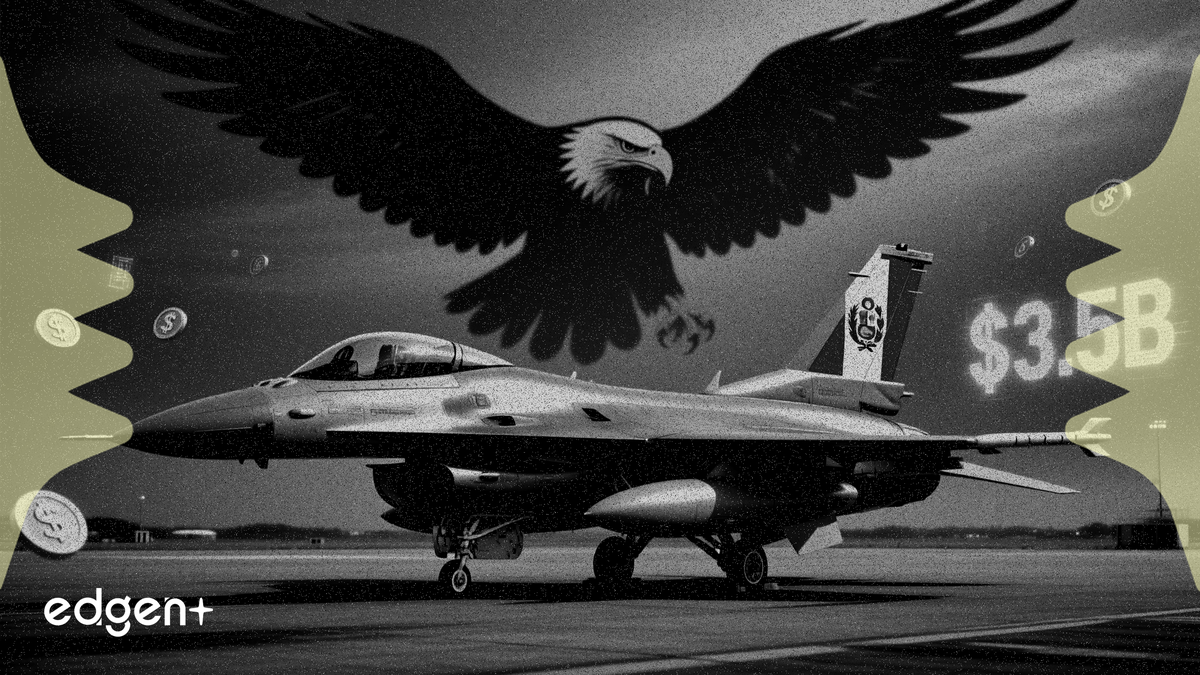
Peru’s government is moving forward with a US$3.5 billion purchase of 24 F-16 fighter jets from Lockheed Martin, transferring an initial $462 million payment just a day after the interim president tried to halt the deal, sparking a cabinet crisis.
The move "endangers our country and undermines its credibility," said former Foreign Minister Hugo de Zela, who resigned Wednesday in protest alongside the defense minister.
The political infighting follows a warning from the U.S. Ambassador to Peru, Bernardo Navarro, who stated he would "use every available tool to protect and promote the prosperity and security of the United States" after interim President Jose Maria Balcazar announced the delay. Despite the president's statement, Peru's Ministry of Economy confirmed the transfer of the initial $462 million payment late Wednesday.
The deal, critical for modernizing Peru's aging fleet of French and Russian jets, now represents a major geopolitical test for the unstable interim government. For Lockheed Martin, the contract secures a key export order, reinforcing its F-16 production line and signaling a strengthening of U.S.-Peru strategic relations ahead of a contentious runoff election in June.
The resignations of Foreign Minister Hugo de Zela and Defense Minister Carlos Diaz on Wednesday threw the F-16 purchase into chaos. Both ministers claimed the deal, approved by the National Defense Council, was already signed and that stalling it jeopardized Peru’s international standing. Diaz stated the purchase was not political but "for the security and defense of the nation."
Their departure came after interim President Jose Maria Balcazar publicly stated he would leave the final decision to the winner of the June 7 runoff election, citing a need to prioritize public funds to address "significant social gaps."
The move prompted a sharp rebuke from the U.S. ambassador, who wrote on X: "If you deal with the US in bad faith and undermine US interests, rest assured, I, on behalf of @POTUS Trump and his administration, will use every available tool to protect and promote the prosperity and security of the United States and our region."
The deal with the United States is for two squadrons of 12 F-16 Block 70 jets, with the first aircraft scheduled to arrive in 2029. A state evaluation committee chose the F-16s over rival bids from France’s Rafale and Sweden’s Gripens, citing technical and geopolitical criteria.
The purchase is intended to renew Peru's aging air defense fleet. According to defense publications, the country currently operates 12 Mirage 2000 aircraft alongside Russian MiG-29s and Belarusian Sukhoi Su-27s, most of which are reportedly inoperative or in reserve. The deal is expected to positively impact Lockheed Martin's revenue and order backlog, reinforcing the company's position as a top global defense supplier.
This article is for informational purposes only and does not constitute investment advice.