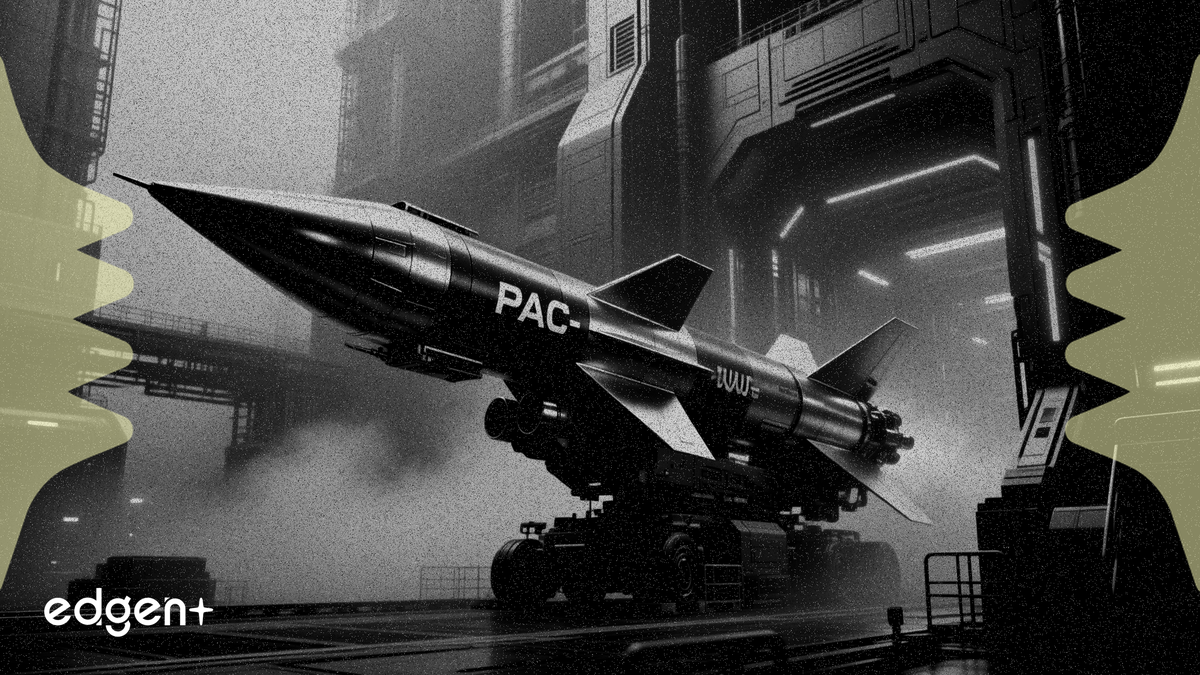
The Pentagon is overhauling its missile defense strategy, prioritizing production volume to counter low-cost threats from adversaries like Iran.
Back
The Pentagon is overhauling its missile defense strategy, prioritizing production volume to counter low-cost threats from adversaries like Iran.

The Pentagon has forged a seven-year framework agreement with Boeing to triple production capacity for the seeker component of the Patriot Advanced Capability-3 (PAC-3) Missile Segment Enhancement, directly addressing the rapid depletion of high-end interceptor stockpiles.
"This agreement with Boeing is a direct reflection that speed, volume and a resilient supply chain are paramount," Michael Duffey, under secretary of war for acquisition and sustainment, said in a Wednesday release. "We are moving beyond the old model and forging direct partnerships with critical suppliers to ensure the entire defense industrial base is postured to expand production."
The deal aligns with a parallel push by Lockheed Martin, the prime contractor for the PAC-3, which in January announced its own seven-year plan to increase overall interceptor production from 600 to 2,000 annually. It also follows a similar contract last week to quadruple production of seekers for the Terminal High Altitude Area Defense (THAAD) system, signaling a major industrial base expansion for critical missile components.
This production surge is a direct response to the unsustainable cost-exchange ratio observed in recent conflicts, particularly against inexpensive Iranian-made drones. With a single PAC-3 missile costing an estimated $4 million and an Iranian Shahed drone costing around $35,000, the U.S. faces a 114-to-1 cost disadvantage, making a strategy based on sheer production volume a national security imperative.
The agreements with both Boeing for the PAC-3 seeker and a recent deal with BAE Systems and Lockheed Martin for the THAAD seeker mark a strategic pivot. Instead of contracting solely with prime contractors, the Defense Department is now engaging directly with critical sub-component suppliers to accelerate production timelines and build resilience throughout the supply chain. Boeing, which increased its seeker deliveries by over 30 percent in 2025, will begin work immediately at its Huntsville, Alabama, facility. The PAC-3 seeker is the electronic brain of the interceptor, responsible for identifying, tracking, and guiding the missile to destroy threats ranging from ballistic and hypersonic missiles to enemy aircraft through direct body-to-body impact.
The urgency behind these production increases has been underscored by the widespread use of cheap, effective unmanned aerial vehicles by adversaries. Iran is reportedly capable of producing 10,000 Shahed drones per month. The high-cost, low-volume nature of advanced U.S. interceptors has come under intense scrutiny, as their use against such drones creates a race of attrition that heavily favors the producer of the low-cost system. By massively scaling up the production of interceptors like the PAC-3 and THAAD, the Pentagon aims to rebalance this economic equation and ensure it has the necessary magazine depth for a sustained conflict.
This article is for informational purposes only and does not constitute investment advice.