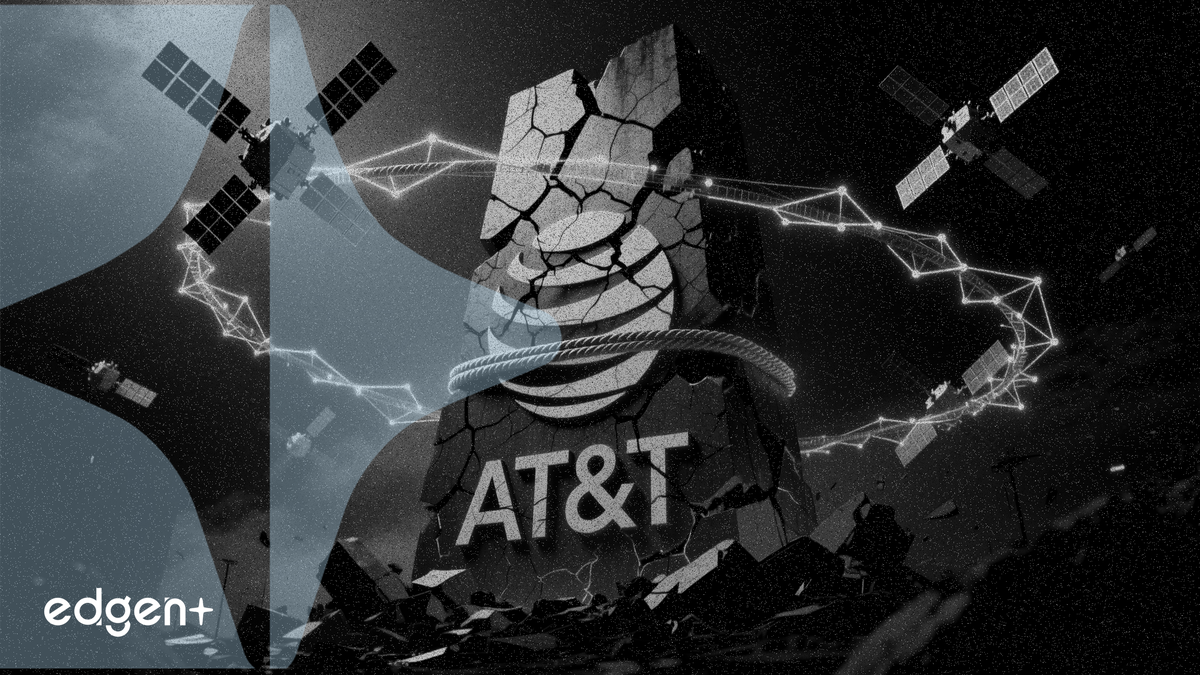
SpaceX's Starlink will disrupt the $1.6 trillion US communications industry, with legacy broadband providers such as AT&T most at risk, Oppenheimer said.
"We think longer-term broadband subscriber growth and eventually mobile is at risk from rising threat of satellite low-earth orbit constellations," Timothy Horan, analyst at Oppenheimer, said.
Horan downgraded AT&T to perform from buy. The firm raised its space revenue projection to $800 billion by 2035 from $500 billion. AT&T shares have fallen 12% in the past three months and are flat year to date, closing at $23.93 on Tuesday.
SpaceX is planning an initial public offering at $135 per share, targeting a $1.75 trillion valuation, Reuters reported. Starlink already counts 10 million subscribers, and the Federal Communications Commission in April voted to update satellite spectrum-sharing rules that could boost space-based broadband access sevenfold.
The downgrade puts AT&T at greater risk than peers Verizon and T-Mobile US, which have less exposure to fixed broadband, Oppenheimer said. Cable operators also face pressure, with the firm warning that "in three years, new fiber builds will halt, hitting the entire foodchain."
Oppenheimer sees "strong regulatory support behind satellite, increasing the feasibility for SpaceX to directly enter mobile." The firm noted that Starlink's expansion into critical applications is enhancing its pricing power and reducing customer churn.
The downgrade reflects growing concern that satellite broadband will erode traditional telecom market share. SpaceX's IPO pricing and first-day trading will offer a clearer view of how the market values the Starlink business against traditional telecom assets.
This article is for informational purposes only and does not constitute investment advice.