
The fragile truce in the Middle East has shattered, setting the stage for a renewed energy shock that could push global inflation higher and derail market optimism.
The fragile truce in the Middle East has shattered, setting the stage for a renewed energy shock that could push global inflation higher and derail market optimism.
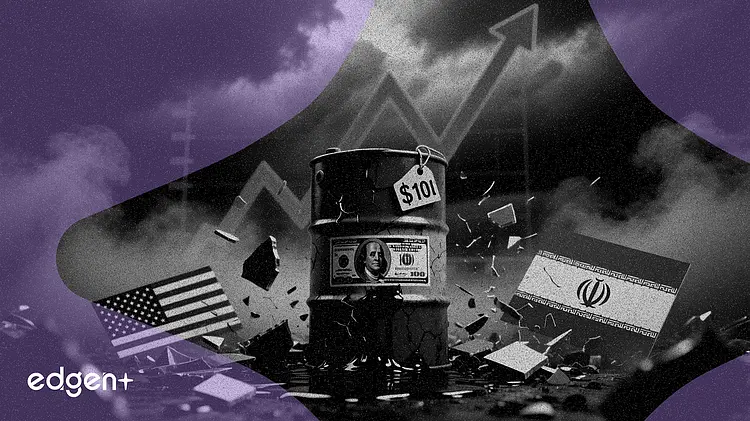
The collapse of marathon peace talks between the US and Iran has put global markets on high alert for a return to volatile trading, with oil prices expected to climb back above $100 a barrel and borrowing costs set to rise. The breakdown in negotiations was followed swiftly by an announcement from President Donald Trump that the US Navy would blockade the Strait of Hormuz, a critical artery for about 20% of the world's oil supply.
"Absent a swift resumption of negotiations, the immediate reaction of financial markets when they open for the trading week will be to push oil prices higher and borrowing costs higher," Mohamed El-Erian, an adviser to Allianz, said. He added that for the UK, "all this translates into another hit to the cost of living and less flexibility for both fiscal and monetary policy responses."
The geopolitical risk premium, which had eased last week on hopes of a diplomatic breakthrough, is now being rapidly priced back into assets. US crude futures for weekend trading pointed to an opening price around $98 a barrel, up from $96.50 on Friday, while gold fell 1.9% to $4,656.29 an ounce as the dollar strengthened on a flight to safety. Asian stock markets in Japan, South Korea, and Australia were the first to react, opening lower on Monday.
The failure of the talks, which US Vice President JD Vance attributed to Tehran’s refusal to abandon its nuclear weapons program, unwinds the brief market rally that followed a temporary ceasefire. The S&P 500 had rebounded to its pre-conflict levels last week, but analysts now warn of a significant reversal. Marko Kolanovic, former chief market strategist at JPMorgan, called the initial peace deal "unrealistic" and said that oil and stocks should retrace their recent moves, adding that a "crash is quite possible."
President Trump’s declaration of a US blockade introduces a new layer of complexity to the crisis. Iran had already effectively closed the strait, with its deputy parliament speaker stating the passage is "completely" under Iranian control. The US move to blockade "any and all Ships trying to enter, or leave" now creates a direct confrontation in the world's most important oil chokepoint.
The move is "the largest supply shock with nothing even coming close," Don Johnson, chief economist at Macro Edge Advisory Group, wrote on X. The announcement immediately raised the risk of a broader escalation, with analysts at JPMorgan Chase now expecting oil prices to remain above $100 a barrel through the second quarter. This renewed pressure on energy supplies comes even as Saudi Arabia announced the restoration of 700,000 barrels per day of pumping capacity that was lost in earlier attacks.
The conflict's impact on the global economy will be the primary focus of the International Monetary Fund and World Bank spring meetings this week. The IMF is expected to present three scenarios, all of which forecast lower economic growth and higher inflation.
The return of high energy prices threatens to undo the work of central banks that were anticipating interest rate cuts later this year. Financial markets are now pricing in the possibility of further rate increases to combat a new wave of inflation. This pressure is already visible on the ground, with Ireland experiencing social unrest and street protests over the rising cost of living. The International Energy Agency previously warned that the crisis from the Iran war could be worse than the oil shocks of 1973, 1979, and 2022 combined, a fear that now seems set to be tested.
This article is for informational purposes only and does not constitute investment advice.