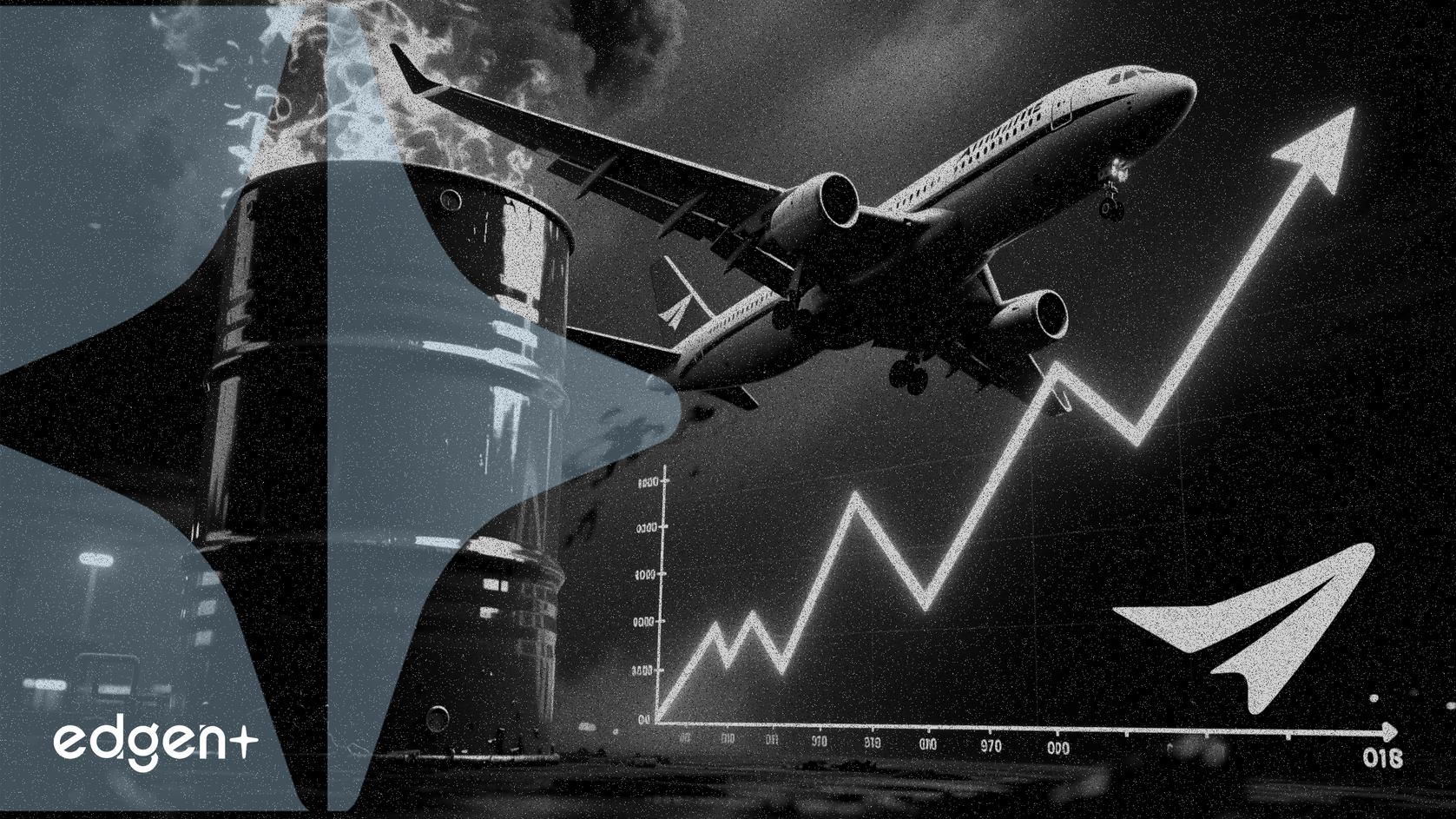
Crude Surges 38% as Mideast Conflict Chokes Supply
West Texas Intermediate crude futures recorded their largest weekly rally since at least 1985, gaining 38% to push prices over $92 per barrel. The dramatic price action came as an escalating conflict in the Middle East effectively halted traffic through the Strait of Hormuz, a waterway responsible for transporting roughly 20% of global oil supplies. The international benchmark, Brent crude, also climbed more than 28% to trade above $94 per barrel.
Even though the U.S. is the world's largest oil producer, the shockwaves are already hitting American consumers. The national average price for gasoline jumped 11% in the past week to $3.32 per gallon, according to AAA data. Diesel prices saw an even sharper 15% increase to $4.33 per gallon, the highest since November 2023. The increases underscore the reality of a globally connected energy market, where supply disruptions thousands of miles away can rapidly affect domestic prices.
Airlines Warn Fares Must Rise as Jet Fuel Hits 2022 Highs
Airline stocks are under intense pressure as the oil price shock translates directly to their bottom line. With most U.S. carriers no longer hedging fuel—typically their largest operating expense after labor—they are fully exposed to the price spike. Spot prices for jet fuel have already reached levels not seen since 2022, creating a significant headwind for profitability.
On March 5, United Airlines CEO Scott Kirby issued a direct warning about the consequences for travelers. Because airlines sell tickets months in advance, they must first absorb the higher costs before passing them on.
If fuel stays at these levels, ticket prices will probably start moving up pretty quickly.
— Scott Kirby, CEO, United Airlines.
The combination of surging operational costs and thousands of flight cancellations due to the conflict presents a severe challenge for the industry's second-quarter earnings.
Gasoline Prices Could Top $3.70 as Ripple Effects Spread
The financial pain is unlikely to end soon. Patrick De Haan, an analyst at GasBuddy, forecasts that the national average price of gasoline could climb toward $3.50 to $3.70 per gallon if oil prices continue rising. The geopolitical risk is compounded by seasonal factors, as refineries are beginning their annual switch to more expensive summer-blend gasoline just as crude prices are spiking.
The sharp rise in diesel also signals potential for broader inflation. As the primary fuel for freight transportation, manufacturing, and agriculture, higher diesel costs often get passed on to consumers through increased prices for goods and services.