A dramatic overnight policy shift from the Trump administration on Iran has recalibrated geopolitical risk in energy markets, sending oil prices tumbling and sparking a rally in risk assets.

A dramatic overnight policy shift from the Trump administration on Iran has recalibrated geopolitical risk in energy markets, sending oil prices tumbling and sparking a rally in risk assets.
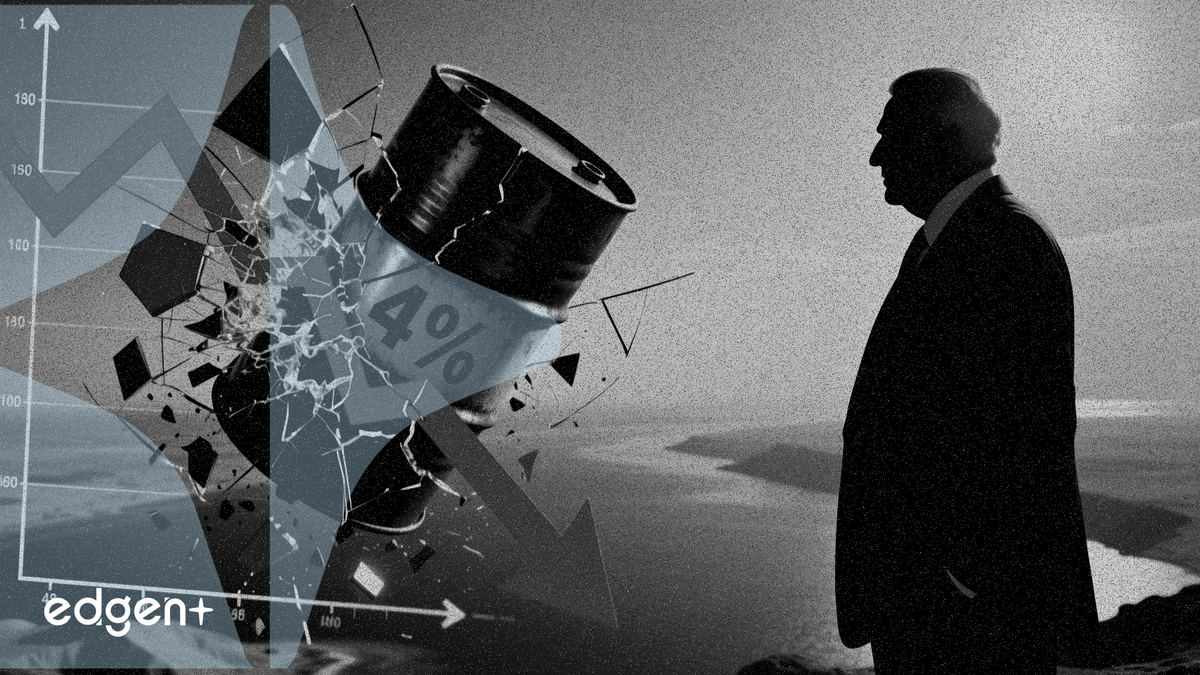
Oil prices plunged nearly 4 percent on Tuesday after President Donald Trump announced a temporary halt to the U.S. military’s “Project Freedom” operation in the Strait of Hormuz, citing “great progress” in negotiations for a comprehensive deal with Iran and fueling broad market optimism.
“Based on the request of Pakistan and other Countries... and the fact that Great Progress has been made toward a Complete and Final Agreement... we have mutually agreed that... Project Freedom will be paused for a short period of time,” Trump said in a post on Truth Social.
The apparent de-escalation sent international benchmark Brent crude futures down roughly 4 percent to close at $109.87 per barrel, while U.S. West Texas Intermediate futures lost a similar margin to settle at $102.27. The shift in sentiment also lifted the Australian dollar to a four-year high, reflecting traders' move away from safe-haven assets.
The sudden reversal from heightened military tensions just 24 hours prior suggests a potential breakthrough in back-channel talks, possibly mediated by Pakistan. A finalized deal could remove a significant geopolitical risk premium from oil markets, potentially easing global inflationary pressures ahead of the Federal Reserve's next meeting.
The market's reaction was a swift reversal from Monday, when oil prices had jumped more than 4 percent after the U.S. and Iran traded blows in the critical shipping lane. U.S. forces had sunk Iranian vessels and Iran launched drones at the United Arab Emirates. Defense Secretary Pete Hegseth confirmed the change in posture, telling reporters on Tuesday that Iran's recent attacks fell "below the threshold of restarting major combat operations" and that the "ceasefire is not over."
The paused "Project Freedom" was launched Monday to reopen the Strait of Hormuz, through which roughly one-third of the world’s seaborne oil flows. Hegseth noted that two U.S. commercial ships had already transited the strait under military protection, declaring that Iran does not control the waterway. The operation was a response to Iran effectively shutting the strait, trapping, by some estimates, nearly 23,000 civilian sailors and creating a growing humanitarian and supply chain crisis.
While the U.S. military operation is paused, diplomatic efforts appear to be accelerating. Iranian Foreign Minister Abbas Araghchi arrived in Beijing on Tuesday for talks with his Chinese counterpart, a key diplomatic and economic partner for Tehran. Separately, Iranian President Masoud Pezeshkian spoke with Iraq's prime minister, urging the U.S. to "remove military threats from our region." The flurry of diplomatic activity underscores the high stakes involved, with a potential agreement offering a significant off-ramp to a conflict that threatened to boil over.
The last time a comparable de-escalation occurred following a direct military confrontation in the Gulf, oil prices corrected by more than 10 percent over the subsequent month as the market unwound its risk premium. A sustained period of lower energy prices could provide a tailwind for global equities by reducing input costs for companies and easing inflation fears that have preoccupied central banks, potentially leading to a broader rally in risk assets if the agreement holds.
This article is for informational purposes only and does not constitute investment advice.