
An economist from the Gulf Research Center warns that oil markets are “completely wrong” in their assessment of the Iran conflict, with prices potentially reaching $200 a barrel.
An economist from the Gulf Research Center warns that oil markets are “completely wrong” in their assessment of the Iran conflict, with prices potentially reaching $200 a barrel.
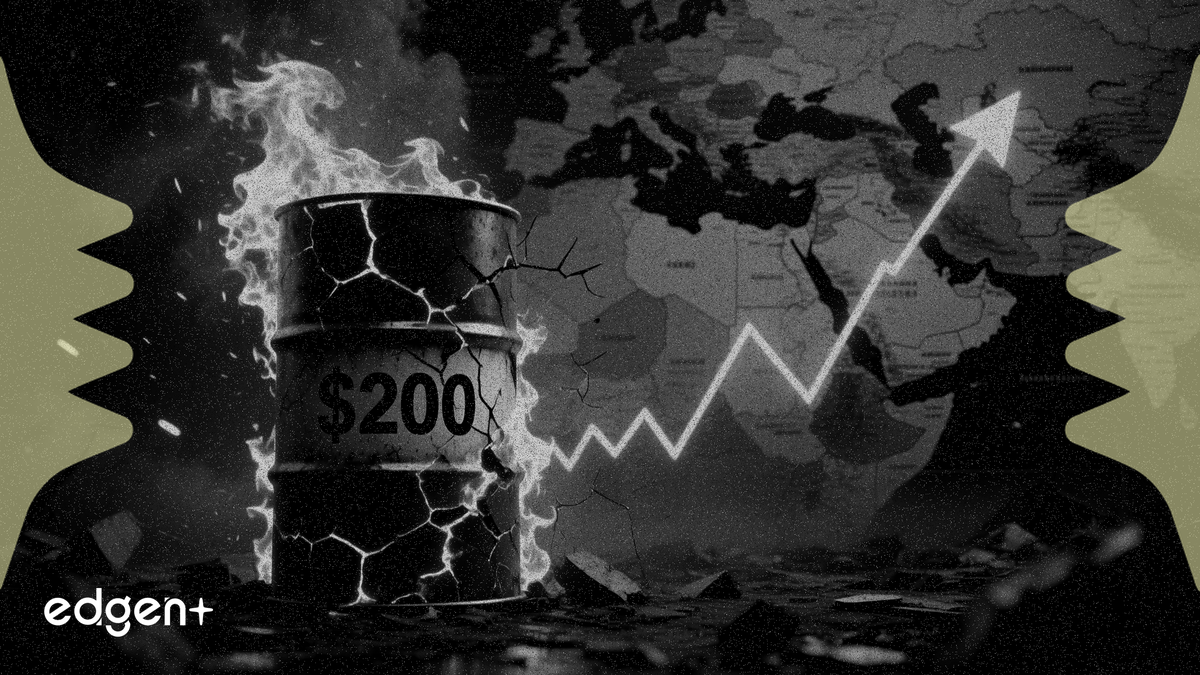
The risk of a wider conflict in the Middle East could send oil to $200 a barrel, an economist warned, as the head of the International Energy Agency said the current crisis is worse than the oil shocks of 1973, 1979, and 2022 combined.
"The markets are ‘completely wrong’ in pricing out the Iran war," John Sfakianakis of the Gulf Research Center said Tuesday. He added that military buildups and failed negotiations point to further escalation, creating a "new paradigm" where a significant risk premium for the Strait of Hormuz must be priced in.
The warning came as oil prices continued to climb. Brent crude, the international benchmark, traded above $110 a barrel after former U.S. President Donald Trump set a Tuesday deadline for Iran to reopen the vital shipping lane. Brent was up 0.7 percent at $110.60 a barrel, while New York light crude rose 2.5 percent to $115.17. Global stock markets fell on the news, with the FTSE 100 in London down 0.84 percent and the Dow Jones Industrial Average opening 0.64 percent lower.
At stake is the passage through the Strait of Hormuz, a chokepoint through which about 20 percent of the world's daily oil consumption flows. An extended closure threatens to trigger a global stagflationary shock, marked by soaring inflation and slowing economic growth, according to the International Monetary Fund.
The severity of the situation was underscored by Fatih Birol, the executive director of the IEA. He told Le Figaro newspaper the impact of the conflict is "more serious than the ones in 1973, 1979 and 2022 together." The combination of the Arab oil embargo, the Iranian Revolution's disruption, and the market turmoil from Russia's invasion of Ukraine pales in comparison to the current threat, Birol said.
Developing nations are most at risk from the triple threat of higher energy prices, rising food costs, and accelerating inflation. However, the impact is also being felt across developed economies. In the U.K., the RAC reported "significant fuel price rises" over the Easter holiday, with petrol climbing to 157.02p a litre.
Analysts see three primary ways the conflict could resolve, each with different consequences for energy markets. In an analysis for Forbes, Ariel Cohen outlined a scenario of escalation where the U.S. could seize Iran's Kharg Island, the country's primary oil export hub. This would temporarily drive prices even higher and force a long-term diversification away from Gulf producers, benefiting suppliers in the Atlantic Basin, the Caspian region, and Africa.
A second scenario involves the U.S. declaring victory and leaving the Strait for other nations to manage. This could prove politically damaging and would likely leave prices high, with a permanent risk premium baked into Middle East energy supplies.
A third path is a conditional armistice, brokered by neutral parties like Pakistan or China, that reopens the Strait. While this would resolve immediate supply concerns, prices would likely settle at a level higher than before the crisis, reflecting the newly quantified political risk.
The war has already rattled investor confidence and is pushing major economies toward recession. On Monday, IMF head Kristalina Georgieva said that "all roads now lead to higher prices and slower growth," a sharp reversal from the fund's pre-war expectation of a slight upgrade to its global growth forecast.
In the U.K., a poll of purchasing managers found that service sector growth was the weakest in 11 months in March, with falling business and consumer spending. Thomas Pugh, chief economist at RSM UK, said the data points to "another bout of stagflation, even if the conflict ends soon. If it drags on longer, a recession looks likely."
This article is for informational purposes only and does not constitute investment advice.