

Nvidia shares tumbled 3.5% on Monday, extending a sector-wide rout triggered by SK Hynix's record post-IPO plunge in Seoul.
Nvidia shares tumbled 3.5% on Monday, extending a sector-wide rout triggered by SK Hynix's record post-IPO plunge in Seoul.
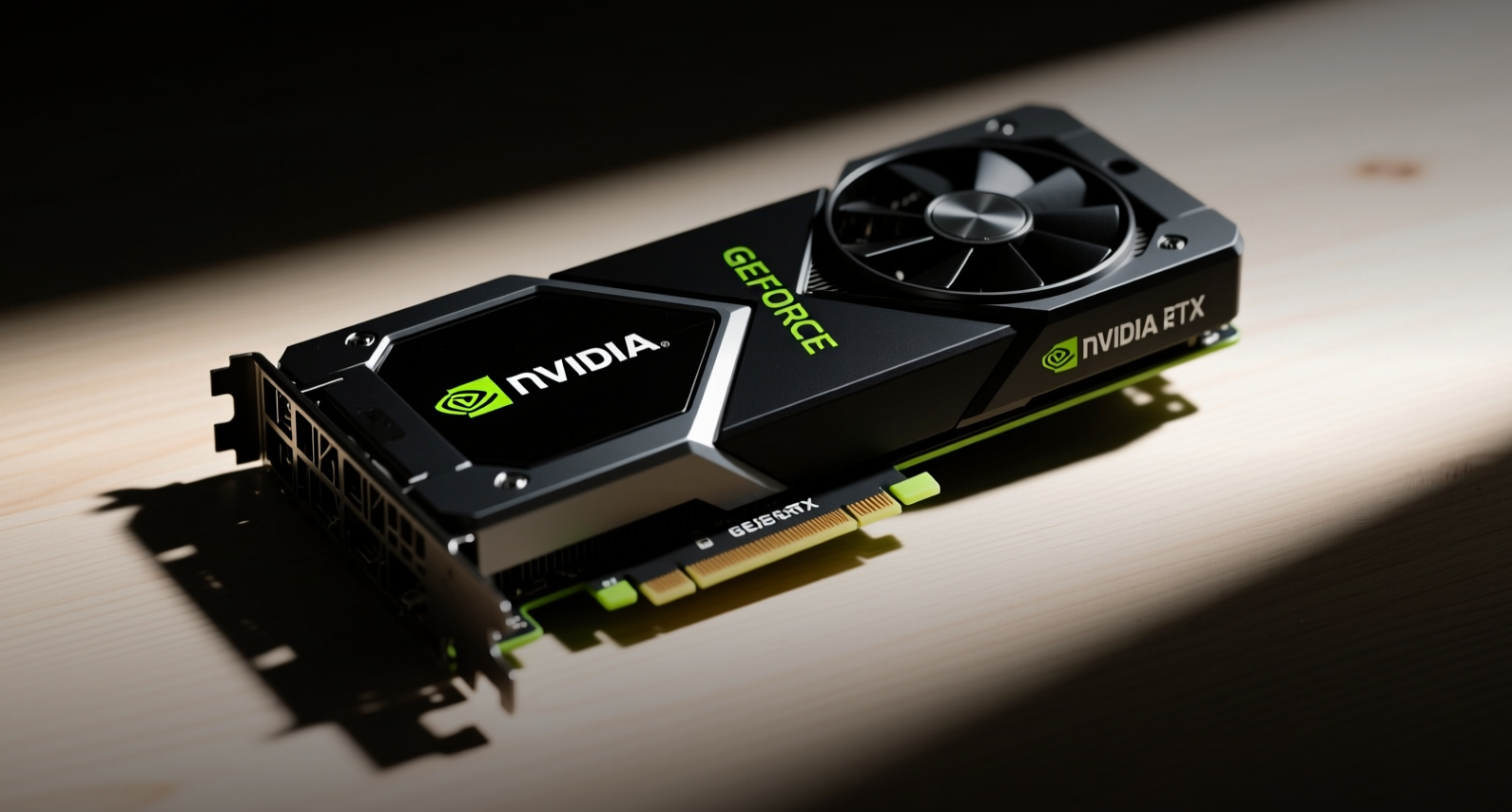
Nvidia shares tumbled 3.5% on Monday, extending a sector-wide rout triggered by SK Hynix's record post-IPO plunge in Seoul.
Nvidia shares fell 3.5% to $203.53 on Monday, joining a semiconductor sell-off that swept across markets after SK Hynix's record post-IPO decline in Seoul.
"SK Hynix's Korea-listed shares have nearly doubled this year, and the current memory upcycle is tracking substantially stronger than expected, but our base case continues to assume normalization in cycle dynamics," Lorraine Tan, an analyst at Morningstar, said in a note on Friday.
SK Hynix's Korea-listed shares cratered 15.4% on Monday — the steepest single-day decline on record — one trading day after the company's $26.5 billion US listing on the Nasdaq. Samsung Electronics lost more than 10%, dragging the benchmark Kospi index nearly 9% lower and triggering a circuit breaker for the seventh time this year. The sell-off spread to US markets, where Advanced Micro Devices and Intel each dropped 5% at the open.
The rout highlights a growing divergence between the AI-driven semiconductor rally and the underlying fundamentals. SK Hynix's American depositary receipts now trade at about a 37% premium to its Seoul-listed shares, a gap analysts say may narrow as the memory cycle normalizes. For Nvidia, which relies on Hynix for high-bandwidth memory used in its AI accelerators, any disruption to the memory supply chain or pricing environment could pressure margins already under scrutiny from investors.
The sell-off marks a sharp reversal for a sector that had led the market to record highs last quarter. The S&P 500 and Nasdaq had posted their second consecutive weekly gains through Friday, buoyed by strength in memory and chip stocks. SK Hynix's US debut on Friday initially reinforced that optimism before the Monday rout erased those gains.
A $26.5 Billion Debut Turns Sour
SK Hynix priced its American depositary shares at $149 on Thursday, raising $26.5 billion in the largest US listing by a foreign company ever. The offering was reportedly seven times oversubscribed, reflecting strong demand from US investors for exposure to the memory chip market. The shares opened at $170 on Friday — 14% above the reference price — and closed their debut session up 12.8%.
But the euphoria faded fast. By Monday, the stock had surrendered those gains and more, with the Korea-listed shares falling 15.4% in their steepest drop on record. The Kospi index closed nearly 9% lower, triggering a 20-minute trading halt after a circuit breaker was activated. Samsung Electronics, South Korea's other memory chip heavyweight, lost more than 10%, adding to the index's decline.
The sell-off in Seoul was driven by profit-taking after a months-long rally that had pushed SK Hynix's Korea-listed shares up more than 200% this year. Morningstar values the company's ADRs at $160, implying the stock is fairly valued at current levels. James Ooi, a market strategist at Tiger Brokers, noted that companies with both US and home-market listings often trade at a premium in the US, benefiting from broader investor access and deeper liquidity.
Risk-Off Mood Grips AI Trade
The semiconductor sell-off unfolded against a backdrop of renewed geopolitical uncertainty. The US and Iran traded strikes this week, reviving concerns about the Strait of Hormuz — the waterway through which 20% of the world's crude oil normally flows. Brent crude traded at $76 a barrel Friday, up about $4 from before the fighting restarted. A sustained closure of the strait could push oil toward $90 to $120 a barrel, according to Dan Alamariu, chief geopolitical strategist at Alpine Macroeconomics.
The risk-off mood hit the most speculative corners of the tech sector hardest. Quantum computing stocks IonQ, D-Wave Systems, Rigetti Computing, and Quantum Computing each fell 6% to 8%, with no company-specific news driving the moves. The tech-heavy Nasdaq Composite was down 0.9% at the open, while the S&P 500 fell 0.3%.
Monday's sell-off suggests investors are becoming more discerning about AI-related bets after a months-long rally that pushed semiconductor stocks to record highs. Nvidia shares have more than doubled over the past year, driven by strong demand for its AI training and inference chips. If the memory cycle turns, the company's cost advantage from its high-bandwidth memory supply agreements with SK Hynix could erode, potentially squeezing margins at a time when the broader semiconductor sector faces headwinds from geopolitical uncertainty and profit-taking.
This article is for informational purposes only and does not constitute investment advice.
