


Hyperscalers' trillion-dollar AI infrastructure spending is funneling into nontech 'HALO' companies with hard assets and low obsolescence.
Hyperscalers' trillion-dollar AI infrastructure spending is funneling into nontech 'HALO' companies with hard assets and low obsolescence.
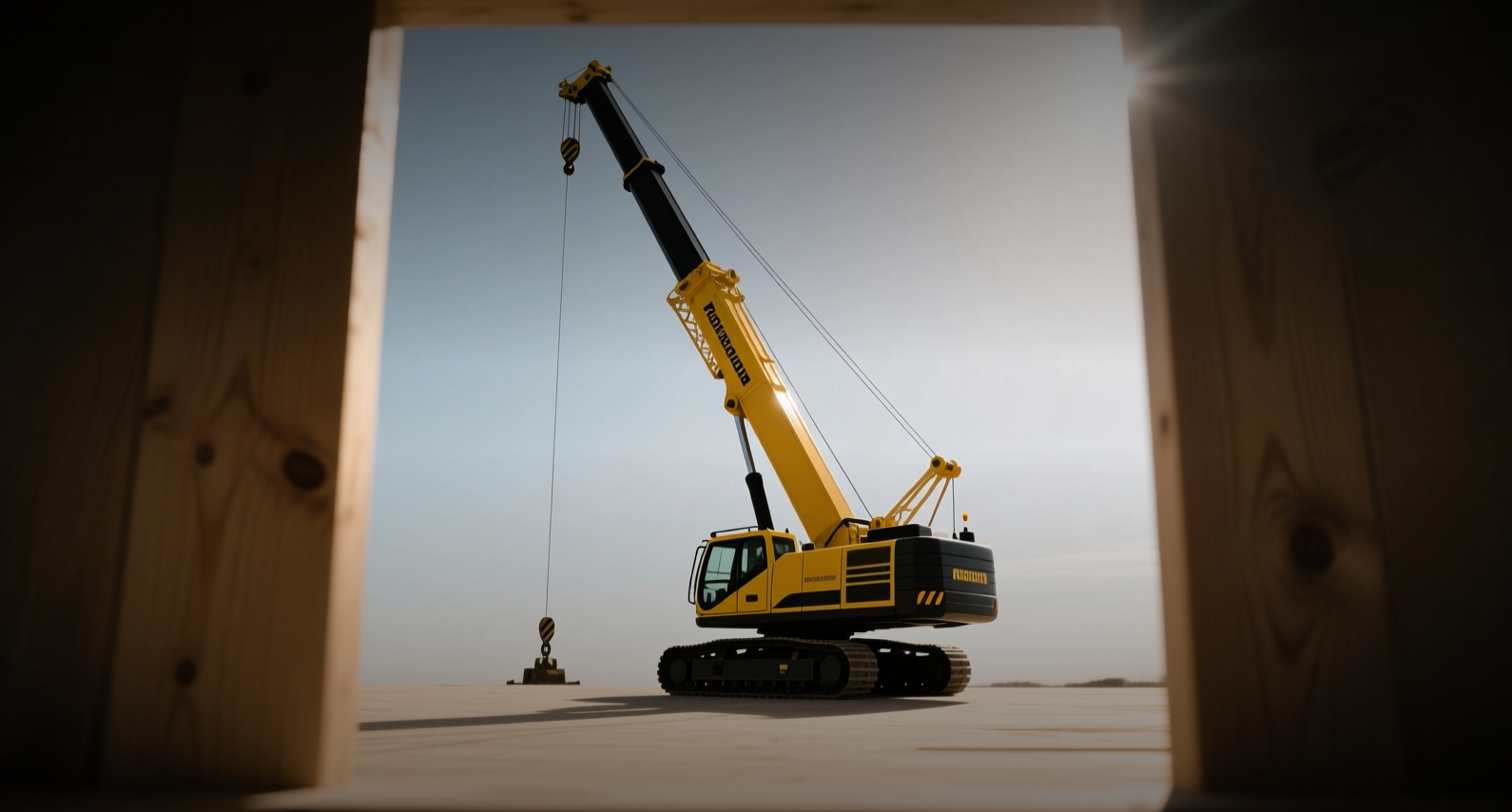
Hyperscalers are expected to spend a trillion dollars or more in 2026 building AI data centers, and the money is flowing to industrial names that supply the turbines and cranes — not just chipmakers.
"These are the 'old economy' companies that have been in business for decades, and they are now seeing a renaissance as they capture business from the hyperscalers," Tracey Ryniec, stock strategist at Zacks Investment Research, said.
Caterpillar's second-quarter sales jumped 24%, with backlog up 92% year over year to $72 billion. MasTec's record backlog reached $21.4 billion, up 30%. United Rentals reported record second-quarter results and raised full-year guidance.
The build-out is entering a second phase — agentic AI rolling out to enterprise and sovereign customers — that is even more compute-intensive, extending the revenue runway for infrastructure suppliers well beyond the current cycle.
The "HALO" framework — hard assets, low obsolescence — captures companies whose products have been in use for decades and are now central to data center construction. Caterpillar makes industrial gas turbines used to power data centers alongside its construction equipment. MasTec handles power delivery, pipeline and communications infrastructure. United Rentals, the world's largest equipment rental company, supplies the heavy machinery for large projects across North America, Europe, Australia and New Zealand.
Caterpillar's earnings are expected to rise 30.5% this year and another 25.2% in 2027. Its shares hit all-time highs earlier this year but have fallen 13% in the past month, trading at 35 times forward earnings. MasTec's earnings are expected to rise 41.2% in 2026 and 35.3% in 2027; its shares have dropped 33.1% in the past month as investors take profit on the AI trade, leaving a forward P/E of 28.8. United Rentals, whose shares are at all-time highs and up 5.8% in the past month, trades at 23.9 times forward earnings, with earnings expected to rise 15.4% this year and 14.2% in 2027.
The spending is broadening beyond the first phase of generative AI, which centered on hyperscalers training large language models in GPU-packed data centers. Argus Research notes the next phase, agentic AI, is rolling out to enterprise and sovereign customers and is even more compute-intensive. Nonresidential fixed investment rose 8.4% in the second quarter, with equipment spending up 15.2% and intellectual property products up 8.8%. Computer and electronic orders grew in nine of the past 10 months in support of the build-out.
For investors, the question is whether the pullback in Caterpillar and MasTec represents an entry point. The trillion-dollar spending commitment gives these companies a multi-year revenue runway, but valuations above 30 times forward earnings leave little room for error if hyperscalers trim capital plans. Nvidia, the chipmaker at the center of the AI trade, trades at a premium that already prices in years of growth; the industrial suppliers offer a different way to play the same build-out, with backlogs that are already booked.
This article is for informational purposes only and does not constitute investment advice.
