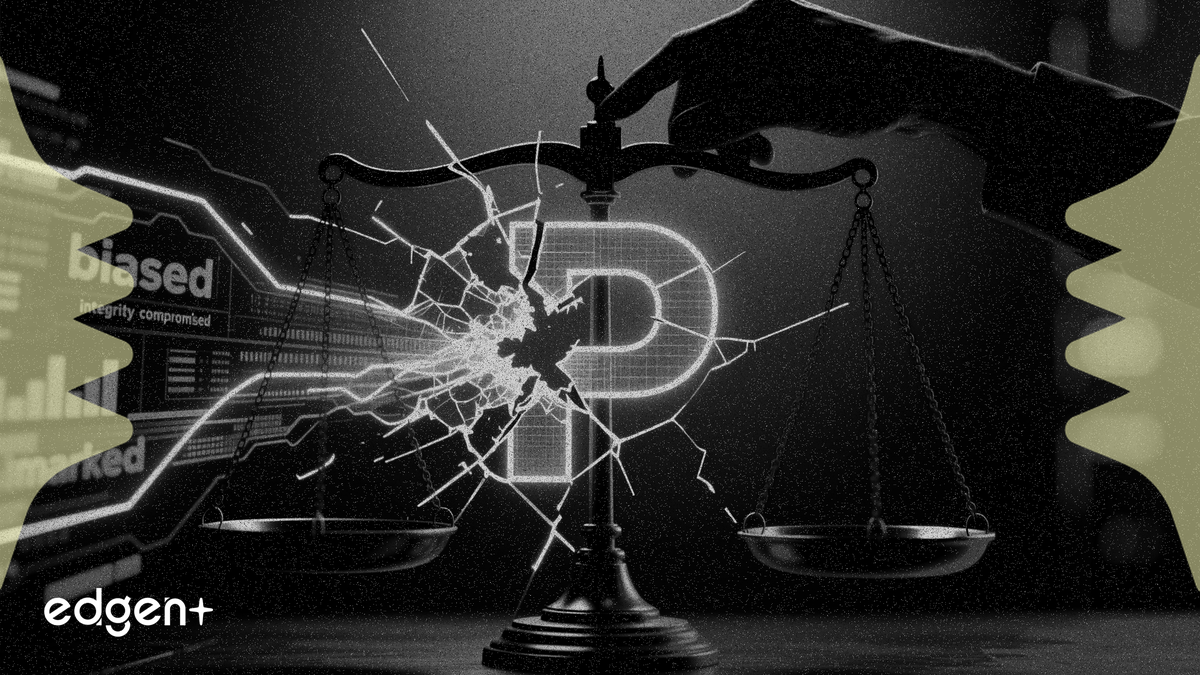
Les enquêtes sur la gouvernance du marché de prédiction crypto Polymarket ont révélé d'importants conflits d'intérêts, avec près d'un pari contesté sur cinq étant réglé par des votants anonymes ayant un intérêt financier dans le résultat.
« Cela devrait être la responsabilité de Polymarket, et non celle de détenteurs de jetons mystérieux, anonymes et externalisés », a déclaré Nic Carter, associé fondateur de la société d'investissement Castle Island Ventures, en réponse aux conclusions.
Une analyse des données de la blockchain par le Wall Street Journal a révélé que dans plus de 300 litiges au cours de l'année écoulée — soit près de 20 % du total — au moins un détenteur de jetons UMA votant sur la résolution avait également un pari actif sur ce même marché. Une analyse distincte de Barron's sur 50 litiges aléatoires a révélé que 36 impliquaient des votants avec des paris actifs. La structure soulève des questions sur l'intégrité d'un système qui règle des millions de dollars de mises sur tout, des événements géopolitiques aux prédictions natives de la crypto.
Le potentiel d'abus sape la prétention de la plateforme à un arbitrage impartial et pourrait attirer l'attention des régulateurs sur son modèle de gouvernance décentralisée. Alors que Polymarket affirme que le système offre une « responsabilité transparente à l'échelle du marché », la concentration du pouvoir de vote et les incitations financières directes pour les votants à influencer les résultats présentent un défi critique pour la confiance des utilisateurs.
Justice décentralisée ou conflit de votants ?
Contrairement à la plupart des marchés de prédiction qui résolvent les ambiguïtés en interne, Polymarket externalise la tâche à un service tiers appelé Universal Market Access, ou UMA. Lorsqu'un résultat de pari est incertain et contesté, cela déclenche un vote parmi les détenteurs du jeton UMA. Plus une personne détient de jetons, plus son vote a de poids.
Bien que Polymarket note que seulement 0,21 % de ses marchés déclenchent un vote UMA, le nombre de litiges augmente, dépassant les 1 150 jusqu'à présent cette année selon les données de Betmoar. Le cœur du problème, selon l'analyse du Journal, est qu'au moins 60 % des votants actifs d'UMA peuvent être directement liés à des comptes de trading Polymarket.
Dans un exemple très médiatisé, un marché de 12 millions de dollars demandait si l'ancien président Trump parlerait au président chinois Xi Jinping en mars. Après des rapports contradictoires, la décision a été soumise à un vote UMA. Au cours du processus, un seul votant UMA contrôlant environ 10 % des voix a annoncé son vote « Oui » sur Discord, provoquant une flambée des cotes du marché avant que Polymarket ne clarifie que le marché devait se résoudre par un « Non ».
« Des crétins ou un conflit d'intérêts »
Polymarket et UMA défendent le système, affirmant qu'il est sécurisé par des incitations économiques. Les votants du côté perdant d'une résolution voient leurs jetons UMA stakés « slashés » (réduits), ce qui crée une dissuasion à voter contre un résultat vérifiable. « Les plaintes que vous entendez proviennent d'un petit nombre de traders qui ont perdu de l'argent sur leurs paris et qui cherchent quelqu'un à blâmer », a déclaré James Fry, porte-parole de la fondation parente d'UMA.
Cependant, la concentration du pouvoir est significative. Dans la plupart des litiges, plus de la moitié des voix sont exprimées par les 10 plus grands portefeuilles UMA. Cela a conduit à des accusations de manipulation par ceux que l'on appelle les « baleines ».
Un membre déchu d'un important comité de vote, connu sous le seul nom de « Scout », a reconnu parier régulièrement sur les marchés qu'il aidait à résoudre. Il a fait valoir que les votants ayant « leur peau en jeu » (skin in the game) sont plus motivés pour trouver le résultat correct que les parties désintéressées.
« Vous pouvez soit avoir des traders avec un conflit d'intérêts, soit des crétins sans conflit d'intérêts », a déclaré Scout dans un message Discord. « Il n'y a pas vraiment de juste milieu. »
Cet article est uniquement à titre informatif et ne constitue pas un conseil en investissement.