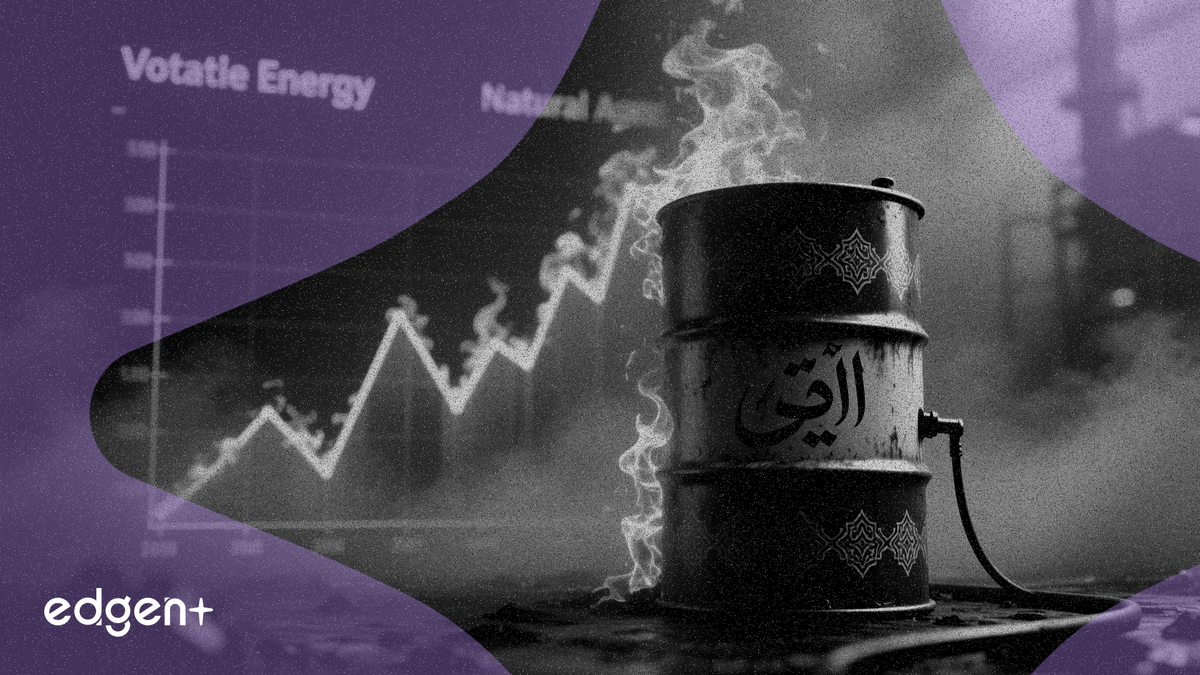
A brewing conflict in the Strait of Hormuz sent ripples across energy markets Monday, pushing natural gas higher after five weeks of losses.
U.S. natural gas futures rose 2.2% to $2.706/mmBtu, lifted by a surge in oil prices after talks between the U.S. and Iran broke down without an agreement. The geopolitical uncertainty, which includes a planned U.S. blockade of Iranian ports, overshadowed a domestic market still grappling with high inventory levels.
"Physical demand may recover 8 Bcf/d by next Monday, and weak spot prices and shoulder-season pipeline maintenance may limit production and discourage Canadian imports," Eli Rubin of EBW Analytics said in a note. An increase in speculator short positioning, he added, "is an indicator for a potential relief rally after five straight weeks of Nymex natural gas losses."
The immediate catalyst for the cross-commodity rally was the collapse of negotiations aimed at de-escalating the Iran conflict. In response, Brent crude, the global oil benchmark, jumped 8.5% to $102.37 a barrel, while West Texas Intermediate crude climbed 9% to $105.34. The planned U.S. blockade of the Strait of Hormuz, a chokepoint for a fifth of the world's energy shipments, threatens to further tighten global supplies.
The spike in energy prices adds another layer of complexity to the global economic outlook, threatening to exacerbate inflationary pressures. For the U.S. natural gas market, the geopolitical flare-up provides a bullish counterpoint to a bearish domestic setup, where inventories are roughly 5% above the five-year average after a mild winter.
Long-Term Demand Story Intact
Despite the near-term volatility, analysts at Morgan Stanley see a stronger long-term outlook for U.S. natural gas, driven by two main factors: liquefied natural gas (LNG) exports and rising demand for power generation. The investment bank projects that overall U.S. gas demand will reach approximately 140 billion cubic feet per day (bcf/d) by 2030, a significant increase from the current 113 bcf/d.
LNG exports are the primary growth engine in this forecast. Feedgas demand, the amount of gas used by liquefaction plants, is already on the rise and is expected to increase substantially as new export terminals come online.
Summer Power Demand Looms
A secondary driver for natural gas is the anticipated increase in demand from the power sector. Lower-than-normal snowpack levels in the western U.S., about 65% below average, are expected to reduce hydropower generation. This will likely force utilities to rely more heavily on gas-fired power plants to meet summer electricity needs.
Morgan Stanley anticipates a 1 bcf/d year-over-year increase in gas demand for power generation this summer. This, combined with the rising tide of LNG exports, provides a fundamental basis for price support later in the year, even as the market navigates immediate geopolitical shocks.
This article is for informational purposes only and does not constitute investment advice.