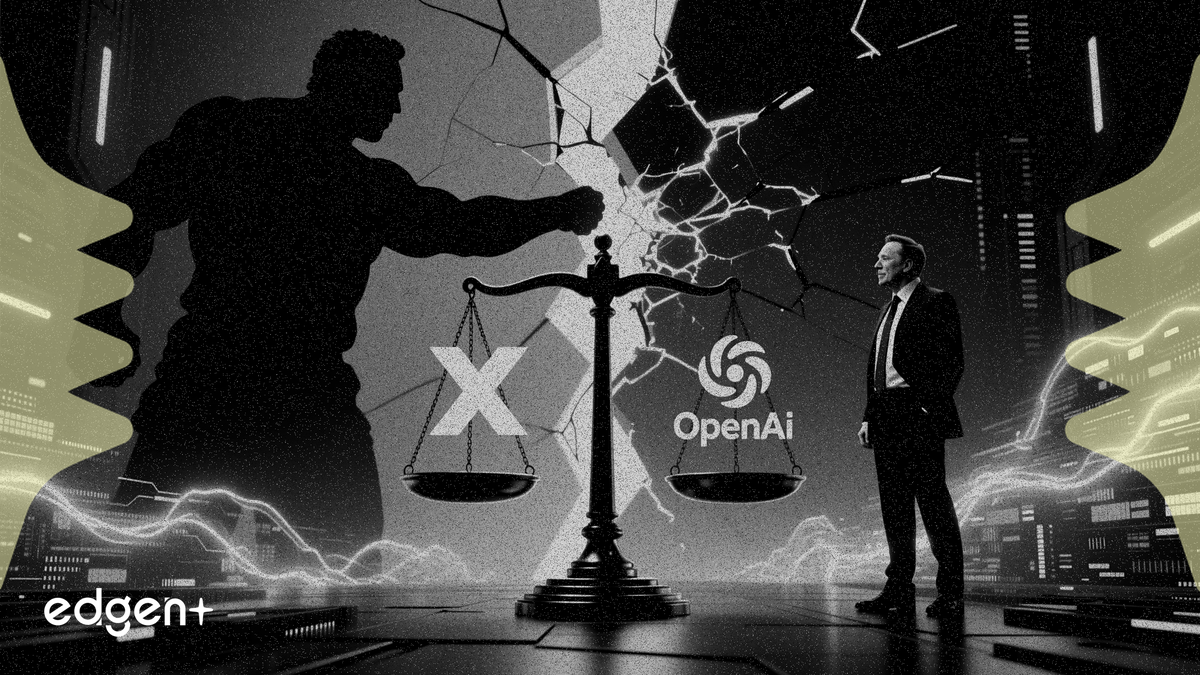
Closing arguments in the high-stakes legal battle between Elon Musk and OpenAI concluded Thursday, with lawyers for each side painting starkly different pictures of the artificial intelligence lab’s origins and CEO Sam Altman’s character. The outcome of the three-week trial could fundamentally reshape the competitive landscape of the AI industry.
“Imagine that you’re on a hike, and you come upon one of those wooden bridges that you see on a trail, and it’s over a gorge,” Steven Molo, Musk’s lead counsel, said to the jury. He argued the case hinges on Altman’s credibility, asking if they would cross a bridge “built on Sam Altman’s version of the truth.”
The suit, filed by Musk in August 2024, alleges a breach of OpenAI’s founding agreement, seeking over $150 billion in damages from OpenAI and its primary partner, Microsoft. Musk also seeks to remove Altman from the board and unwind the company's shift to a for-profit entity, which followed Microsoft's $13 billion investment and catapulted OpenAI to a valuation of about $730 billion.
A victory for Musk could destabilize the world’s leading AI startup and benefit competitors, including Musk’s own xAI, Google, and Anthropic. Conversely, a loss for Musk would solidify Altman’s control and clear the path for a potential initial public offering, expected to be one of the largest in history.
A Battle of Credibility
Musk's legal strategy heavily focused on attacking Sam Altman's character. Molo told jurors that five witnesses, including former OpenAI board members, had called Altman a "liar" under oath. This line of argument leans on Altman's brief ouster in November 2023, when the board cited a lack of trust. "If you cannot trust him, if you don’t believe him, they cannot win. It’s that simple," Molo stated.
OpenAI’s lawyer, Sarah Eddy, worked to counter these attacks, reminding the jury that "90 percent of OpenAI employees" had called for Altman's reinstatement after his firing, a strong testament to his leadership. Eddy argued that the only person who testified to any broken promises was Musk himself, portraying the lawsuit as a personal vendetta.
The Founding Agreement Dispute
The core of Musk's case is that Altman and President Greg Brockman betrayed the startup's original mission to be a nonprofit dedicated to building safe AI for the public good. Molo accused them of "stealing a charity" by converting it into a for-profit enterprise driven by commercial gains, particularly after the launch of ChatGPT and major investments from Microsoft.
Eddy countered this narrative by asserting that the OpenAI nonprofit still exists and, crucially, controls the for-profit arm, which now holds assets worth tens of billions of dollars. She argued that no formal agreement was ever breached.
Statute of Limitations and Musk's Motives
A key technical defense for OpenAI is the statute of limitations. The jury must decide if Musk filed his suit within the three-year window. OpenAI's lawyers argue Musk knew or should have known about the alleged breach long before August 2021. Molo claimed Musk only became aware of the breach in October 2022 after news of a major Microsoft investment.
Eddy also presented a compelling counter-narrative about Musk's own intentions, arguing it was he who pushed for a for-profit structure and "unequivocal control" over the venture. She brought up a 2017 meeting where Musk allegedly tried to fold the AI lab into Tesla and even suggested his control over OpenAI's technology should pass to his children upon his death, a proposal that made other founders, including Altman, deeply uncomfortable.
This article is for informational purposes only and does not constitute investment advice.