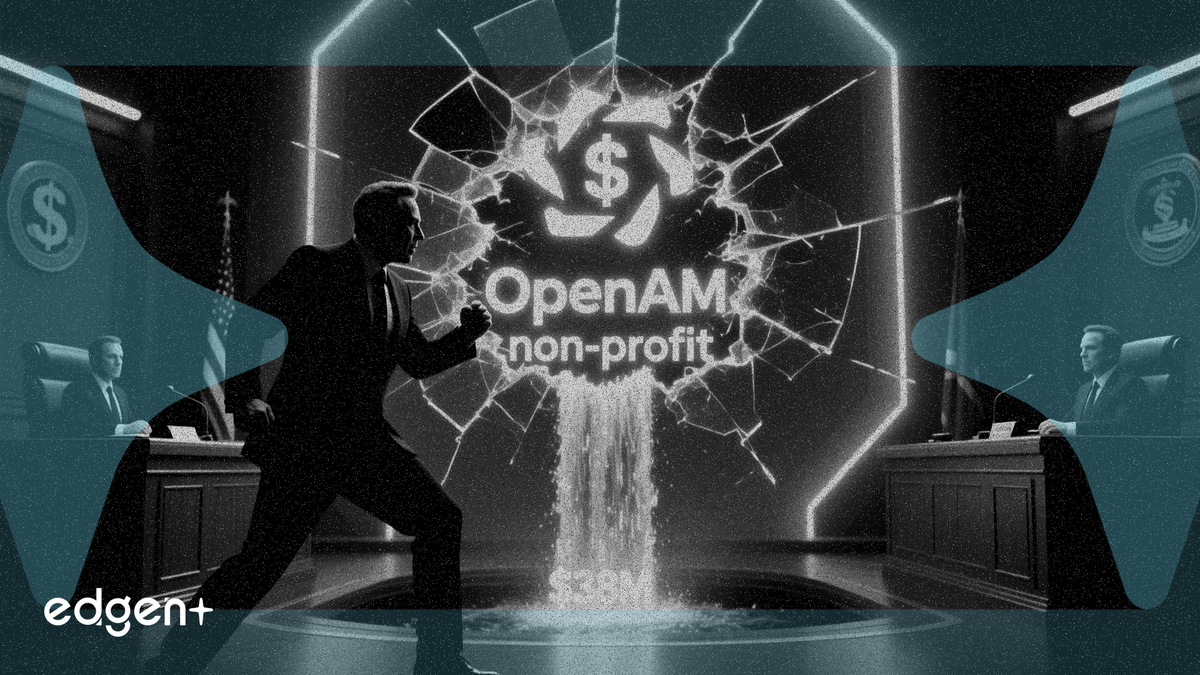
Elon Musk’s lawsuit against OpenAI and its CEO Sam Altman reveals the high-stakes battle for the future of artificial intelligence, with a $38 million donation at its heart.
(P1) Tesla CEO Elon Musk is suing OpenAI, the company he co-founded, along with its CEO Sam Altman and President Greg Brockman, alleging a breach of the company's original non-profit mission. The lawsuit, filed in a California federal court with jury selection set for April 27th, claims Musk was deceived into donating approximately $38 million to the startup under the promise that it would remain a non-profit organization dedicated to developing AI for the benefit of humanity.
(P2) "Their stated run rate is inflated," OpenAI's chief revenue officer Denise Dresser wrote in a memo to staff, criticizing competitor Anthropic. "They use accounting treatment that makes revenue look bigger than it is, including grossing up rev share with Amazon and Google. Our analysis shows that this overstates their run rate by roughly $8 billion."
(P3) The lawsuit and internal memos highlight the intense competition in the AI sector, particularly between OpenAI and rival Anthropic. OpenAI's CRO also criticized Anthropic for its focus on coding, suggesting it's a "strategic misstep" in a "platform war." This comes as both companies, along with other tech giants like Google and Meta, are spending billions on data centers and AI model development.
(P4) The legal battle introduces significant uncertainty for OpenAI, a leader in the AI industry. A ruling in Musk's favor could force a dramatic restructuring of the company, potentially disrupting its operations and impacting key partners like Microsoft. Conversely, a dismissal would solidify OpenAI's current for-profit structure, likely bolstering investor confidence in the AI sector. The outcome of this lawsuit could set a precedent for the governance and commercialization of powerful AI technologies.
The feud between Musk and Altman has pulled back the curtain on the inner workings of Silicon Valley's most powerful circles. The lawsuit alleges that OpenAI's transition to a for-profit entity, particularly its close relationship with Microsoft, represents a betrayal of its founding principles. Musk's legal team argues that OpenAI's current structure prioritizes profits for Microsoft and its executives over the original goal of creating a transparent and open AI for all.
The backdrop to this legal drama is a rapidly evolving AI landscape. Google recently launched two new AI chips, the TPU 8t and TPU 8i, directly competing with Nvidia and its own partners. Meta is not only developing its own AI models but is also launching programs to train fiber technicians to build out the massive data centers required to power them. The competition for talent and resources is fierce, with companies like Anthropic and OpenAI at the center of a multi-billion dollar arms race.
The influence of these AI giants extends beyond the tech industry and into public institutions. The California State University system, for example, signed a $17 million contract with OpenAI to provide access to ChatGPT for its 500,000 users. While proponents argue this prepares students for an AI-driven workforce, critics point to the high cost and the ethical implications of partnering with a company embroiled in controversy over its mission and the use of its technology in military and surveillance applications.
The lawsuit also brings to light the complex web of partnerships and rivalries in the AI world. While OpenAI and Microsoft have a deep partnership, OpenAI has also expanded its deal with AWS, which includes a massive $50 billion investment from Amazon. This move is seen as an attempt by OpenAI to diversify its cloud providers and reduce its reliance on Microsoft. The competition is not just about technology, but also about the narrative. Dresser's memo to OpenAI staff is a clear attempt to frame the competition with Anthropic in a way that favors OpenAI, both in terms of financial performance and strategic vision.
As the legal proceedings begin, the tech world will be watching closely. The outcome of Musk's lawsuit could have far-reaching consequences, not just for OpenAI, but for the entire AI industry. It raises fundamental questions about the role of non-profits in developing powerful technologies, the ethics of commercializing AI, and the governance structures needed to ensure that AI is developed and used for the benefit of all. The battle between these two tech titans is more than just a personal feud; it's a fight for the soul of artificial intelligence.
This article is for informational purposes only and does not constitute investment advice.