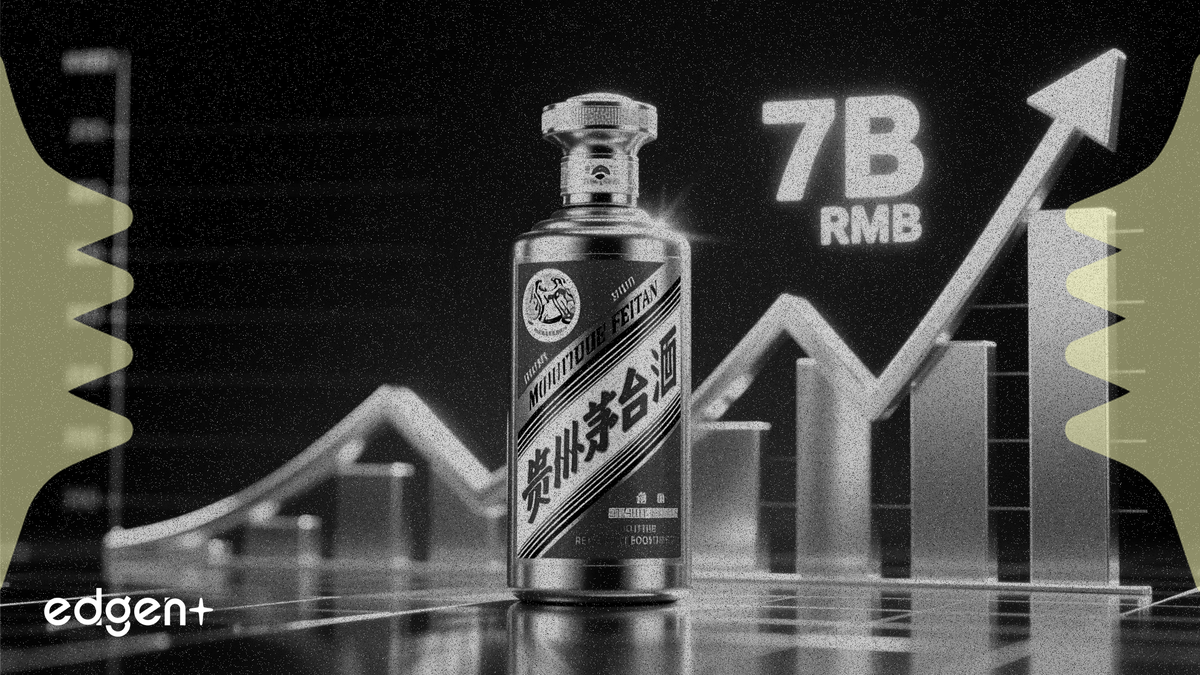
Price Hike to Generate 7 Billion RMB in Revenue
Kweichow Moutai will implement its first simultaneous increase of factory and retail prices in eight years, a decisive move to bolster its financial performance. Effective March 31, 2026, the sales contract price for its iconic 53% vol 500ml Feitian Moutai will climb by 100 RMB to 1,269 RMB per bottle, an 8.6% increase. Concurrently, the company's self-operated retail price will rise by 40 RMB to 1,539 RMB, bringing it in line with the current third-party wholesale price of approximately 1,545 RMB.
This price adjustment provides a direct injection of capital as the company navigates slowing growth. With net profit expansion slowing to an estimated 5.5% in 2025—a historically low figure for the premium distiller—the increase is critical. Based on analyst estimates, the dual hike is expected to add roughly 7 billion RMB in annual revenue and, after taxes, contribute around 3.5 billion RMB to net profit. The last such increase occurred in 2018, when an 18% average price rise helped propel Moutai's revenue up 26.5% and pushed its market capitalization past one trillion RMB for the first time.
iMoutai Platform Enables Strategic Shift from Distributors
The price hike is underpinned by the success of Moutai's direct-to-consumer e-commerce platform, iMoutai, which has fundamentally reshaped its market power. Launched in early 2026, the platform proved the company could release significant inventory at the official 1,499 RMB guide price without destabilizing the secondary market. In January alone, iMoutai processed over 1.43 million orders for Feitian, generating at least 2.14 billion RMB in revenue from that single product and giving the company direct insight into real consumer demand.
This strategic pivot directly impacts Moutai's traditional distribution network. The higher 1,269 RMB contract price increases procurement costs for distributors, while the smaller retail price bump compresses their profit margin from 330 RMB to approximately 270 RMB per bottle. This change erodes the viability of the long-standing distributor model of stockpiling inventory to capitalize on future price appreciation. It accelerates Moutai's channel reform, transforming distributors from speculators into service providers and solidifying the company's control over its own profit structure.