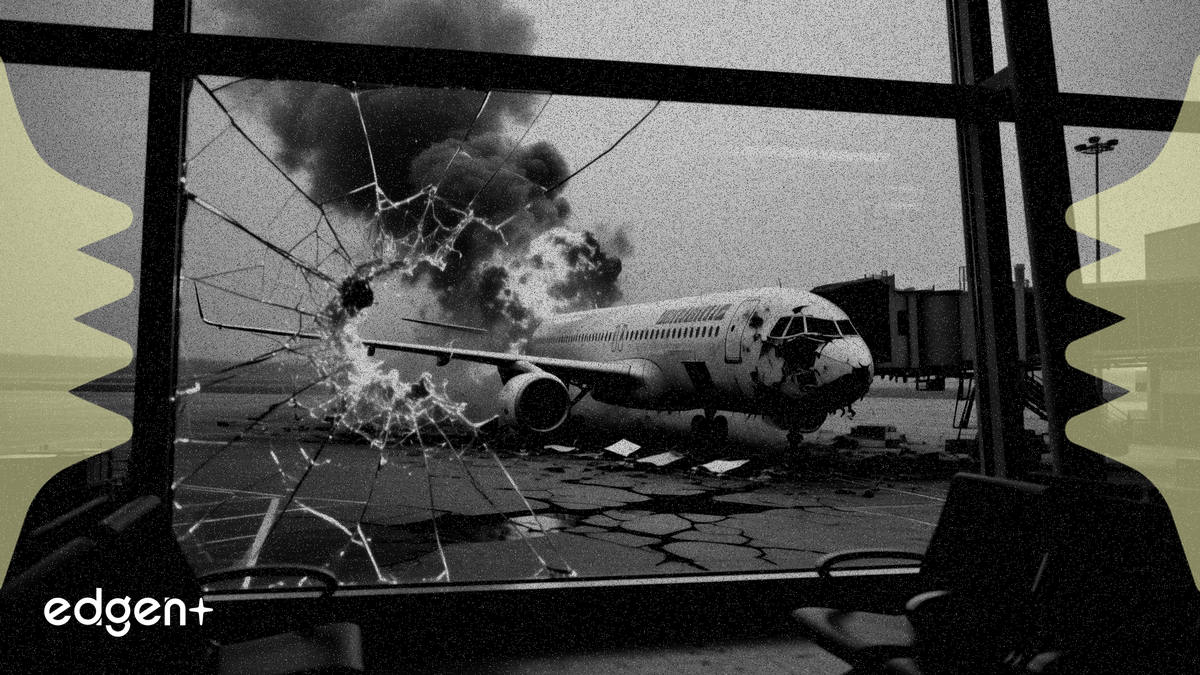
The escalating conflict in the Middle East has inflicted significant damage on at least nine civilian airports, forcing airlines to navigate active war zones and raising fears of a catastrophic event for commercial aviation.
“I’m not really comfortable, but I’m doing it, because I know the probability is that I’ll be fine,” said Sara Kahn Shapiro, a 66-year-old retired teacher traveling from Israel to the U.S. for family events.
Since the conflict intensified on February 28, the region's airspace has become a high-risk environment. At least five parked aircraft have been struck by missile or drone attacks, according to aviation-security firm Osprey Flight Solutions. The persistent threat has led to chaotic scenes, with air-raid sirens triggering passenger evacuations and hurried takeoffs in airports across Israel and the United Arab Emirates. In one instance, a flight from Tel Aviv to Athens was aborted on the tarmac as missile alerts sounded.
The incidents underscore the precarious new reality for one ofthe world's busiest travel hubs. Airlines are rerouting flights to avoid missile and drone threats, leading to longer flight times and increased fuel costs. Israel’s Ben Gurion Airport remains open, but authorities on March 23 briefly limited flights to one per hour and capped passengers at 50 per flight to mitigate risks. While some measures have eased, the situation remains volatile. The last time a commercial airliner was shot down by Iranian forces was in 2020, killing all 176 people aboard a flight taking off from Tehran.
Navigating a War Zone
Airlines and air traffic controllers are employing dynamic strategies to maintain operations. This includes using safer air corridors and adjusting altitudes to minimize time in threat zones, which can result in startlingly rapid takeoffs and landings.
Passengers have described harrowing experiences. An early morning Etihad flight from Abu Dhabi to London was evacuated twice due to missile alerts before finally taking off. In another incident, a passenger landing in Dubai filmed a nearby fuel tank on fire after being struck by a drone. The U.A.E. has responded by threatening jail time and fines up to $50,000 for sharing unapproved images of strike damage.
Warnings and Continued Travel
Despite the clear dangers, many travelers are proceeding with their plans. “To be honest, everyone was pretty chill,” said Guy Berman, a 28-year-old Israeli student, after his flight to Cyprus was delayed by air-raid sirens. “I think if you’re someone who’s sensitive about it or afraid, you just wouldn’t fly right now.”
However, aviation safety bodies are issuing stark warnings. Osprey maintains an extreme-risk warning for almost the entire region. Europe’s aviation regulator has gone further, advising airlines not to enter any Middle East airspace, with minor exceptions for high-altitude routes in western Saudi Arabia and Oman. Jamie Thornback, who represented families of the 2020 Tehran crash victims, warned, “Eventually somebody is going to get hit.”
This article is for informational purposes only and does not constitute investment advice.