

The new agreement grants OpenAI long-sought freedom, reshaping the competitive landscape for AI supremacy.
The new agreement grants OpenAI long-sought freedom, reshaping the competitive landscape for AI supremacy.
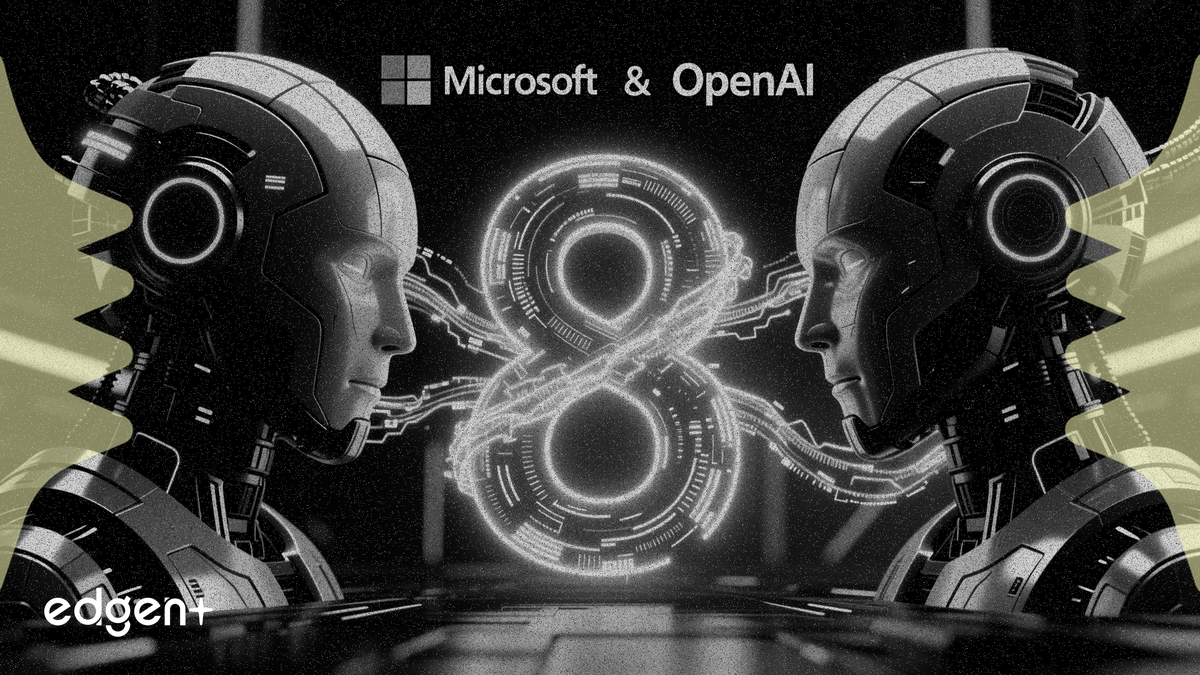
(Bloomberg) -- Microsoft and OpenAI have forged a new partnership agreement that significantly alters their long-standing relationship, giving the artificial intelligence startup more autonomy to work with rivals and reshaping the balance of power in the multitrillion-dollar AI industry. The deal, announced Monday, sent Microsoft shares down nearly 3 percent.
Under the reworked pact, Microsoft will remain OpenAI's primary cloud partner and hold a license to its intellectual property through 2032, but it will no longer have exclusive access to OpenAI's models. This allows the ChatGPT creator to sell its technology to other cloud giants, including Google and Amazon, a move that OpenAI has long desired.
The revised agreement ends Microsoft’s exclusive licensing rights and removes a contentious clause that would have limited Microsoft’s access to future technology if OpenAI achieved "artificial general intelligence." In return, Microsoft will no longer pay a revenue share to OpenAI, a significant financial shift for both companies.
The truce comes as OpenAI, reportedly valued at over $850 billion, considers an initial public offering as soon as this year. For Microsoft, which holds a 27 percent stake in the startup, the deal marks a strategic pivot to diversify its AI portfolio, as it already uses models from OpenAI’s competitor Anthropic in its 365 products.
The new agreement signals a fundamental change in the competitive dynamics of the AI sector. By relinquishing its exclusive rights, Microsoft is acknowledging the need for a more open and competitive ecosystem, while simultaneously developing its own in-house AI capabilities to reduce its dependency on OpenAI. This move could potentially dilute Microsoft's perceived advantage as the primary partner of the world's leading AI company.
For OpenAI, the freedom to partner with other cloud providers is a critical step toward diversifying its revenue streams and increasing its leverage in the market. The ability to sell its models on platforms like Google Cloud and Amazon Web Services opens up a vast new customer base and reduces its reliance on a single partner, a crucial factor as it eyes a potential IPO.
The relationship between Microsoft and OpenAI has been under intense scrutiny, particularly after the chaotic ouster and subsequent reinstatement of CEO Sam Altman in 2023. The previous agreement, which gave Microsoft significant control over OpenAI's intellectual property, had become a source of tension between the two companies.
The backdrop to this new deal is the ongoing legal battle between Elon Musk and OpenAI. Musk, an early investor who contributed $38 million to the startup, is suing OpenAI and Altman for allegedly betraying the company's original nonprofit mission. The trial, set to begin in California, could have significant repercussions for OpenAI's leadership and corporate structure.
The new, more flexible partnership may be an attempt by both Microsoft and OpenAI to present a more stable and independent front ahead of the trial and a potential IPO. The deal provides both companies with greater flexibility to navigate the rapidly evolving AI landscape, where alliances are constantly shifting and the race for dominance is intensifying.
This article is for informational purposes only and does not constitute investment advice.