

Micron Technology's slide to $934.66 marks the latest leg of a selloff driven by Netlist's ITC patent actions and a broad memory-chip retreat.
Micron Technology's slide to $934.66 marks the latest leg of a selloff driven by Netlist's ITC patent actions and a broad memory-chip retreat.
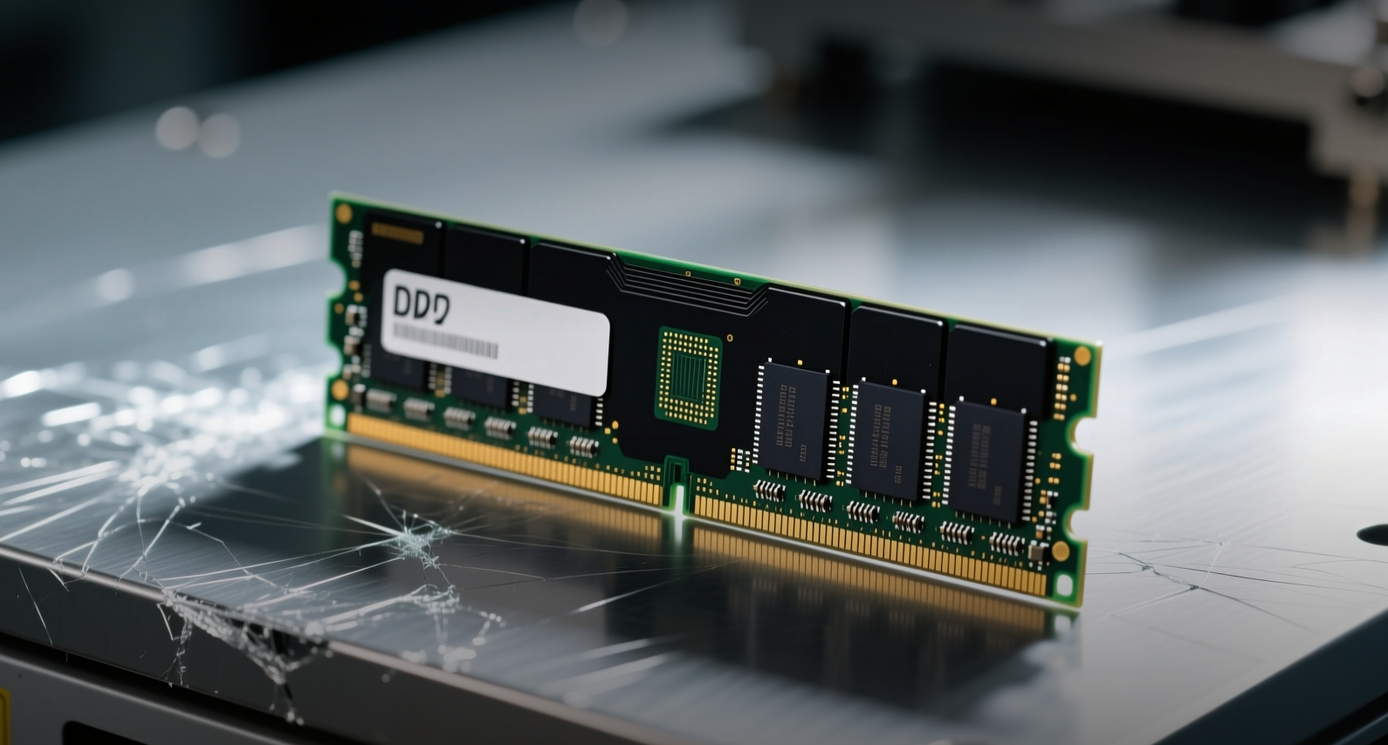
Micron Technology fell 3.3 percent to $934.66 on Monday as Netlist's patent actions at the U.S. International Trade Commission threatened to block DDR5 memory imports.
New Street Research upgraded Micron to Buy on Aug. 14 with a $1,250 price target, while Citigroup maintained its Buy rating but trimmed its forecast to $1,150 on Aug. 7, according to analyst reports.
Micron's decline came as the broader memory sector sold off, with SanDisk falling 10.9 percent and Samsung Electronics dropping more than 8 percent, dragging South Korea's KOSPI lower. Nasdaq futures fell 0.52 percent while S&P 500 futures slipped 0.13 percent, as a resurgence in U.S. Treasury yields renewed concerns over financing costs for hyperscale cloud providers.
The stakes are high: DDR5 modules are central to Micron's AI and data center growth story, and ITC exclusion orders could block some U.S. sales. Micron's next major event is its earnings report, expected Sept. 22, with analysts projecting earnings of $31.26 per share on revenue of $50.78 billion.
Netlist has opened a new front against Micron, filing actions at both the U.S. International Trade Commission and federal court accusing the memory maker of infringing multiple DDR5 RDIMM and MRDIMM patents. The company is seeking exclusion orders that, if granted, would block Micron's allegedly infringing DDR5 products from being imported and sold in the United States.
DDR5 is a core part of the AI and data center upgrade cycle. If Micron faces limits on selling certain DDR5 modules, traders have to price in possible revenue pressure and customer disruption, even if the legal process drags on. This kind of overhang rarely disappears quickly; it becomes a steady source of headline risk.
Micron's financial profile is strong. The company reported an EBIT margin near 65.7 percent and gross margin of 72.6 percent, with revenue over the last year around $37.4 billion and top-line growth of more than 70 percent over three years. The balance sheet carries light leverage, with total debt to equity of 0.06, a current ratio of 3.4, and return on equity above 60 percent on a trailing basis.
The flip side is valuation. Micron trades at roughly 21.9 times earnings and about 12.1 times sales, rich for a notoriously cyclical memory name. The price-to-book ratio near 10.8 shows traders are paying up for the AI and DDR5 story. Recent daily charts show MU swinging from roughly the low-800s to above 1,000 in a few weeks, then pulling back, confirming a high-beta, momentum-driven environment.
Technically, the picture is mixed. Micron remains 64.1 percent above its 200-day simple moving average of $571.10 and 15.9 percent above its 100-day SMA of $808.40. But the stock is 2.8 percent below its 50-day SMA of $964.59, with the relative strength index at 54.90, pointing to consolidation rather than overbought conditions. Key resistance sits near $1,012, with support around $891.50.
For active traders, MU is a "strong company, weak tape" setup. Micron is throwing off huge cash, with about $25.4 billion in operating cash flow and roughly $17.6 billion in free cash flow in the latest quarter. But the market does not trade the spreadsheet alone. The Netlist patent actions put a spotlight on Micron's DDR5 product line right as that line is central to its growth story. Add in the string of sharp declines — 8.8 percent in a broad chip selloff, then multi-day premarket drops of 2.8 percent and 4.9 percent — and you have a stock that is clearly under distribution.
This is where discipline matters. MU offers big swings for day and swing traders, but those same swings can punish anyone who gets stubborn. As Tim Bohen, lead trainer at StocksToTrade, said, "I never chase price. The best opportunities allow me to enter on my terms, not when I'm feeling pressured." For Micron, that means respecting the trend, tracking every legal headline, and letting price action — not hope — guide your trading plan.
This article is for informational purposes only and does not constitute investment advice.
