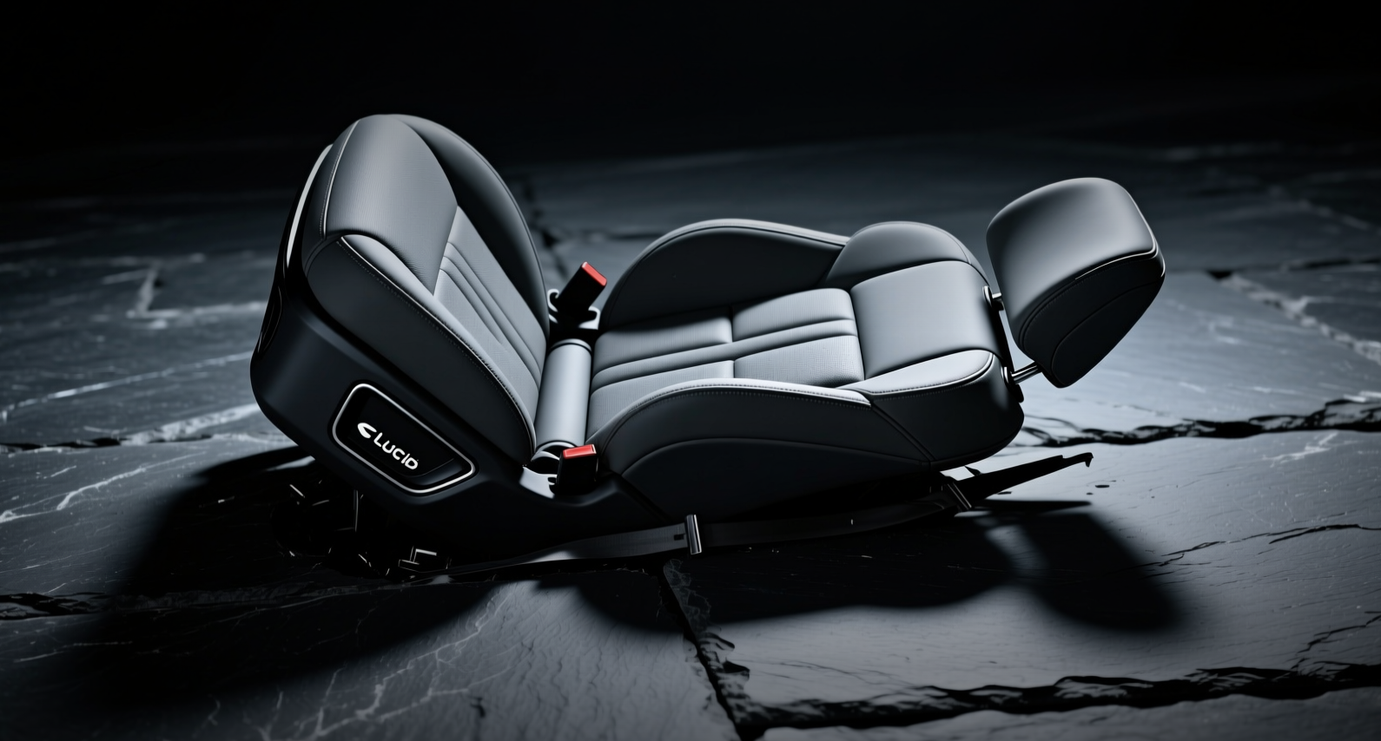
Lucid Group faces a securities class action after a supplier issue halted Gravity SUV deliveries for 29 days during the first quarter.
"The company's ability to meet customer demand was impacted," Interim Chief Executive Officer Marc Winterhoff said in an April 3 press release disclosing the disruption, according to the complaint filed July 22 in the US District Court for the Northern District of California.
Lucid produced 5,500 vehicles in Q1 2026 but delivered only 3,093, a gap the company attributed to a supplier quality problem with second-row seats for the Gravity SUV. The disruption began in February, when Lucid paused production to reverse an unauthorized supplier change and inspect vehicles already built. The company's preliminary Q1 revenue of $280 million to $284 million fell well short of the $433.8 million consensus estimate, while losses from operations reached $985 million to $1.005 billion. GAAP earnings per share of negative $3.46 missed estimates by $0.83.
The lawsuit, docketed under 26-cv-05128, seeks damages for investors who purchased Lucid securities between Feb. 25 and April 13, alleging the company made false statements about enhancements to its manufacturing and delivery capabilities. The complaint cites statements from late February touting sustainable improvements in production and the ramp-up of Gravity deliveries, which the plaintiffs argue were misleading given the supplier issue that had already emerged. The suit names Winterhoff and Chief Financial Officer Taoufiq Boussaid as defendants, along with the company.
Lucid's stock fell 11.35 percent over two sessions after the April 3 disclosure, closing at $8.83 on April 7, then dropped another 4.76 percent to $8.80 on April 14 after the company announced a $1.05 billion capital raise that included a $300 million public stock offering. The stock now trades near its lowest levels since the company went public via a SPAC merger in 2021. Investors have until July 28 to seek appointment as lead plaintiff. The law firms Pomerantz LLP and Bronstein, Gewirtz & Grossman LLC are among those representing shareholders in the action.
The Gravity SUV, launched in late 2025, was expected to be a key growth driver for Lucid as it competes with Rivian Automotive Inc. and Tesla Inc. in the electric SUV market. The delivery disruption delayed what the company had projected as a critical ramp-up period. Lucid ended the quarter with elevated inventory that Winterhoff said the company expected to convert to revenue as deliveries normalized.
The company faces the challenge of restoring investor confidence after the stock lost more than 15 percent in the two weeks following the disclosure. The next catalyst for Lucid will be the resolution of the supplier issue and the normalization of Gravity deliveries in the coming quarters, along with the company's Q2 2026 earnings report.
This article is for informational purposes only and does not constitute investment advice.