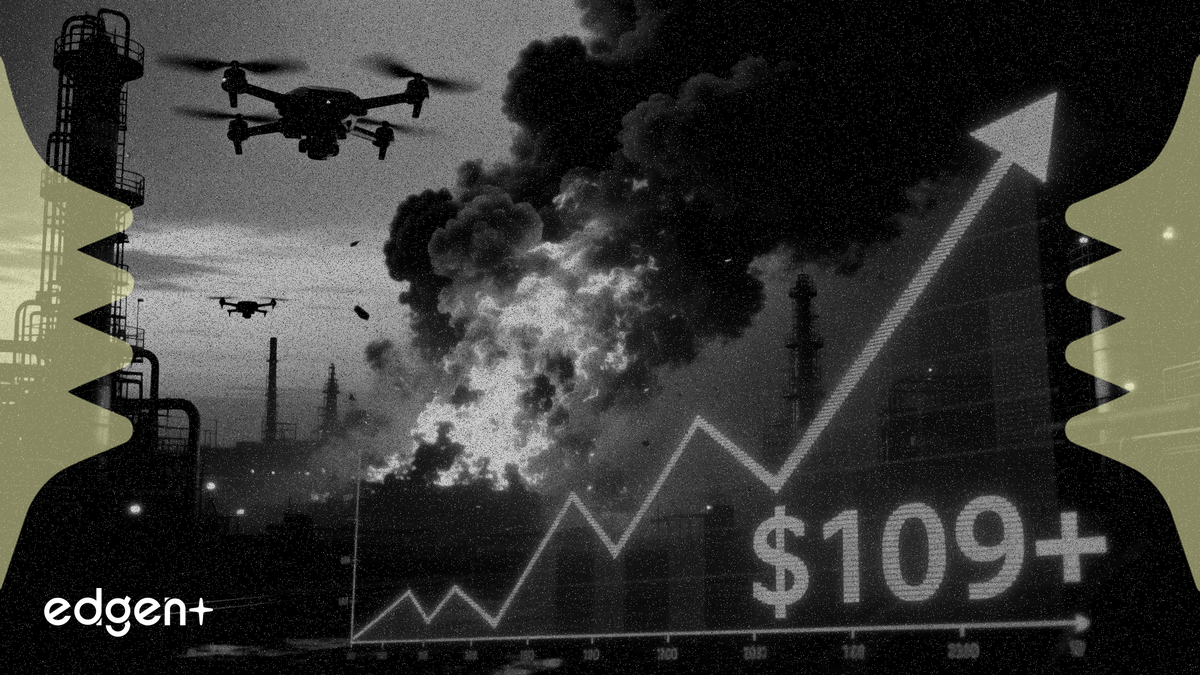
(P1) A coordinated drone assault attributed to Iran struck Kuwait’s primary oil complex and power plants Sunday, escalating a regional conflict that has shuttered a critical shipping lane and sent global energy prices soaring more than 50 percent this year. The attacks, which caused significant material damage but no casualties, hit the Shuwaikh oil sector complex—home to the state-run Kuwait Petroleum Corporation (KPC) and the Oil Ministry. Brent crude held above $109 a barrel in response to the widening conflict.
(P2) "The genie is out of the bottle," said Neil Quilliam, an associate fellow at the Chatham House think tank, in a Reuters analysis. "Now that Hormuz has been closed, it can be closed again and again, and that poses a major threat to the global economy."
(P3) The strikes on Kuwait are part of a broader series of regional attacks, with Iran’s Islamic Revolutionary Guard Corps (IRGC) also claiming responsibility for incidents in Bahrain and the United Arab Emirates. In Bahrain, Bapco Energies confirmed a fire at a storage tank, while Saudi Arabia announced it had intercepted an Iranian cruise missile. The escalation follows Iran's effective closure of the Strait of Hormuz, a chokepoint for nearly 20 percent of the world's daily oil consumption, which has created the largest supply disruption in history.
(P4) The attacks occurred just as OPEC+ members agreed to a modest 206,000 barrel-per-day output increase for May. However, the move is largely symbolic while tankers cannot safely transit the Strait. The disruption has created a stark divide among Gulf producers: countries like Saudi Arabia and the UAE, which can bypass the strait with pipelines, are weathering the crisis, while the oil-dependent economies of Iraq and Kuwait have seen export revenues plunge by an estimated 75 percent.
A Region on Edge
The drone strikes targeted not only the KPC headquarters but also two power and water desalination plants in Kuwait, causing what the government described as "severe material damage" to generators and fuel tanks. The attacks underscore the vulnerability of critical energy infrastructure across the Middle East as the conflict, which began in late February, enters its second month.
The sustained disruption has had a dramatic impact on global energy markets. Brent crude, which traded near $70 a barrel before the conflict, surged to a peak of $119.50 in March and continues to trade at elevated levels. This has translated directly to higher costs for consumers, with average US fuel prices passing $4 a gallon for the first time in four years, according to The Guardian.
Diverging Fortunes for Oil Producers
The effective blockade of Hormuz has bifurcated the fortunes of OPEC members. While Iraq and Kuwait are facing a severe revenue shock, Saudi Arabia has managed to maintain exports via its 1,200-kilometer East-West pipeline to the Red Sea port of Yanbu. The kingdom’s ability to bypass the strait, combined with soaring prices, increased its oil export revenues by 4.3 percent in March compared to a year earlier, a Reuters analysis found.
The crisis now hinges on diplomatic efforts to de-escalate the conflict and reopen the vital waterway. With Iran rejecting ultimatums and the U.S. threatening further action, the risk premium priced into global energy markets is set to remain high, prolonging inflationary pressures on the world economy.
This article is for informational purposes only and does not constitute investment advice.