

Kuaishou’s Kling AI is shifting the film and television industry from a battle of resources to a competition of pure imagination.
Kuaishou’s Kling AI is shifting the film and television industry from a battle of resources to a competition of pure imagination.
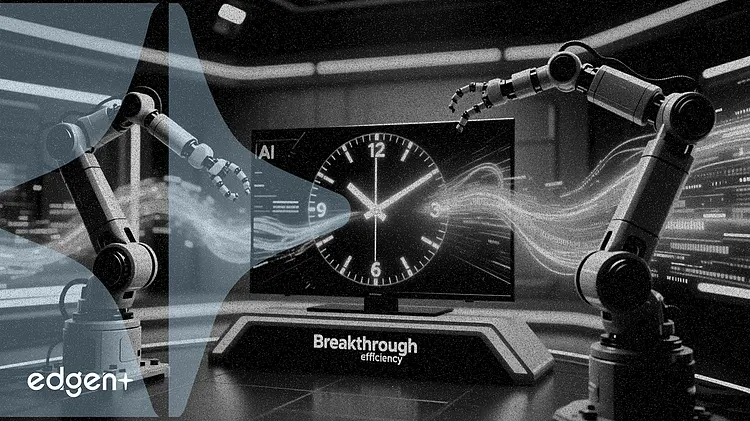
Kuaishou’s Kling AI is shifting the film and television industry from a battle of resources to a competition of pure imagination.
Kuaishou Technology’s Kling AI is dramatically reshaping the economics of film and television, slashing production costs by more than two-thirds and shortening production cycles by over 60 percent for certain projects. The development positions the short-video giant as a formidable player in the AI-driven content creation space, posing a direct challenge to traditional visual effects and production houses.
"Kling AI is moving from 'capable of generating' to 'capable of delivering'," Ma Hongbin, Senior Vice President of Kuaishou-W (01024.HK), said at the 13th China Internet Audio-Visual Conference. He revealed the AI has penetrated deeply into the professional film and television production chain, demonstrating its real-world application.
In the production of the TV drama "Taiping Year," Kling AI was used to generate certain virtual scenes, compressing a task that traditionally takes two months into just two weeks. For the popular micro short drama segment, industry feedback indicates production costs can be reduced to less than one-third of traditional methods, a significant margin improvement.
This efficiency leap is highly bullish for Kuaishou, potentially creating a new monetization stream and a strong competitive moat. For the broader media sector, it signals a disruptive shift, forcing a re-evaluation of production methods and cost structures. The stock, trading on the Hong Kong Exchange under ticker 01024.HK, could see renewed interest as its AI strategy bears fruit.
The core of Kuaishou's advancement lies in Kling AI's ability to move beyond simple AI video generation to producing content that meets the standards of professional film and television. While many AI models can generate short clips, few have been successfully integrated into a high-budget production workflow. The use of Kling in "Taiping Year" serves as a crucial proof-of-concept, demonstrating its capability to handle complex virtual scenes that are both time-consuming and expensive to create with conventional CGI. This transition from a novelty to a practical tool is what sets it apart from competitors in the generative AI video space.
The dramatic cost and time savings enabled by Kling AI could upend the competitive dynamics of the content production industry. Traditional visual effects studios, which rely on large teams of artists and extensive render farms, may find their business models under threat. Kuaishou, by contrast, can offer a faster, cheaper alternative, potentially capturing a significant share of the market for virtual scene creation and short-form video production. This could also lower the barrier to entry for smaller creators, leading to an explosion of new content and further fueling the growth of platforms like Kuaishou itself. The move echoes the disruption seen in other industries, where AI has automated tasks previously done by skilled professionals, from copywriting to software development.
This article is for informational purposes only and does not constitute investment advice.