
A fresh disruption in the Strait of Hormuz is sending a wave of risk aversion through global currency markets, strengthening the U.S. dollar and pressuring commodity-linked currencies.
A fresh disruption in the Strait of Hormuz is sending a wave of risk aversion through global currency markets, strengthening the U.S. dollar and pressuring commodity-linked currencies.
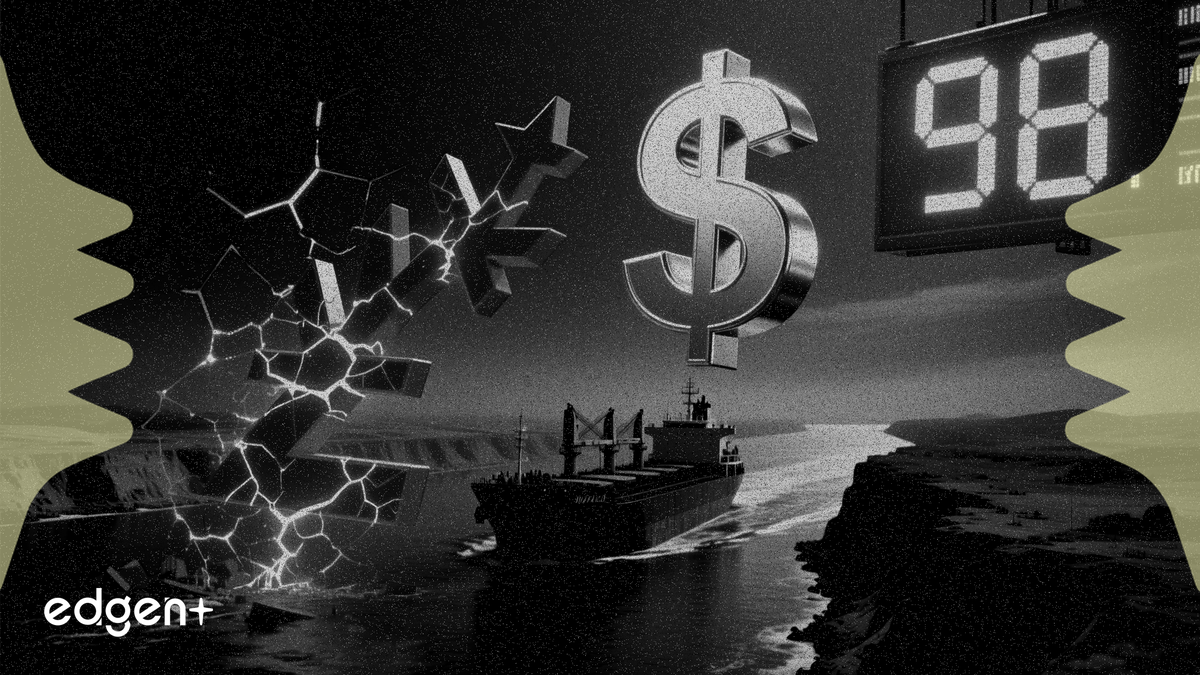
The New Zealand dollar came under significant pressure on Tuesday as a renewed disruption in the Strait of Hormuz fueled a flight to safety, pushing the U.S. Dollar Index back above the 98.0 mark and causing oil prices to surge more than 5 percent.
"Any sign of escalating conflict in the Gulf immediately triggers safe-haven demand for the dollar," said Paresh Upadhyaya, director of market strategy at Pioneer Investments, in a recent note. "Is there any reason for the dollar to be pricing in a zero geopolitical risk premium? I would argue not."
The move reverberated across asset classes, with Brent crude futures jumping 5.4% to $100.40 a barrel, while West Texas Intermediate climbed 5.3% to $101.70. The U.S. Dollar Index (.DXY), which measures the greenback against a basket of six major peers, built on its previous close of 98.07, reflecting investor demand for liquidity. This renewed dollar strength weighed heavily on risk-sensitive currencies, including the Kiwi and the Australian dollar, which are often sold off during periods of global uncertainty.
The disruption highlights the market's vulnerability to geopolitical shocks in the Middle East, a critical artery for about 20 percent of the world's oil supply. A sustained closure could not only drive energy prices higher, exacerbating global inflation concerns, but also force a broader de-risking across portfolios that would further benefit the dollar at the expense of currencies like the NZD. The key question for markets is whether this is a temporary flare-up or the start of a more prolonged blockage that could impact the global economy.
The dollar's rally on Tuesday marks a partial reversal of a recent trend. The greenback had given back most of its war-related gains earlier in April as traders anticipated a de-escalation of the U.S.-Iran conflict. The dollar index, which had surged over 3% to a 10-month high of 100.64 after the conflict began, had retreated 1.9% through mid-April as peace talks showed signs of progress.
Hedge funds had reportedly been increasing their bearish bets against the currency. "The hedge fund community has actually been waiting for an opportunity to sell the US dollar, and the first ceasefire agreement happened to be the best catalyst," noted Antony Foster, head of G10 spot trading at Nomura International in London, commenting on activity last week. However, the latest events in the Hormuz strait underscore the dollar's persistent role as the world's primary sanctuary in times of crisis.
The economic stakes of a prolonged Hormuz closure are immense. Analysts have warned that a significant loss of oil and LNG supply could tip the global economy into a severe recession. According to analysis from Kurt Cobb at Oilprice.com, a sustained 12 percent loss of oil from the strait, combined with disruptions to LNG, could remove 4.5 percent of the world's total energy supply, potentially contracting global GDP by a correlated 4 percent. For comparison, U.S. real GDP fell 4.3 percent during the entire Great Recession.
While some analysts believe the geopolitical risk premium will eventually fade, the market remains on edge. "We see these as temporary phenomena as we believe the U.S. is looking for ways to de-escalate," said Standard Chartered's Steve Brice. Yet, for now, the path of least resistance for the dollar is higher as long as traffic in the vital shipping lane remains halted, keeping pressure on currencies like the NZD that are tied to global growth and risk appetite.
This article is for informational purposes only and does not constitute investment advice.