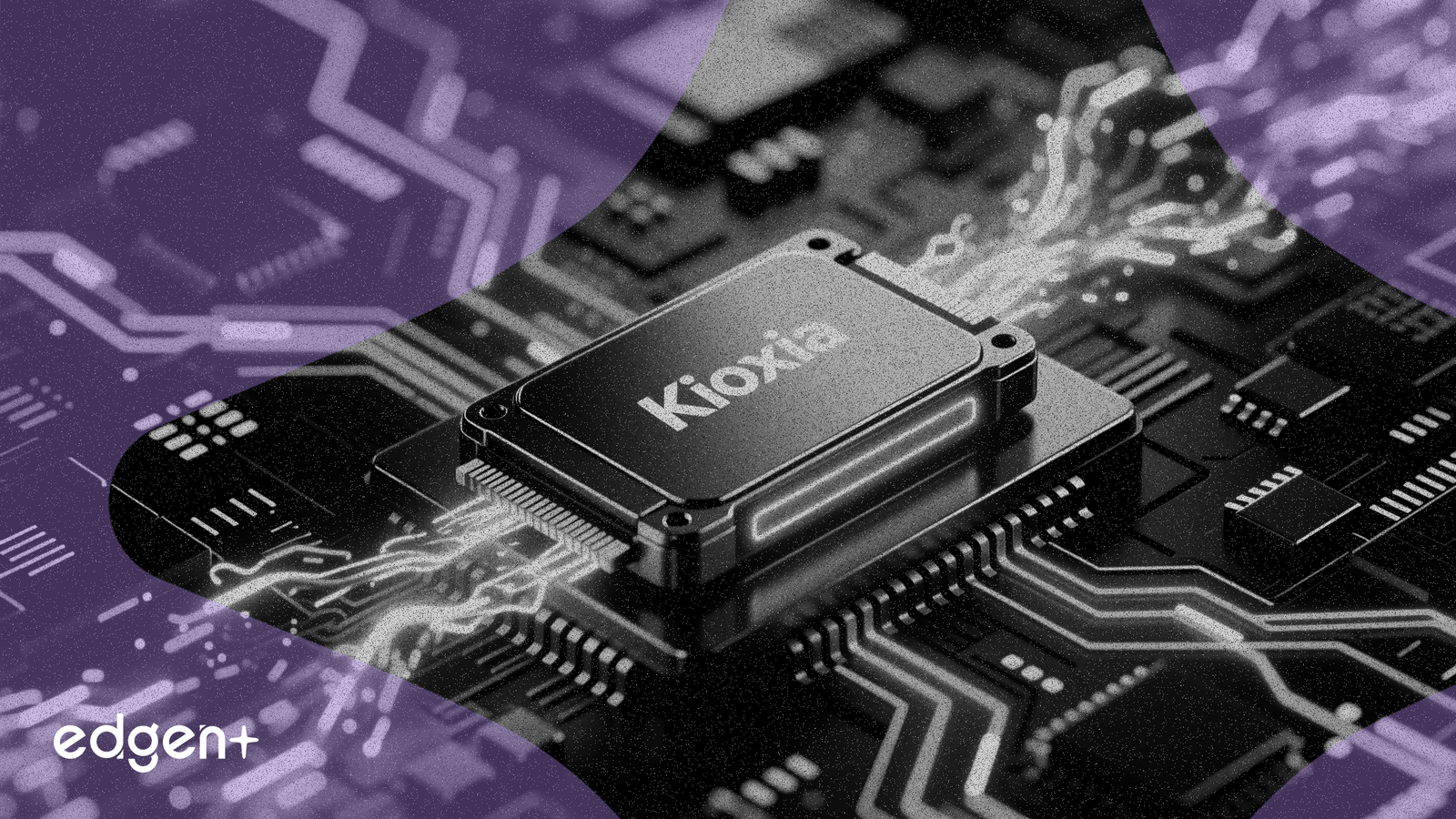
Kioxia Debuts SSD with Over 100 Million IOPS
On March 16, 2026, Tokyo-based Kioxia announced the development of its "Super High IOPS SSD," a new solid-state drive engineered to remove critical storage bottlenecks in artificial intelligence infrastructure. The drive's architecture enables a system's GPU to directly access high-speed flash memory, a significant departure from conventional data pathways. This innovation targets the performance-intensive demands of AI training and inference workloads, which often leave expensive GPUs waiting for data.
The announcement was strategically timed for the start of NVIDIA's GTC 2026 conference, a premier global AI event running from March 16-19. Kioxia plans to demonstrate the technology's potential at the conference using an emulator capable of delivering over 100 million Input/Output Operations Per Second (IOPS). This level of performance is designed to keep pace with the most demanding AI environments, including large-scale data processing and retrieval-augmented generation (RAG) pipelines.
Storage Becomes AI Battleground at GTC 2026
Kioxia's hardware-focused innovation is part of a larger trend emerging at GTC 2026, where storage architecture is taking center stage as a key competitive differentiator for AI performance. While Kioxia is focused on raw hardware speed, competitors are tackling the same problem from a service-oriented angle. Rival storage firm Everpure, for instance, used the conference to announce its "Evergreen One for AI" offering.
Everpure's model provides a flexible, consumption-based service for its high-performance FlashBlade//Exa storage, with service-level agreements (SLAs) directly tied to a customer's GPU count. This strategy guarantees that the storage infrastructure provides sufficient throughput to keep GPU resources fully utilized, shifting the performance risk from the customer to the vendor. These parallel announcements from major storage players underscore a critical market shift: as AI models grow more complex, optimizing the data pipeline is now as important as the computational power of the GPUs themselves.