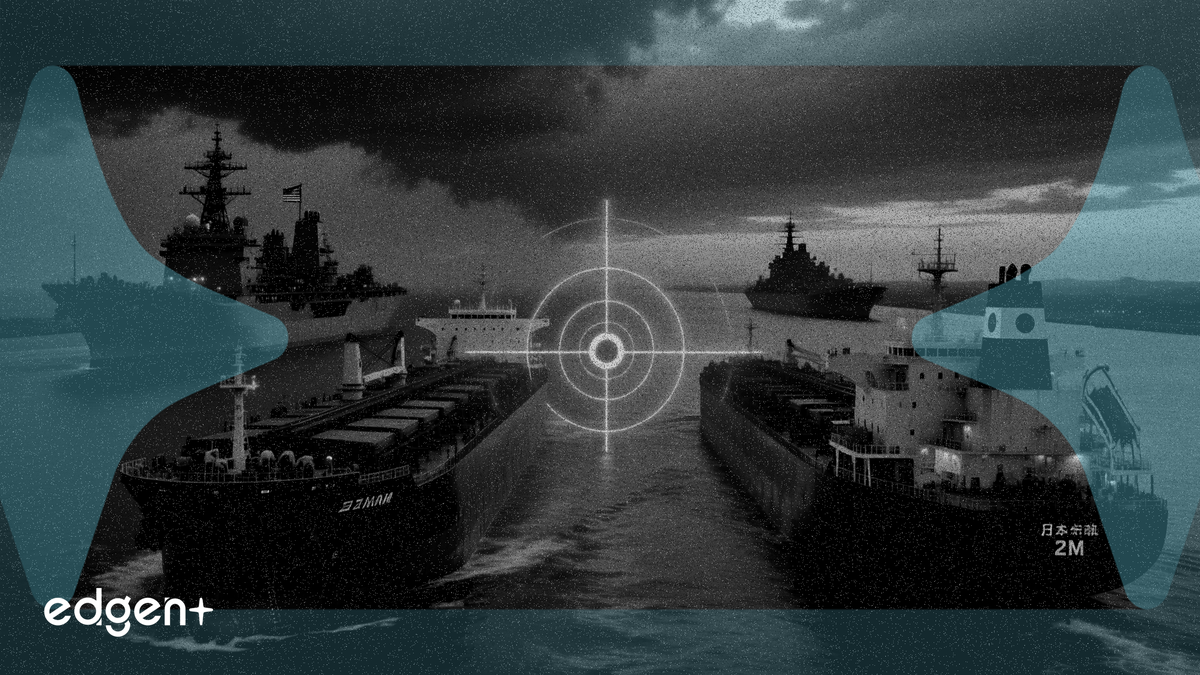
A Japanese tanker carrying 2 million barrels of oil has successfully transited the Strait of Hormuz, challenging a two-week-old US maritime blockade of Iran by using a route approved by Tehran.
The successful passage of the Idemitsu Maru marks a significant strategic shift for Japanese refiners, who are now testing the limits of a US-led maritime blockade on Iran to secure critical energy supplies from the Persian Gulf.
"Iran has achieved absolute control over the Strait of Hormuz," Iran's Islamic Revolutionary Guard Corps Navy Deputy Commander said on April 28, demanding ships pay passage fees and use Persian for communications, highlighting the local control asserted over the waterway.
The Panama-flagged very large crude carrier, laden with 2 million barrels of Saudi crude, completed its transit on Tuesday after traffic in the vital chokepoint collapsed to just seven vessels in 24 hours, down from a pre-conflict average of over 125, according to data from Kpler and SynMax. The US Navy has diverted 39 vessels since its blockade began.
With roughly 95 percent of Japan's oil imports originating from the Middle East, the voyage poses a critical test of the blockade's durability. The Idemitsu Maru's success could encourage more tankers to follow its Iranian-approved path, potentially undermining the US pressure campaign, or it could provoke a more severe US enforcement action, raising the stakes for global oil prices.
Japan Prioritizes Energy Security
Before the Idemitsu Maru's transit, Japanese firms like its operator Idemitsu Kosan had adopted a cautious stance, relying on costly and inefficient ship-to-ship transfers outside the Gulf. They also increased purchases of US crude, which is transported on smaller tankers, to avoid the conflict zone.
The decision to send one of the world's largest oil tankers through an Iranian-sanctioned shipping lane signals that the calculus has changed. The vessel, which loaded its cargo in Saudi Arabia in early March, had been waiting in waters northwest of Abu Dhabi for over a week before starting its journey on Monday evening. Its destination is Nagoya, Japan, with an estimated arrival of May 18, according to LSEG shipping data.
A Calculated Risk Amid High Tensions
The Idemitsu Maru's passage is one of the largest to challenge the US maritime blockade since it was initiated two weeks ago following military action against Iran. While other smaller Japanese-linked vessels carrying liquefied petroleum gas have passed, a VLCC represents a far more significant test case.
The transit occurred as the US Central Command continues its blockade operations. On the same day, the US Navy boarded a container ship to verify it was not heading to an Iranian port. Iran, in turn, has maintained a defiant posture. Its permanent mission to the UN asserted its right to take "necessary and reciprocal measures" to counter security threats, blaming the US for any disruption to shipping.
This article is for informational purposes only and does not constitute investment advice.