
A decisive Israeli air campaign has taken an estimated 85% of Iran’s petrochemical export capacity offline, striking the core of the nation's economy and its ability to fund military operations.
A decisive Israeli air campaign has taken an estimated 85% of Iran’s petrochemical export capacity offline, striking the core of the nation's economy and its ability to fund military operations.
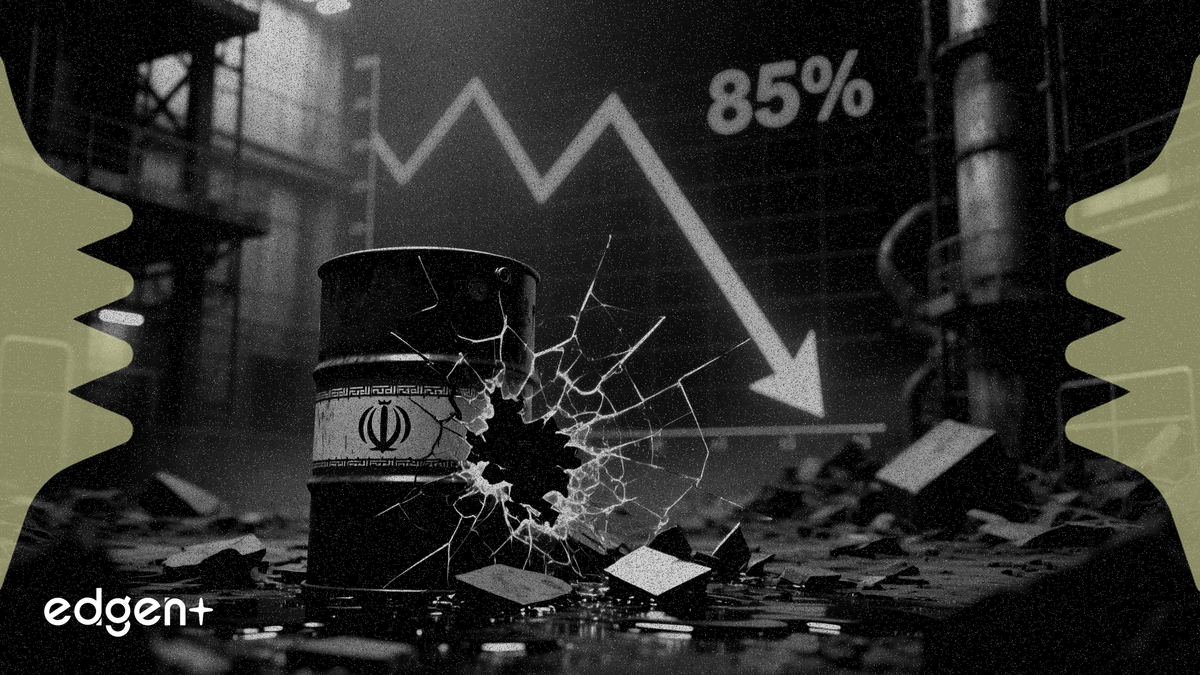
(P1) A series of Israeli airstrikes has incapacitated roughly 85 percent of Iran’s petrochemical export capacity in a major escalation of economic warfare. The attacks on April 8 targeted the country's largest production facilities, threatening a severe and sustained shock to Iran's economy as geopolitical tensions in the region approach a boiling point.
(P2) "The two sites together are responsible for roughly 85% of Iran’s petrochemical exports and are now out of operation," Israeli Defense Minister Israel Katz said in a statement. He described the damage as a "severe economic blow worth tens of billions of dollars."
(P3) The primary target was the South Pars petrochemical facility in Asaluyeh, which alone accounts for about 50 percent of Iran's output. A previous strike last week hit the Mahshahr Petrochemical Special Zone, according to Iranian officials and reports from Fars news agency. Katz asserted that Iran’s petrochemical industry is a central source of funding for the Islamic Revolutionary Guard Corps (IRGC) and the country's military buildup.
(P4) The strikes carry immense strategic weight, directly targeting Tehran's revenue streams at a time when diplomatic off-ramps appear to be closing. Iran has reportedly rejected a 45-day ceasefire proposal, while a US deadline for reopening the critical Strait of Hormuz looms, raising the risk of a wider conflict that could keep global energy prices elevated for an extended period.
The attacks are the latest in "Operation Roaring Lion," a campaign that appears aimed at systematically dismantling Iran's economic infrastructure. Beyond the petrochemical plants, reports also indicated an attack on the Arak Aluminum plant. The strategy, as outlined by Katz, is to ensure that continued attacks on Israel lead to "further economic and strategic damage" for Tehran. The strikes coincided with the killing of Major General Majid Khademi, the intelligence chief of the IRGC, in a separate Israeli airstrike, further heightening the stakes.
The financial impact is substantial. The petrochemical sector is a vital non-oil export for Iran, and its disruption cuts off a key source of foreign currency used to finance the IRGC and its proxies. The move is designed to cripple Tehran's ability to wage its shadow war across the Middle East by hitting it where it hurts most: its wallet.
The escalation has sent ripples through global energy and commodity markets, which remain highly sensitive to geopolitical developments in the region. The Strait of Hormuz, a chokepoint for nearly a third of the world's sea-borne oil, has been effectively closed by the conflict, forcing nations like South Korea to seek alternative supply routes.
According to a recent report from SBI Mutual Funds, current crude prices are already sitting about 50 percent above the Reserve Bank of India's $70 per barrel assumption, creating significant inflationary pressure. The report warned that the "rising likelihood of more frequent geopolitical disruptions will lead to precautionary inventory builds and strategic reserve expansions, keeping crude prices elevated for an extended period." While gold and silver prices have also seen volatility, analysts note that geopolitics remains the primary market driver this week.
This article is for informational purposes only and does not constitute investment advice.