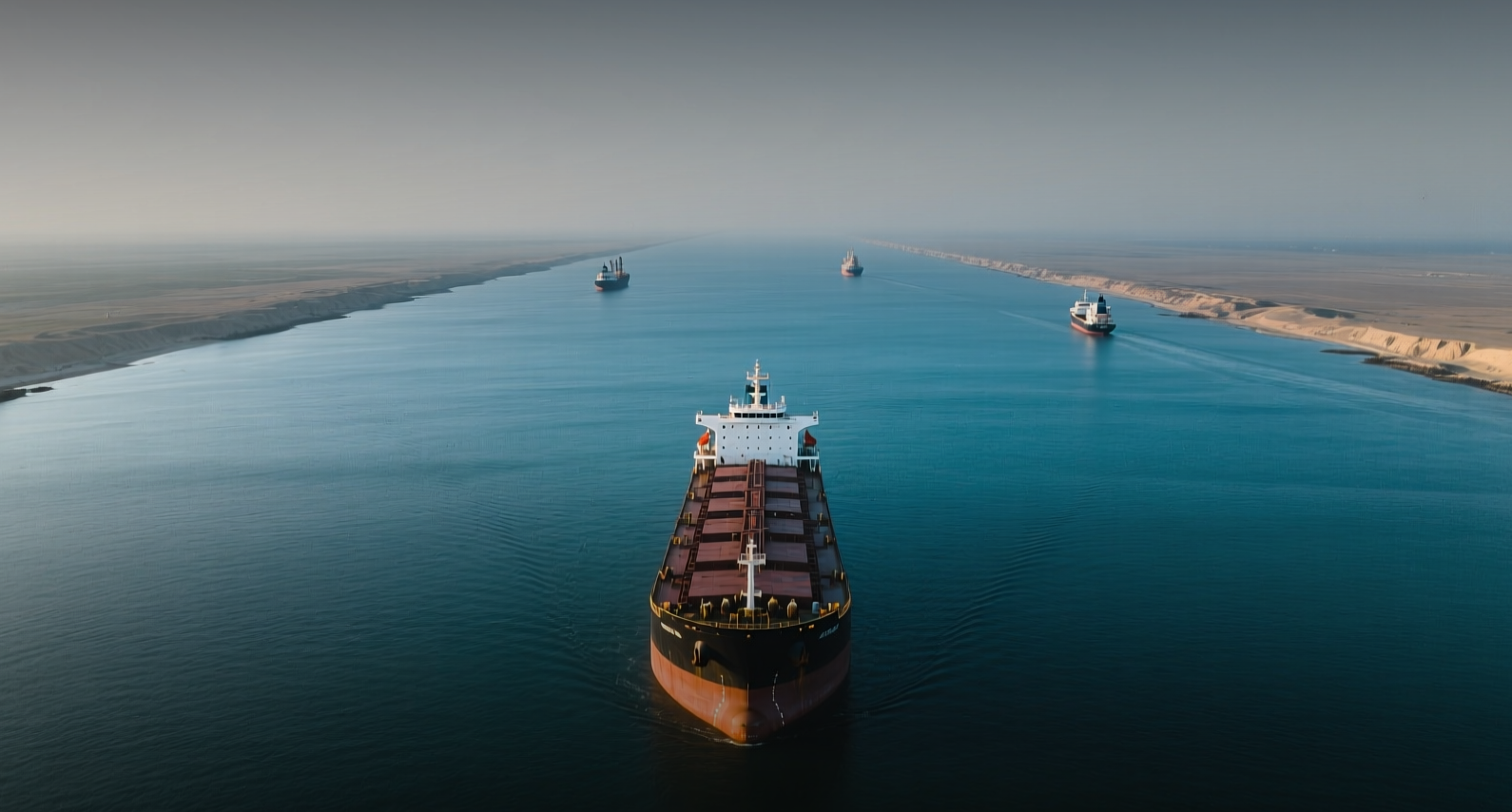
Iran's shift from commercial shipping to ballistic missile attacks on US warships marks the most dangerous escalation in six months of war, pushing crude toward $120 a barrel as Goldman Sachs flags prolonged supply disruption risk.
"Events over the last few days do suggest that the risk of shipping disruptions broadening and intensifying is an important one," Daan Struyven, co-head of global commodities research at Goldman Sachs, said in a Bloomberg TV interview Sunday.
Oil prices extended gains near six-week highs Monday after the US struck three Iranian oil tankers Saturday in response to ballistic missile launches at US warships. Iran state media said the improved solid-fueled Qassem Basir missile — carrying a half-ton warhead with at least 1,200-kilometer range — demonstrates Tehran's new doctrine of preemptive action. The White House dismissed Iran's planned "exclusion zone" near the strait, saying the waterway remains open and under US control, while Kpler data showed transits through the chokepoint dropped sharply last week.
The escalation carries direct implications for global energy markets. The Strait of Hormuz handles roughly 21 percent of global oil trade, and Goldman projects crude could reach $120 a barrel if shipping attacks intensify — or fall to $80 if exports normalize. With 94 commercial vessels already redirected and three disabled, the risk premium embedded in crude prices reflects a market pricing sustained disruption rather than a temporary flare-up.
Rezaee, who heads Iran's Supreme National Security Council, claimed the new missile capability had been "tested" against a US warship, though it was unclear whether the test involved the Qassem Basir itself. The announcement follows a week in which an attack on a Saudi-owned tanker killed two crew members and left seven unaccounted for — potentially the deadliest strike on a commercial vessel since the war began Feb. 28 with US and Israeli strikes on Iran.
Saturday's missile launches against US naval assets marked a departure from the conflict's earlier phase, when Iran's attacks at sea had targeted commercial shipping rather than warships. The US Navy had previously been able to keep the strait open while enforcing a blockade on Iranian ports to limit oil exports, a strategy Washington continues to pursue.
Gulf states are increasingly vocal about the economic toll. The UAE, a close US ally that has come under repeated Iranian missile and drone fire, suspended all trade with Iran last month. "No single state should control the strait," Anwar Gargash, diplomatic adviser to the UAE president, said at a forum in Abu Dhabi. "Our energy exports will not be held hostage, nor will our trade and economic activity." Nabil Fahmy, secretary-general of the Arab League, told a ministerial meeting in Cairo that "we will not accept our maritime corridors to become a bargaining chip in the calculations of others."
The last time the strait faced comparable disruption risk was during the 2019 tanker attacks, when Brent spiked roughly 15 percent within two weeks before tensions eased. The current conflict has already run six months with no diplomatic off-ramp visible, and Iran's shift toward targeting US warships raises the probability of direct military confrontation that could close the waterway entirely.
For investors, the transmission chain runs through multiple asset classes. Defense and aerospace stocks have outperformed as the conflict persists, while gold and US Treasuries have drawn safe-haven flows. The VIX remains elevated relative to pre-war levels, reflecting a market that has learned to price geopolitical risk as a persistent feature rather than a transient shock.
The key question now is whether Washington's response — striking Iranian oil tankers while maintaining a naval blockade — will deter Tehran or provoke further escalation. If Iran follows through on its exclusion zone and begins interdicting vessels on a route it does not control, oil could test the $120 level Goldman has flagged. If the US Navy's mine-clearing operations and convoy system hold, the risk premium could compress as quickly as it expanded.
This article is for informational purposes only and does not constitute investment advice.