
A new digital front has opened in the Middle East conflict, with at least 7 major subsea internet cables in the Strait of Hormuz now facing heightened risk.
A new digital front has opened in the Middle East conflict, with at least 7 major subsea internet cables in the Strait of Hormuz now facing heightened risk.
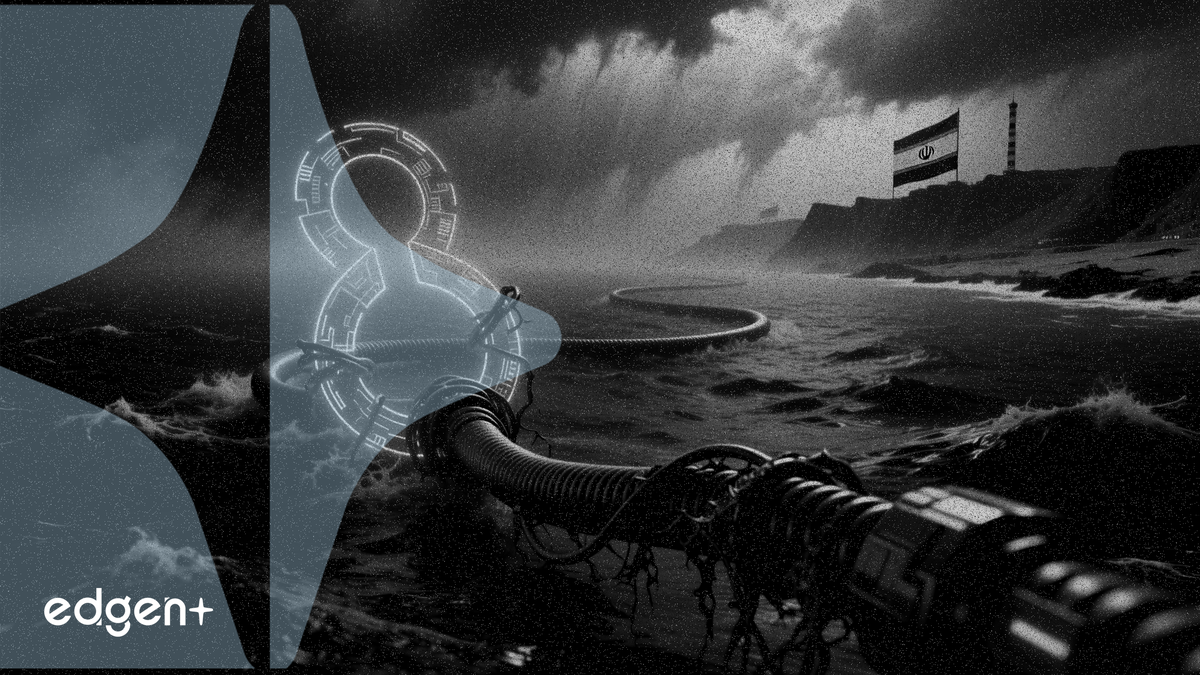
The Strait of Hormuz, long known as a critical chokepoint for one-fifth of global oil shipments, is now facing a parallel threat to the world’s digital economy. Iran’s recent warnings that several major subsea internet cables transiting the narrow waterway are vulnerable have raised alarms about the security of critical infrastructure that carries approximately 99 percent of global internet traffic.
"Damaged cables mean the internet slowing down or outages, e-commerce disruptions, delayed financial transactions, and economic fallout from all of these disruptions," Masha Kotkin, a geopolitical and energy analyst, said. The warning comes as the nearly two-month-long Iran war has already hit Amazon Web Services data centers in Bahrain and the UAE, demonstrating the tangible risks to the region's burgeoning digital economies.
At least seven primary communication cables pass through the Strait of Hormuz, including the Asia-Africa-Europe 1 (AAE-1) and the FALCON network, connecting Gulf nations to data hubs in Asia and Europe. These cables are the backbone for the UAE and Saudi Arabia's multi-billion-dollar investments in artificial intelligence and economic diversification. While state-sponsored sabotage is a concern, experts note that 70 to 80 percent of the 150-200 annual cable faults are accidental, caused by fishing and ship anchors, according to the International Cable Protection Committee (ICPC).
The ongoing conflict significantly increases the odds of unintentional damage. "In a situation of active military operations, the risk of unintentional damage increases, and the longer this conflict lasts, the higher the likelihood of unintentional damage," Kotkin said, referencing a 2024 incident where a drifting vessel in the Red Sea severed cables with its anchor. The economic impact on Gulf economies is already stark, with 2026 growth forecasts slashed and countries like Qatar and Kuwait now projected to see their economies shrink by 6.0 percent and 4.4 percent, respectively.
The concentration of vital cables in a narrow, contested waterway creates a significant vulnerability for the region's digital infrastructure. Gulf countries have established national AI companies and cloud services entirely dependent on the high-speed data transfer these subsea networks provide.
Repairing any potential damage presents its own set of challenges. While the physical task is not overly complex, gaining permits for repair vessels to enter territorial waters during a conflict can cause long delays. "Often one of the biggest problems with doing repairs is you have to get permits into the waters where the damage is. That can take a long time sometimes and can be the biggest source of problems," said Alan Mauldin, research director at telecom research firm TeleGeography. Insurers and vessel owners may also be hesitant to operate in a zone with active military risks and potential sea mines.
While land-based routes offer some redundancy, satellite internet systems are not a viable large-scale replacement for high-capacity subsea cables. Experts agree that current satellite technology cannot handle the sheer volume of data traffic that fibre-optic cables support and are significantly more expensive.
"It's not as though you could just switch to satellite. That's not an alternative," Mauldin said, explaining that satellites are better suited for mobile applications like planes and ships. Kotkin added that low-Earth-orbit networks like Starlink are "a boutique solution, which is not scalable to millions of users, at this time." The lack of a scalable alternative means any significant damage to the Hormuz cables could lead to prolonged internet slowdowns and severe economic disruption for the Gulf states.
This article is for informational purposes only and does not constitute investment advice.
