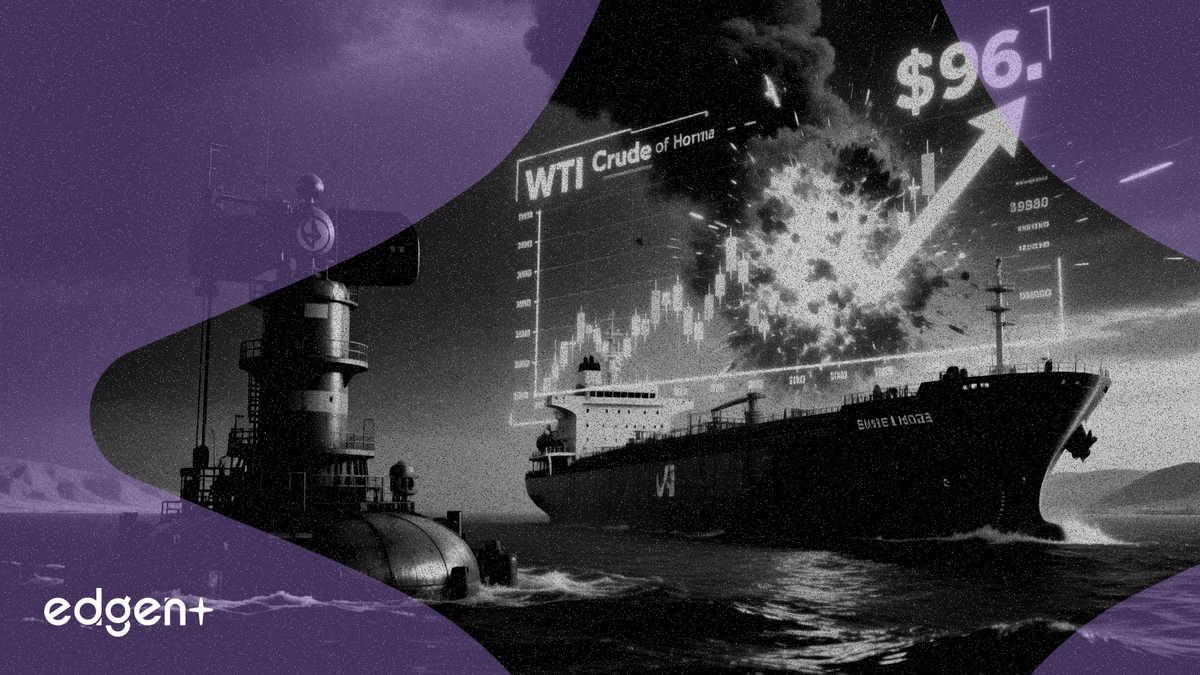
Iran’s deployment of more naval mines in the Strait of Hormuz threatened to shatter a fragile ceasefire, sending West Texas Intermediate crude oil futures soaring past $96 per barrel and raising fears of a prolonged disruption to global energy supplies.
"The civilian shipping industry is not equipped to prevent Iranian armed forces from seizing vessels," said Daniel Mueller, a senior analyst at British maritime security company Ambrey, highlighting the severe risk to commercial tankers in the world’s most important oil chokepoint.
The report of new mine deployments, which first appeared in an Axios report, triggered an immediate market reaction. WTI crude for June delivery jumped $0.50 in just five minutes to trade at $96.69 per barrel. The escalation added to an already tense situation, with international benchmark Brent crude closing in on $100 a barrel and European stocks trading slightly lower on the news.
The move represents the latest escalation in an eight-week conflict that has pitted Iran against the U.S. and its allies. It follows the seizure of two container ships by Iran’s Islamic Revolutionary Guard Corps and comes just days after President Trump extended a ceasefire while keeping a naval blockade of Iranian ports in place. The Pentagon has previously stated that clearing the heavily mined strait could take as long as six months, a timeline that would have severe consequences for the global economy.
Waterway at a Standstill
The deployment of additional mines exacerbates a situation that has already brought one of the world's most vital shipping lanes to a halt. Recent data from LSEG showed that oil-tanker traffic through the Strait of Hormuz has fallen to a near standstill. The U.S. Central Command reported it has directed 31 vessels to turn around or return to port as part of its blockade enforcement.
Iran’s actions appear to be a direct response to the U.S. blockade. An adviser to Iran's parliamentary speaker, Mahdi Mohammadi, said on social media that the "continuation of the siege is no different from the bombing and must be responded to militarily." This rhetoric, combined with the IRGC's use of fast-boat swarms to seize commercial vessels, suggests a strategy of asymmetrical warfare aimed at raising the economic cost of the conflict for the U.S. and its allies.
The economic fallout is already spreading. Germany's Lufthansa announced it was canceling 20,000 flights through October, citing the doubling of jet fuel prices since the conflict began. The war's impact on supply chains has even led a Malaysia-based condom manufacturer to warn of potential 20 to 30 percent price hikes.
This article is for informational purposes only and does not constitute investment advice.