
Key Takeaways:
- A statement from Iran's supreme leader on April 18 has heightened concerns over the security of the Strait of Hormuz, through which 21 percent of the world's daily oil supply travels.
Key Takeaways:
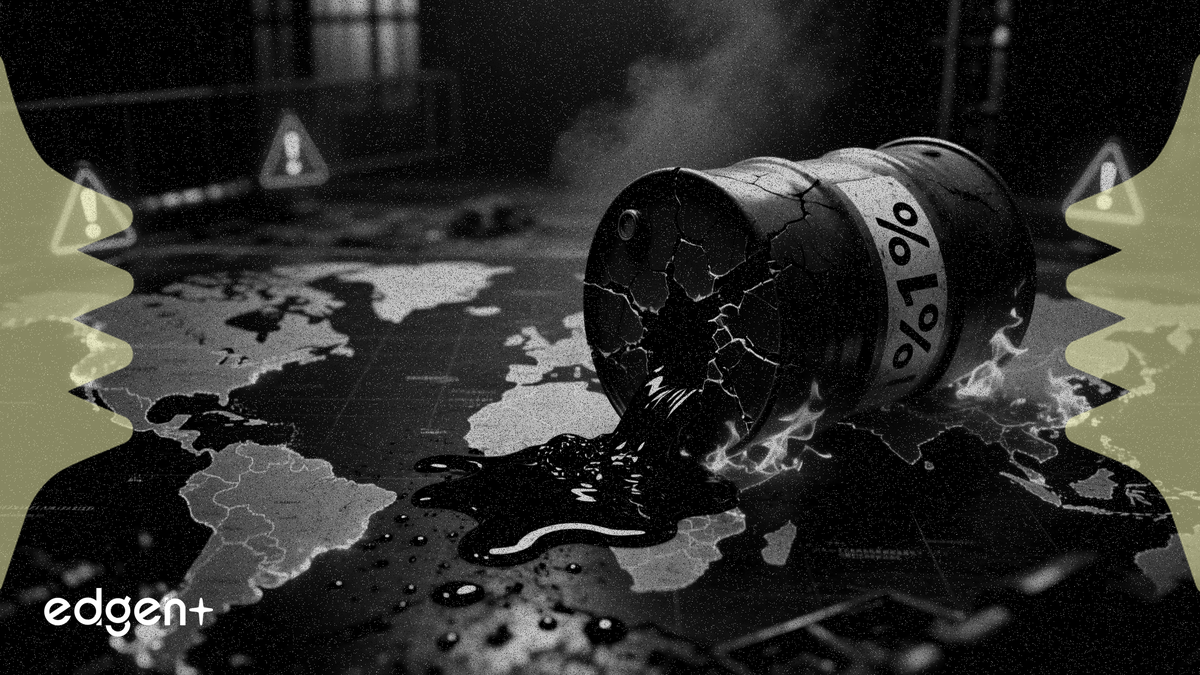
A hawkish statement from Iran's supreme leader for the country's Army Day on April 18 is stoking fears of a potential military confrontation in the Middle East, threatening the flow of oil through the world’s most critical energy chokepoint.
"The Iranian Navy is prepared to inflict a 'new and painful defeat' on its adversaries," Supreme Leader Mojtaba Khamenei said in a letter celebrating the national holiday, according to state-run media.
The declaration signals a heightened military posture from Tehran and could introduce fresh volatility to global markets. Investors are now closely watching for any signs of escalation near the Strait of Hormuz, a narrow waterway that handles approximately 21 percent of global petroleum liquids consumption. Any disruption could drive oil prices sharply higher, benefit safe-haven assets like gold and the US dollar, and increase downward pressure on global equities.
This matters because a direct conflict or even minor skirmishes could lead to a blockade of the strait, removing a significant volume of crude oil from the global market almost overnight. The last major disruption in the region, following attacks on Saudi Arabian oil facilities in September 2019, caused Brent crude prices to surge by nearly 20 percent in a single day. While Khamenei's comments were directed at "the enemy" broadly, they come at a time of already-elevated geopolitical risk.
The statement specifically mentioned the Iranian Navy, which, alongside the more ideologically-driven Islamic Revolutionary Guard Corps Navy (IRGCN), patrols the Persian Gulf and the Strait of Hormuz. Analysts note that while the regular navy's role is primarily defensive, the IRGCN has a history of more aggressive actions, including the seizure of commercial vessels. The explicit mention of the navy's readiness is being interpreted by market participants as a direct threat to maritime security in the region.
The market's risk-off sentiment is reflected in the potential for increased hedging activity in the oil options market. A sustained period of tension could see the geopolitical risk premium, which had been subsiding, rebuilt into crude prices, potentially adding $5 to $10 per barrel. This would complicate the inflation outlook for central banks already struggling to maintain price stability.
This article is for informational purposes only and does not constitute investment advice.