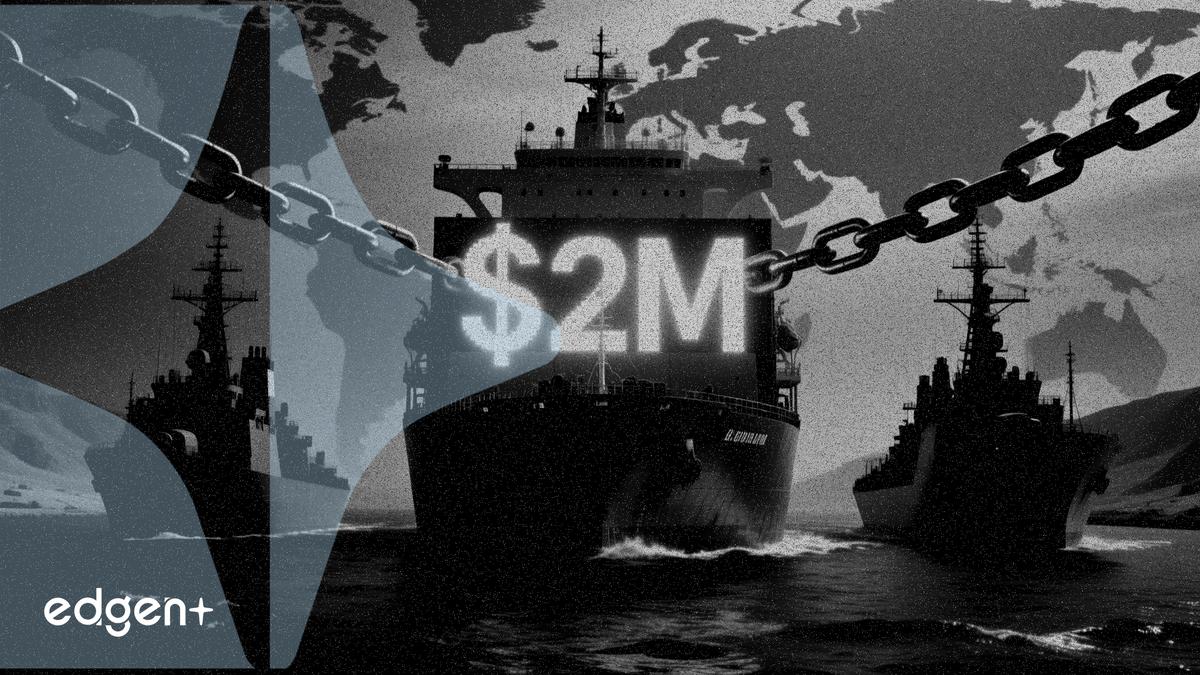
Iran's assertion of control over the Strait of Hormuz, backed by new transit fees, threatens to create a new and costly reality for 20 percent of the world's oil supply.
A top adviser to Iran's Supreme Leader declared that control of the Strait of Hormuz is now firmly in Iranian hands, a statement made tangible by a new system of passage fees roiling global energy markets. The move comes despite a fragile two-week ceasefire with the U.S., pushing Brent crude back toward $100 a barrel as traders question the stability of the truce.
"Control of the Strait of Hormuz is now a different kind of leverage, one that is clearly visible in global markets," said Hamidreza Azizi of the German Institute for International and Security Affairs, highlighting a strategic shift for Tehran.
The new reality on the world’s busiest oil route involves fees of up to $2 million for large tankers, a dramatic reduction in daily ship traffic from 100 to just 12, and direct threats of destruction to unauthorized vessels. Just four ships transited the strait Thursday. While Brent crude prices had retreated to the mid-$90s after the ceasefire was announced, they have since climbed as the details of Iran's new toll system emerged.
This policy gives Iran significant economic leverage and a new strategic card to play, one that a former Israeli intelligence official called as important "as missiles and the nuclear program." The development creates a high-stakes test for the U.S. and its allies, who depend on the free flow of the roughly 21 million barrels of oil that pass through the strait daily and now face the prospect of paying Tehran for passage or risking a renewed, wider conflict.
A Toll on Global Trade
Under the new system, Iran is effectively monetizing its geographic advantage. According to shipping industry sources, payments are demanded a week in advance in cryptocurrency or Chinese yuan. Vessels from friendly nations reportedly pay lower fees, while those linked to U.S. or Israeli allies are barred entirely. Approved ships are being rerouted to a channel closer to the Iranian coast, between the islands of Qeshm and Larak, instead of the internationally recognized shipping lane.
The move has been met with alarm from Gulf states and legal experts who argue it violates the 1982 U.N. Convention on the Law of the Sea, which guarantees freedom of navigation through such natural waterways. While Iran has drawn comparisons to Egypt's Suez Canal tolls, international law does not permit such fees in natural straits. "We woke up to a deal that does not reduce risk but replaces it with greater risk," said Mohammed Baharoon, head of a Dubai-based policy research center.
Markets Price in New Risk
The ceasefire initially brought relief to energy markets, but analysts now see the price correction as premature. Standard Chartered, which had forecast Brent at $98 per barrel for the second quarter, noted that transit through Hormuz has not suddenly become risk-free, with oil flows now largely at Iran's discretion. The bank's analysts estimate that 426 tankers and dozens of LNG and LPG carriers remain stranded.
The uncertainty is creating a durable risk premium on oil. Goldman Sachs analysts warned that a continued Hormuz closure for another month would likely keep Brent crude prices above $100 per barrel throughout 2026. The U.S. is now pressing European allies to present concrete plans to help secure the waterway, but many who declined to send naval forces during the conflict now face a more entrenched and economically costly problem.
This article is for informational purposes only and does not constitute investment advice.