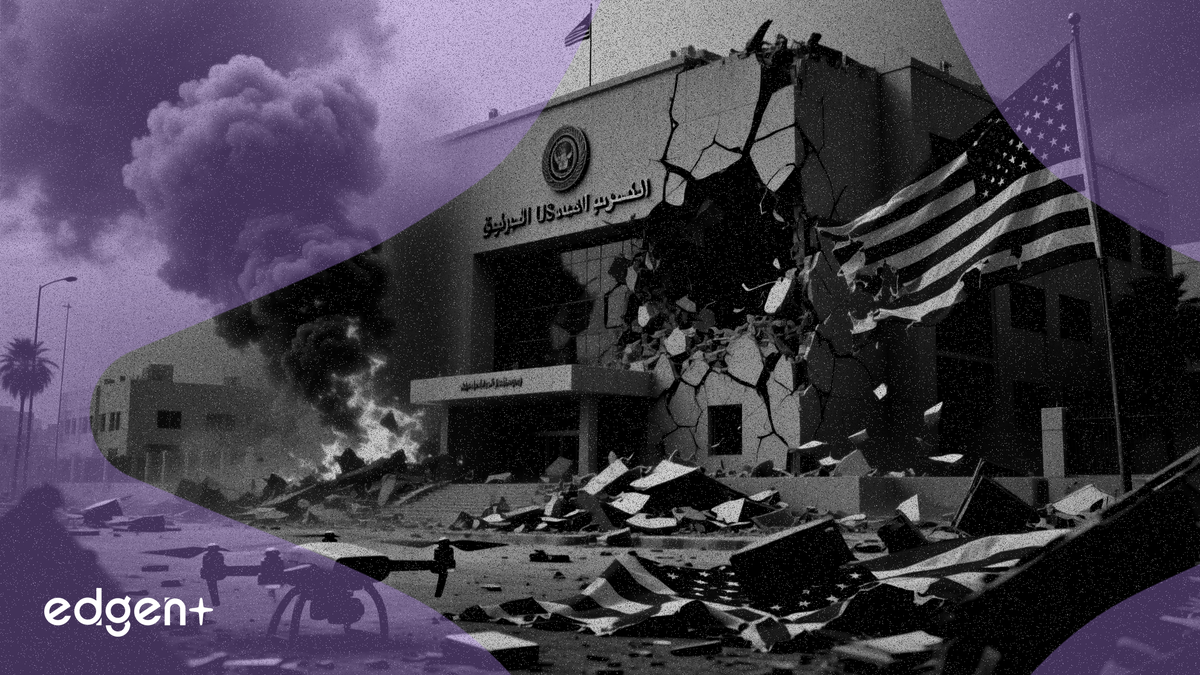
Cuộc tấn công bằng máy bay không người lái của Iran vào Đại sứ quán Hoa Kỳ tại Ả Rập Xê Út vào ngày 3 tháng 3 đã gây ra thiệt hại nghiêm trọng, đánh trúng các khu vực an ninh và gây ra một đám cháy kéo dài nửa ngày, một sự leo thang đáng kể cho thấy khả năng ngày càng tăng của Tehran trong việc tấn công các tài sản nhạy cảm của Mỹ.
"Họ đã có thể sản xuất một loại vũ khí nội địa, bắn nó từ khoảng cách hàng trăm dặm và đưa nó vào đại sứ quán của đối thủ hàng đầu, điều đó có nghĩa là họ có thể đánh trúng bất cứ thứ gì họ muốn trong thành phố," Bernard Hudson, một cựu giám đốc chống khủng bố của CIA với kinh nghiệm sâu rộng tại các quốc gia Vùng Vịnh bao gồm cả Ả Rập Xê Út, cho biết.
Cuộc tấn công liên quan đến hai máy bay không người lái đánh vào đại sứ quán ở Khu Ngoại giao của Riyadh. Theo các quan chức Hoa Kỳ đương nhiệm và cựu nhiệm, chiếc máy bay không người lái đầu tiên đã tạo ra một lỗ hổng trong hệ thống phòng thủ của khu phức hợp, và chiếc thứ hai bay qua lỗ hổng đó để phát nổ bên trong. Đám cháy sau đó đã bùng phát trong nửa ngày, gây thiệt hại nặng nề cho ba tầng, bao gồm cả trạm của Cơ quan Tình báo Trung ương (CIA). Điều này trái ngược với các tuyên bố ban đầu từ Bộ Quốc phòng Ả Rập Xê Út, nơi chỉ mô tả là "thiệt hại nhẹ".
Các cuộc tấn công làm nổi bật một sự thất bại đáng kể về tình báo và phòng thủ, đặt ra câu hỏi về an ninh của các cơ sở ngoại giao và quân sự của Hoa Kỳ trong một khu vực đang ở mức báo động cao. Cuộc tấn công xảy ra lúc 1:30 sáng, có thể đã dẫn đến thương vong hàng loạt nếu nó xảy ra trong giờ làm việc. Sự kiện này đã làm gia tăng lo ngại về một cuộc xung đột khu vực rộng lớn hơn, có thể làm gián đoạn nguồn cung năng lượng toàn cầu, với eo biển Hormuz là một điểm nghẽn quan trọng mà 21% thương mại dầu mỏ toàn cầu đi qua.
Căn cứ không quân Prince Sultan cũng bị nhắm mục tiêu
Cuộc tấn công đại sứ quán không phải là một sự cố riêng lẻ. Vào cuối tháng 3, Iran đã nhắm mục tiêu thành công vào máy bay Hoa Kỳ tại Căn cứ Không quân Prince Sultan, đánh trúng một máy bay radar E-3 Awacs và các máy bay tiếp dầu. Cuộc tấn công đó đã làm bị thương khoảng một chục binh sĩ Mỹ, hai người trong số họ bị thương nặng. Kể từ khi cuộc xung đột rộng lớn hơn bắt đầu vào ngày 28 tháng 2, Lầu Năm Góc đã báo cáo 365 quân nhân bị thương trong khi hành động, với bảy binh sĩ thiệt mạng trong các cuộc tấn công căn cứ khác nhau trên khắp Trung Đông.
Iran và các đồng minh của họ đã thực hiện các cuộc tấn công thường xuyên nhất từ trước đến nay vào các căn cứ và cơ sở ngoại giao của Mỹ, với các cơ sở của Hoa Kỳ tại Baghdad, Dubai, Thành phố Kuwait và Erbil cũng bị nhắm mục tiêu. Trong khi Hoa Kỳ và Israel đã tiến hành hơn 20.000 cuộc không kích chống lại các mục tiêu Iran, Iran vẫn duy trì khả năng trả đũa các tài sản có giá trị cao của Mỹ. Việc bắn rơi hai máy bay chiến đại Mỹ, một chiếc F-15E và một chiếc A-10, trên bầu trời Iran trong tuần này càng khẳng định thêm sự leo thang trao đổi quân sự.
Ý nghĩa thị trường và rủi ro khu vực
Chuỗi các cuộc tấn công đã gây ra những làn sóng chấn động qua các thị trường tài chính, thúc đẩy giá cổ phiếu của các nhà thầu quốc phòng và tăng sức hấp dẫn của các tài sản trú ẩn an toàn như vàng và đồng đô la Mỹ. Tại Riyadh, các cuộc tấn công bằng máy bay không người lái đã xuyên thủng cảm giác an ninh tại Khu Ngoại giao được phòng thủ nghiêm ngặt, một khu vực dành cho người nước ngoài và giới tinh hoa Ả Rập Xê Út vốn trước đây từng bị nhắm mục tiêu bởi tên lửa từ lực lượng Houthi ở Yemen. Sau cuộc tấn công đại sứ quán và lời cảnh báo sau đó từ Iran chống lại các công ty Mỹ cụ thể, một số khu công viên kinh doanh ở Riyadh nơi đặt trụ sở của các công ty Hoa Kỳ đã tạm thời đóng cửa, một dấu hiệu cho thấy nhận thức rủi ro ngày càng tăng trong vương quốc.
Việc phụ thuộc vào hệ thống phòng không của nước sở tại, chẳng hạn như hệ thống tên lửa Patriot của Ả Rập Xê Út, đã chứng tỏ là không đủ để ngăn chặn các máy bay không người lái bay thấp. Lỗ hổng này có thể buộc phải đánh giá lại chiến lược các quy trình an ninh cho nhân viên và tài sản của Hoa Kỳ trên khắp vùng Vịnh, có khả năng dẫn đến một sự hiện diện quân sự trực tiếp và lớn hơn của Mỹ trong khu vực để chống lại mối đe dọa đang phát triển từ Iran.
Bài viết này chỉ mang tính chất thông tin và không cấu thành lời khuyên đầu tư.