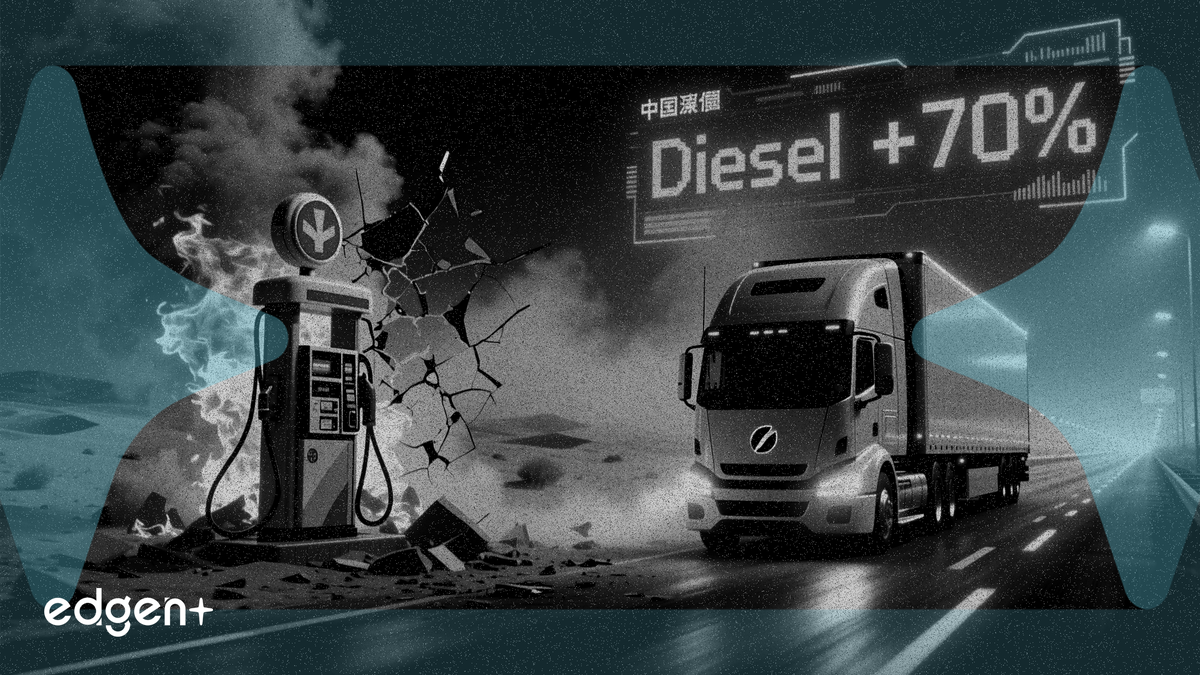
The jump in diesel prices triggered by the Iran war is forcing a rapid electrification of China's heavy truck fleet, a shift that analysts say will permanently reduce fuel demand in the world's largest oil importer.
"The forecast impact of this, assuming an oil price of $100 per barrel, is between $40 to $50 per ounce on a portfolio level," South Africa's Gold Fields said in a quarterly update, noting diesel costs had surged by as much as 70 percent. While a mining company, its cost pressures serve as a direct proxy for other heavy industrial diesel users, including trucking and logistics.
The conflict, which has included naval blockades of the Strait of Hormuz through which a quarter of the world's seaborne oil passes, has broadly inflated operating costs. Gold Fields also reported freight costs rising 40 percent and liquefied natural gas up 30 percent.
For investors, this geopolitical turmoil creates a clear divergence. The sustained high cost of fuel makes running diesel truck fleets economically challenging, threatening long-term demand for oil and diesel engine manufacturers. Conversely, it provides a powerful tailwind for China's domestic electric truck and battery makers such as BYD and Geely, accelerating adoption faster than previous forecasts predicted.
The End of Cheap Fuel
The core of the issue is the disruption in the Middle East. Though a peace deal is reportedly being discussed, energy experts believe it will be months before crude markets normalize. Jeff Currie, chief strategy officer of Energy Pathways at Carlyle, noted that shippers and insurers need to regain confidence before reconfiguring ship traffic, a process that could take "three months bare minimum."
This means the economic pain is likely to persist. For China, the world's largest oil importer, the sharp increase in diesel prices directly impacts its massive logistics and construction sectors. The economic case for switching from internal combustion engine (ICE) trucks to electric alternatives has never been stronger. While the initial capital outlay for an electric truck is higher, the total cost of ownership (TCO) becomes much more favorable when diesel prices are elevated.
China's EV Makers Set to Win
The situation creates a significant market opportunity for China's established EV industry. Companies like BYD, which has its own battery division, and Geely Commercial Vehicles are well-positioned to meet the rising demand for electric heavy-duty trucks. This trend supports not only the vehicle manufacturers but also the entire domestic supply chain for batteries, electric motors, and charging infrastructure.
The shift could permanently alter China's energy consumption patterns. A faster-than-expected electrification of its commercial transport fleet will reduce the country's reliance on imported oil, a long-term strategic goal for Beijing. While passenger cars have been the primary focus of the EV transition to date, the economic shock from the Iran war is now pulling the industrial sector into the electric age at an accelerated pace.
This article is for informational purposes only and does not constitute investment advice.