
Iran has drawn a new line in the sand, threatening to wipe out 25 million barrels of daily oil production from the market in a direct challenge to the U.S. and its allies.
Iran has drawn a new line in the sand, threatening to wipe out 25 million barrels of daily oil production from the market in a direct challenge to the U.S. and its allies.
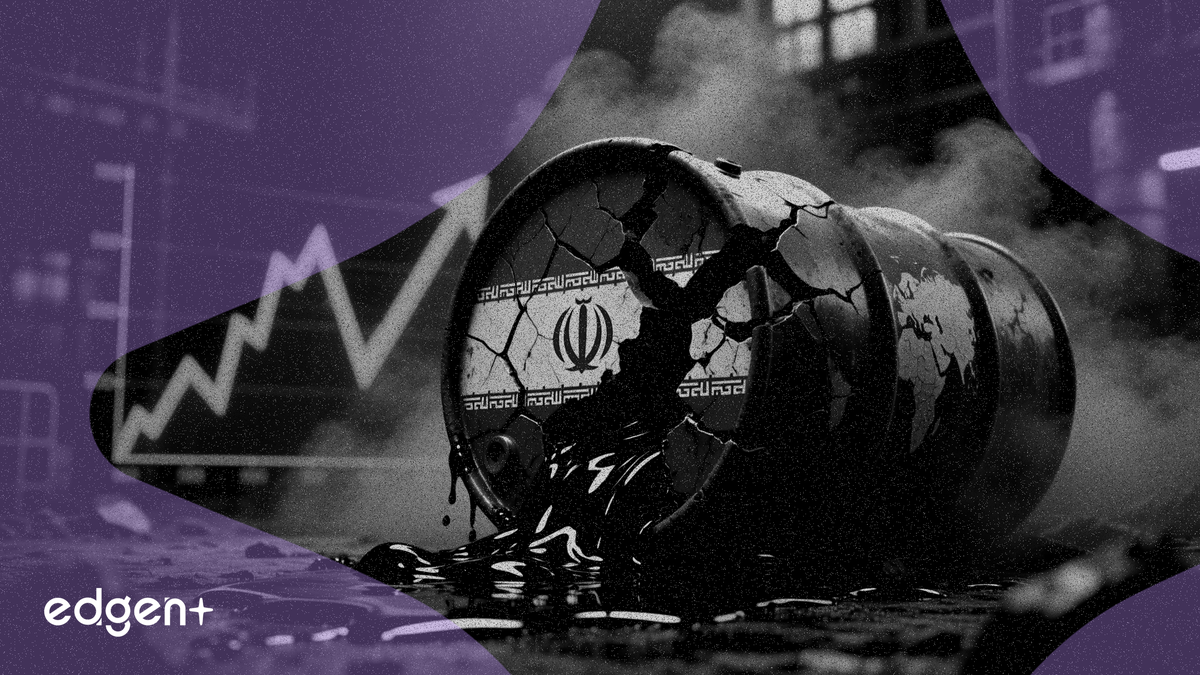
Iran has formulated a detailed military counter-attack plan that includes striking allied energy infrastructure if its own facilities are targeted, Fars News Agency reported on April 23. The plan aims to remove 25 million barrels per day of oil and gas equivalents, a move that would shatter global energy markets.
The plan was formulated based on principles of "reciprocal response" and "offensive deterrence" because of a "complete distrust" in the sincerity of U.S. negotiations, the Iranian news agency said. This follows a period of escalating military exchanges and fragile ceasefires in the region, with Iran's President Masoud Pezeshkian stating that the U.S. "blockade and threats are the main obstacles to genuine negotiations."
The threat comes as tensions remain high in the Strait of Hormuz, a chokepoint for about a fifth of the world's oil supply. U.S. crude recently jumped more than seven percent to roughly $90 a barrel on fears of disruption, according to LA Mag. The U.S. Central Command has redirected 31 vessels as part of its ongoing naval blockade of Iran, while Iranian gunboats have reportedly fired on tankers transiting the strait.
A loss of 25 million barrels per day—an amount that dwarfs previous supply shocks—would likely send crude prices well over $100 per barrel, fueling rampant inflation and risking a global recession. The move puts extreme pressure on diplomatic efforts, with the U.S. awaiting a unified peace proposal from Tehran's complex and fractured leadership structure.
According to the Fars News Agency report, the retaliation is designed to be symmetrical. A strike on Iranian power plants would be met with missile and drone attacks on the power infrastructure of Israel and other regional U.S. allies. If Iran's oil and gas facilities are hit, the counter-strike would target critical production and export hubs of American partners, aiming for a sustained production cut of 25 million barrels per day for a full year.
This threat injects extreme volatility into a market already on edge. The U.S. and Iran are in the seventh week of a conflict that has seen a naval blockade, the seizure of multiple vessels, and a fragile, extended ceasefire. For consumers, the consequences are already apparent at the pump, with gas prices in Los Angeles climbing past $6 a gallon, up more than $1.30 since the war began.
The global energy map is being redrawn by multiple geopolitical pressures. Concurrent with the crisis in the Persian Gulf, Russia has confirmed it will halt the flow of Kazakh oil to Germany through the Druzhba pipeline, adding another layer of supply uncertainty for European markets. While German officials state the stoppage will not jeopardize overall supply, it highlights the fragility of energy logistics amid widespread conflict.
All eyes are now on whether diplomacy can de-escalate the situation. President Trump has stated there is "no time frame" for the conflict's end and continues to press for a unified peace proposal from Tehran. However, with Iran's parliamentary speaker, Mohammad Bagher Ghalibaf, insisting that reopening the Strait of Hormuz is impossible while the U.S. naval blockade continues, the path to a resolution remains unclear.
This article is for informational purposes only and does not constitute investment advice.