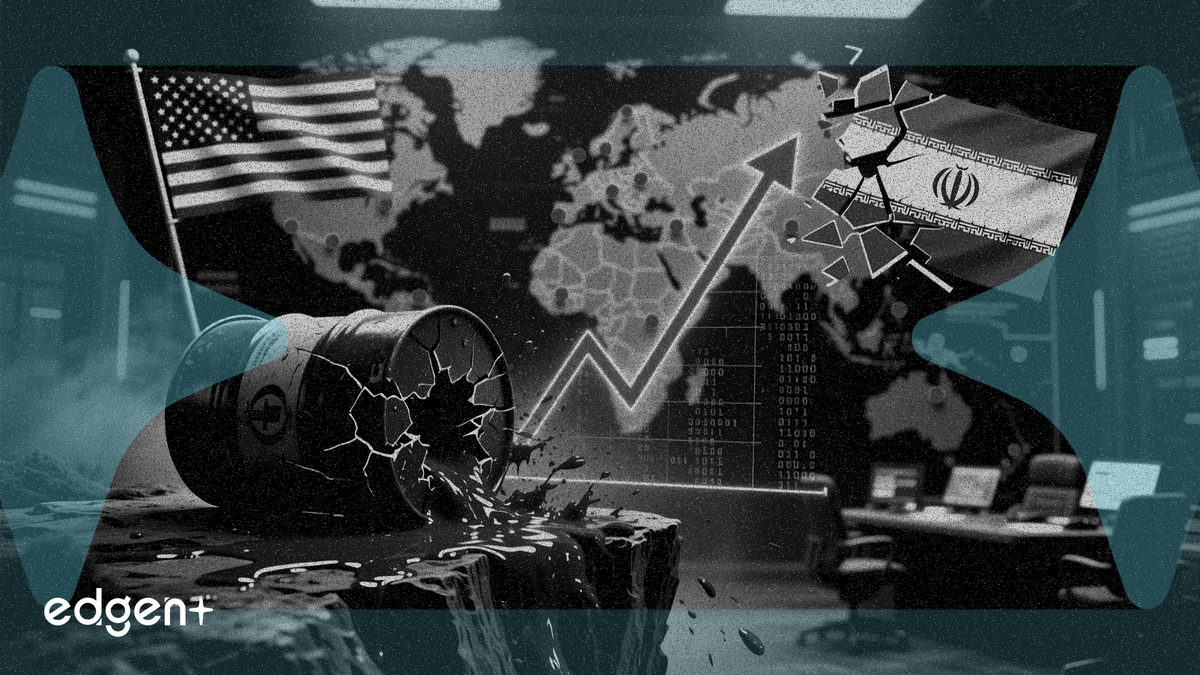
Iran's foreign minister warned Monday that any hostile action against the Islamic Republic will trigger an immediate and decisive military response, as the 90-day US-Iran conflict enters a new phase of escalation with direct threats to civilian shipping and ceasefire violations.
Iranian Foreign Minister Abbas Araghchi said the country's armed forces will conduct defensive counterattacks under the framework of legitimate self-defense, specifically citing US use of regional bases to attack Iranian civilian vessels and what Tehran describes as repeated violations of the ceasefire agreement. "Any hostile action will be met with immediate and decisive response," Araghchi said, according to state media.
The warning came hours after US Central Command confirmed it destroyed Iranian radar sites in Goruk and on Qeshm Island over the weekend, following Iran's shootdown of a US MQ-1 drone operating over international waters. US fighter aircraft eliminated Iranian air defenses, a drone ground control station, and two one-way attack drones that CENTCOM said posed threats to ships in the region.
"The United States is also violating the ceasefire including this morning," Iranian Foreign Ministry spokesman Esmaeil Baghaei said at a Monday briefing, vowing that Tehran will "take whatever measures we deem necessary to defend Iran's national security." Baghaei asserted that a lack of trust, constant US position changes, and Israeli actions in Lebanon are delaying diplomatic efforts to extend the truce.
Oil markets on edge as Strait of Hormuz remains contested
The Strait of Hormuz, which handles about 21 percent of global oil trade, remains the central flashpoint. Brent crude traded at $92 a barrel Monday, down 1.8 percent on tentative optimism about a potential deal, but still well above the $70 level before the conflict began Feb. 28. West Texas Intermediate fell 1.5 percent to $87.59 a barrel.
The US has redirected 116 vessels attempting to breach its naval blockade of Iranian ports, including the Gambia-flagged Lian Star, which was disabled Saturday after a Hellfire missile struck its engine room when it ignored more than 20 warnings. Iran has responded by imposing its own restrictions on commercial traffic through the strait, with Iranian state media reporting 24 ships passed through in the past 24 hours under IRGC Navy coordination.
The last time the strait faced sustained disruption during the 2019 tanker attacks, oil prices spiked about 15 percent over three weeks before stabilizing. The current closure has already drawn down global oil inventories at a record pace, according to the International Energy Agency, World Bank and IMF, which warned Friday of "increasing risks for fuel security" as summer demand peaks.
Ceasefire talks stall as military operations widen
Negotiations to extend the 60-day ceasefire have stalled after President Trump sent revised terms back to Tehran on Friday, demanding stronger language on Iran's nuclear commitments and additional provisions for reopening the Strait of Hormuz. Iran's semi-official Fars news agency called Trump's claims about the deal "invalid," saying the memorandum of understanding was still in its final stages of ratification and had not been decided.
Iran has suspended talks following Israel's latest military operations in Lebanon, where Israeli forces captured the medieval Beaufort Castle and crossed the Litani River. The UN Security Council scheduled an emergency meeting Monday on Lebanon, where an average of 11 children have been killed or wounded daily over the past week, according to UNICEF.
The US intercepted two Iranian ballistic missiles targeting American personnel in Kuwait early Monday, destroying them before they reached their targets. Four US service members and three contractors suffered minor injuries from a separate Iranian missile strike on a Kuwaiti air base last week, a US official told CBS News.
What's at stake for global markets
The conflict's duration — now at 90 days — has already reshaped energy markets, with the Gulf region producing about 30 percent of the world's traded chemical fertilizers, creating spillover risks for food production and prices. The S&P 500 has posted six consecutive gains on deal optimism, but the VIX remains elevated as the path to a ceasefire remains uncertain.
French President Emmanuel Macron said Monday he spoke with Trump and expressed support for the administration's efforts, adding that France, Britain and other allies have assembled an international mission ready to deploy to secure maritime traffic through the strait once a deal is reached.
"The soldiers of the diplomatic battlefield have no trust in the words and promises of the enemy," Iranian Parliament Speaker Mohammad Bagher Ghalibaf said, according to Iranian media. "What matters to us is tangible achievements that we must obtain."
This article is for informational purposes only and does not constitute investment advice.