
A tanker strike off Oman and record rial weakness show Iran's blockade of the Strait of Hormuz is tightening as Washington escalates sanctions.
A tanker strike off Oman and record rial weakness show Iran's blockade of the Strait of Hormuz is tightening as Washington escalates sanctions.
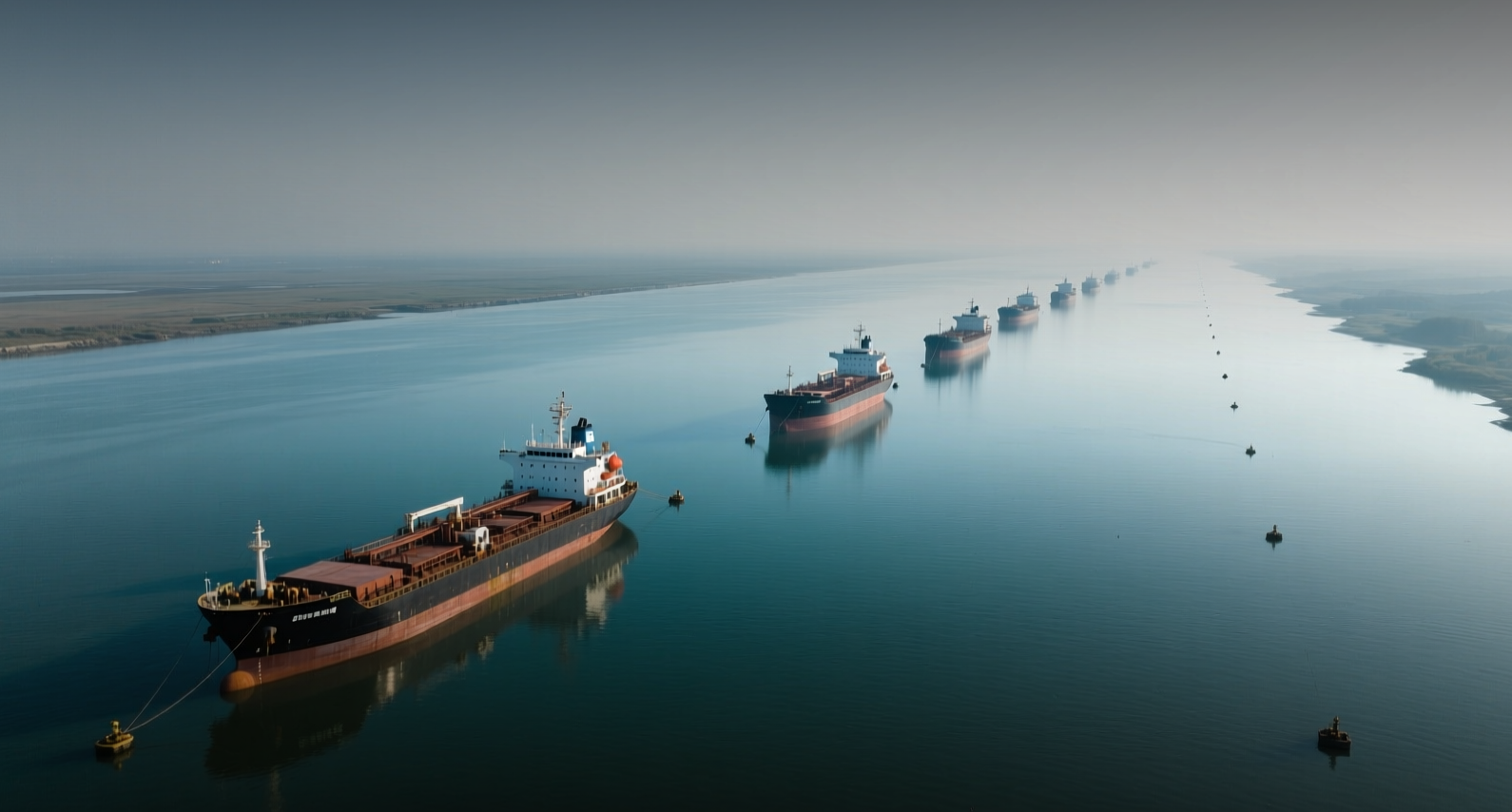
An oil tanker was disabled by a projectile off Oman on Monday, while the Iranian rial slid to a record 2.02 million per dollar as Washington's sanctions and Tehran's Hormuz blockade tighten a six-month conflict.
The sanctions wave will hit Iran's economy hard, but crushing Tehran or forcing it to accept U.S. terms through pressure alone is very difficult, said Niu Xinchun, dean of the China-Arab Research Institute at Ningxia University.
The Liberian-registered aframax Metro Venetian was struck 9 nautical miles northeast of Ash Shishah, damaging its engine room and disabling the vessel, the UK Maritime Trade Organization said, with all crew safe and no immediate environmental impact. Kpler data showed commercial transits through the strait on Aug. 24 fell to the lowest in more than three months, while the rial's open-market slide deepened from the previous record of 1.81 million set April 29 against an official rate of 1.5 million.
The waterway carried about a fifth of the world's traded oil before the U.S. and Israel attacked Iran on Feb. 28, and vessel crossings have since dropped from roughly 140 a day to a handful, according to OECD tracking. Pakistan's army chief Field Marshal Asim Munir concluded a one-day Tehran visit Tuesday after talks on reopening the strait, as Treasury Secretary Scott Bessent sanctioned nearly 60 Iran-linked entities including several in China.
Bessent, announcing the "economic isolation" package Monday, stopped short of secondary sanctions on countries trading with Iran, saying he wanted governments to shift away from Tehran "before it was too late." China, Iran's largest trading partner and the buyer of most of its oil exports, pushed back, with Foreign Ministry spokesperson Lin Jian saying the cooperation "should not be disrupted or undermined" and that unilateral sanctions "lack a basis in international law."
The rial's collapse to 2.02 million per dollar on the open market Monday, versus an official 1.5 million, marks a fresh low after the previous record of 1.81 million on April 29, as households and businesses hedge against a currency that has lost value through nearly six months of war. Iran's President Masoud Pezeshkian said the U.S. "should change its rhetoric and approach," while Supreme Leader adviser Ali Mokhber vowed a more resolute response.
The attack on the Metro Venetian came as Pakistan's Munir and Interior Minister Mohsin Naqvi wrapped up talks in Tehran that Naqvi called "very positive and productive," focused on preventing further escalation and reopening the strait. Iran and Oman are finalizing their own proposal to manage the waterway, though it remains unclear whether Washington would accept it.
The pressure extends beyond Hormuz. Yemen's Houthis, allied with Tehran, claimed a strike Monday on the Saudi oil tanker Amzan off Yanbu, the kingdom's main Red Sea export port, part of a blockade on Saudi-linked vessels that has disrupted shipping around the route Saudi Arabia uses to bypass the strait. The U.S. blockade of Iranian ports, enforced since July 14, has redirected 71 commercial vessels, disabled three and boarded two others, according to U.S. Central Command.
Global crude prices fell ahead of the sanctions announcement as traders weighed the risk of supply disruption against the prospect of a negotiated reopening. If the blockade persists, crude supply through the chokepoint — which moved about 21 percent of global oil trade before the war — will keep tightening, feeding inflation expectations across energy-importing economies. A negotiated reopening of the strait, brokered by Pakistan or Oman, remains the clearest path to easing the risk premium, but Tehran's insistence on sovereignty over transiting vessels and Washington's demand for unfettered passage leave the two sides far apart.
This article is for informational purposes only and does not constitute investment advice.
