

China’s streaming giants are swapping film crews for algorithms, betting that AI-generated content can solve a crisis of falling viewership and high production costs.
China’s streaming giants are swapping film crews for algorithms, betting that AI-generated content can solve a crisis of falling viewership and high production costs.
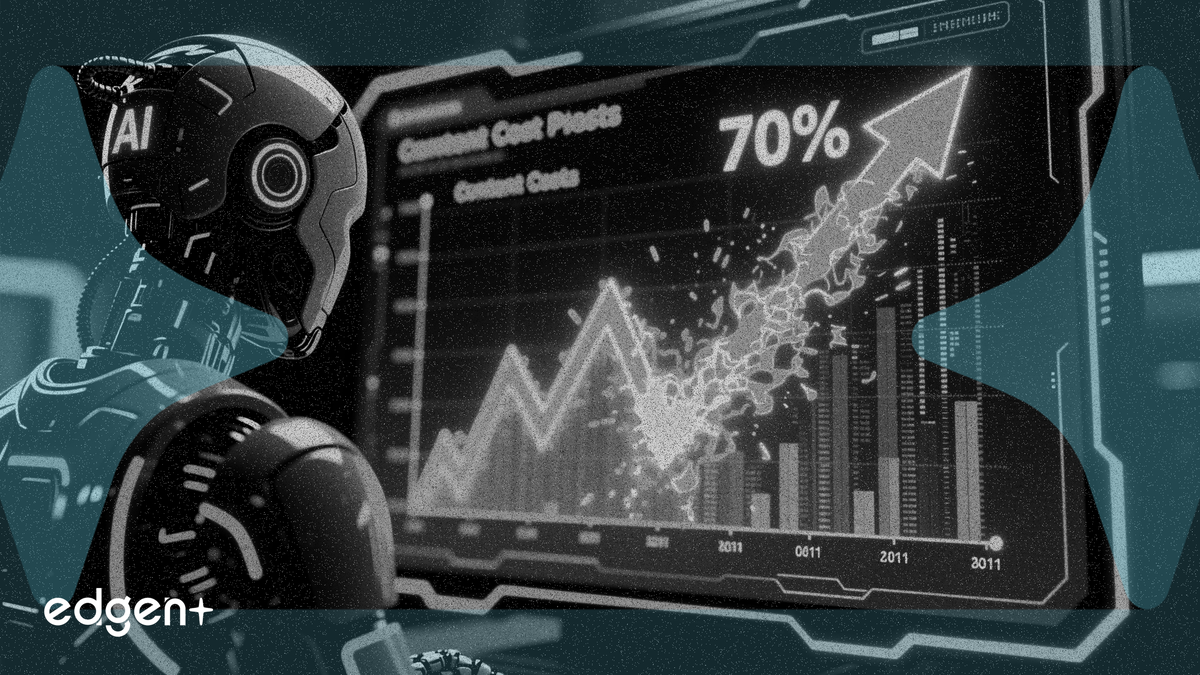
Chinese streaming platforms are aggressively shifting from high-cost human productions to low-cost AI-generated content, a strategic pivot quantified by ByteDance’s daily ad spend on AI dramas surpassing 70 million yuan ($9.6 million) in March 2026. The move, led by giants like iQIYI Inc. and Tencent Holdings Ltd., aims to reverse declining profitability by fundamentally changing the economics of content production.
"Even in the AI era, two things in the film and television industry will not change: premium content and strong IP," Wang Xiaohui, iQIYI's chief content officer, said at a recent conference. Wang added that creators must evolve into "AI content architects" who can design and deploy AI agents, signaling a definitive top-down shift in production strategy for the company often called "China's Netflix."
The turn to AI is backed by startling efficiency gains. AI-generated comic-style dramas, or "manju," slash production costs by over 70 percent and boost efficiency by more than 80 percent, according to data from a巨量引擎 (Douyin's marketing platform). This has compressed production cycles that once took months into weeks, with viewership for AI-simulated dramas reaching 750 billion in the first quarter of 2026 alone.
For iQIYI, the pivot is a direct response to financial pressure. The company, whose NASDAQ-listed shares have struggled, reported declining revenue in its 2025 fiscal year and a sharp drop in operating cash flow. The move to an AI-driven model shifts risk away from nine-figure bets on single blockbuster series toward a high-volume, data-driven game of probabilities.
For the last decade, the business model for iQIYI, Tencent, and Alibaba-owned Youku was to "bet on blockbusters," pouring capital into professional studios to find the next hit series. This left platforms with immense financial risk and limited control over a supply chain capped by human production limits. A single S-tier series failure could mean a write-down of hundreds of millions of yuan. That model is breaking as audience attention shifts. According to QuestMobile, long-form video’s share of total user time in China fell from 17.8 percent in 2023 to 11.3 percent in 2025, while short dramas surged from 2.7 percent to 10.8 percent in the same period.
The new model, proven by short-form video apps, is different. Content is often free to the user, with revenue generated from ad-supported viewing or per-episode payments. The key metric is return on investment (ROI) for ad spend used to acquire viewers. As long as the ROI is positive, the content can be promoted indefinitely. This changes the game from "using money to make content" to "using volume to bet on a win rate," where the goal is to produce content so cheaply that a few hits pay for all the misses.
At the heart of iQIYI's strategy is Nadou Pro, which the company claims is China's first professional-grade AI agent for film and television. The tool, which entered commercial testing in early 2026, is designed to handle the entire production arc from script development to final video output. This AI production line is built on the foundational models of iQIYI’s majority owner, Baidu Inc., giving it direct access to one of China’s most advanced large language models without needing outside partners. Competitors like Bilibili and Youku are pursuing their own AI initiatives, but iQIYI has been the most aggressive in commercializing an end-to-end tool.
This AI-first approach extends beyond just short dramas. The company is using its IQStage virtual production platform to blend AI-generated environments with physical sets, reducing the need for expensive location shoots. It has also deployed AI chatbots based on show characters to drive user engagement. The strategy is clear: use AI to lower costs, increase output, and create a more interactive and profitable content machine.
The pivot affects the entire industry, from production crews facing obsolescence to investors re-evaluating content platforms. For iQIYI (NASDAQ: IQ) and its parent Baidu (NASDAQ: BIDU), a successful transition could finally deliver sustained profitability. However, the bet is not without risk. It remains to be seen whether audiences, accustomed to high-production-value dramas, will accept a flood of algorithmically generated shows, or if the cost savings will be erased by lower user engagement and a race to the bottom on quality.
This article is for informational purposes only and does not constitute investment advice.