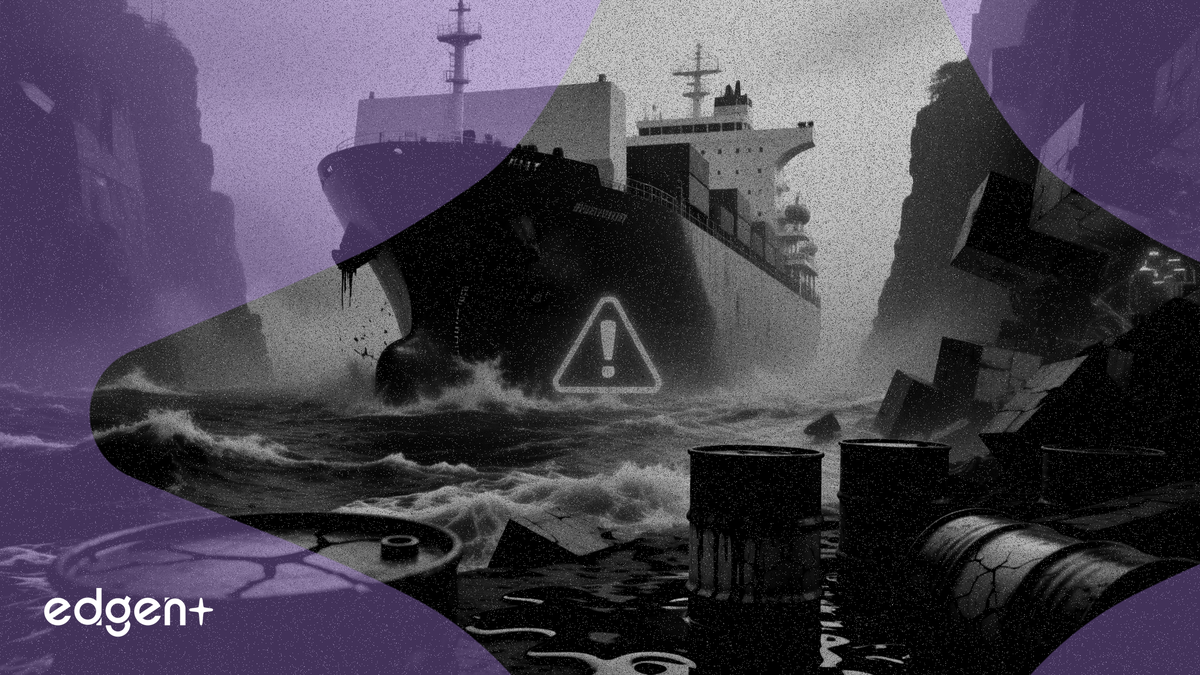
Le choc mondial de l'offre de pétrole est sur le point de s'intensifier, les perturbations en provenance du Moyen-Orient devant doubler en avril et frapper directement les économies européennes, a déclaré jeudi l'Agence internationale de l'énergie. Plus de 12 millions de barils de pétrole ont été perdus depuis le début de la guerre États-Unis-Israël contre l'Iran, à la suite d'attaques contre les actifs énergétiques régionaux et de la fermeture du détroit stratégique d'Ormuz.
« La perte de pétrole en avril sera le double de la perte de pétrole en mars, en plus de la perte de GNL... Cela passera par l'inflation et réduira la croissance économique dans de nombreux pays », a déclaré le chef de l'AIE, Fatih Birol, dans un podcast avec Nicolai Tangen, chef du fonds souverain norvégien.
La pénurie d'approvisionnement devrait s'accentuer considérablement à mesure que les cargaisons contractées avant la guerre terminent leurs trajets. Le problème principal est une pénurie imminente de kérosène et de diesel, qui affecte déjà l'Asie et atteindra bientôt l'Europe d'ici avril ou mai, a ajouté Birol. La perturbation actuelle est pire que les crises pétrolières de 1973 et 1979 combinées à la perte de gaz russe en 2022, représentant ce que Birol a appelé « une perturbation majeure, majeure et la plus importante de l'histoire jusqu'à présent ».
Ces retombées économiques découlent de la cinquième semaine d'une guerre américano-israélienne contre l'Iran, qui s'est intensifiée après que Téhéran a bloqué le détroit d'Ormuz. Alors que les États-Unis et Israël ont atteint des objectifs militaires importants, rasant la base militaro-industrielle de l'Iran et frappant plus de 2 000 cibles liées aux missiles, une victoire stratégique décisive reste incertaine. L'Iran, qui a lancé plus de 1 000 missiles, a démontré à plusieurs reprises sa capacité à reconstituer ses capacités militaires, prétendument avec l'aide de la Chine.
Malgré la dégradation des actifs de missiles et navals de l'Iran, y compris le naufrage ou l'endommagement de plus de 155 navires, la capacité du régime à perturber la navigation avec de petits bateaux rapides, des mines et des drones persiste. Cela a créé une impasse stratégique pour les États-Unis, qui ont réalisé des progrès militaires mais n'ont pas encore atteint leur objectif de neutraliser définitivement la menace. Le président Trump a reconnu le défi restant, tout en notant des « victoires comme peu de gens en ont jamais vu ».
L'issue du conflit reste floue. Bien que les États-Unis aient déclaré que le changement de régime n'était pas leur objectif principal, l'accent a été mis sur la dégradation des capacités militaires de l'Iran au point que le peuple iranien pourrait potentiellement renverser le gouvernement. Cependant, le chemin vers un tel résultat est semé de risques, et le président Trump a récemment semblé déplacer les objectifs, déclarant que « le changement de régime a eu lieu en raison de la mort de tous leurs dirigeants d'origine ». L'administration continue de peser des options plus escalatoires, mais chacune comporte un risque substantiel d'élargissement du conflit et de hausse supplémentaire des prix de l'énergie.
Cet article est uniquement à titre informatif et ne constitue pas un conseil en investissement.