
Hong Kong Financial Secretary Chen Maobo proposed deepening Shanghai-Hong Kong financial ties to cement the city's role as the world's leading offshore yuan hub.
Hong Kong Financial Secretary Chen Maobo proposed deepening Shanghai-Hong Kong financial ties to cement the city's role as the world's leading offshore yuan hub.
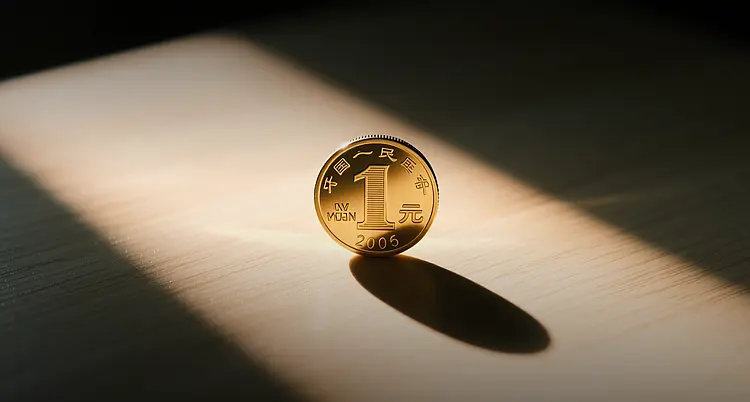
Hong Kong Financial Secretary Chen Maobo proposed deepening Shanghai-Hong Kong financial ties to cement the city's role as the world's leading offshore yuan hub.
Hong Kong Financial Secretary Chen Maobo called for accelerating a "Industry in Shanghai, Offshore Treasury in Hong Kong" model, aiming to deepen the yuan's international role as global demand for RMB-denominated assets rises.
"Global investors' demand for yuan allocation is rising, and Shanghai and Hong Kong can work together to enrich investment products and risk management tools," Chen said at the Lujiazui Forum on June 17.
Hong Kong already handles about 80% of all offshore yuan settlements, according to a China Daily analysis. Chen proposed expanding yuan-denominated commodity pricing and settlement products that use both Shanghai's futures and spot markets and Hong Kong's international investor base, creating "China price" benchmarks that could enhance the yuan's investment and reserve functions.
The initiative comes as trade disputes between China and the US create both risks and opportunities for Hong Kong's financial sector. If successful, the model could accelerate yuan internationalization at a time when the currency's share of global reserves remains below 3%, compared with the dollar's 58%, according to IMF data.
The "Industry in Shanghai, Offshore Treasury in Hong Kong" framework would provide companies with a one-stop cross-border capital and asset allocation solution, Chen said. This allows mainland firms to maintain their industrial operations in Shanghai while centralizing offshore treasury management in Hong Kong, tapping the city's deep capital markets and common law legal system.
The proposal extends beyond corporate treasury services. Chen said Shanghai and Hong Kong can jointly develop more yuan-denominated investment products and risk management tools to meet rising global demand. In commodities, the two cities could collaborate to price and settle more products in yuan, using Shanghai's futures exchange and Hong Kong's global investor base to establish benchmarks that compete with dollar-denominated pricing.
An immediate opportunity lies in the potential shift of Chinese companies away from US stock exchanges. Companies such as Alibaba, JD.com and NetEase have completed secondary listings on the Hong Kong Exchanges and Clearing. Should US delisting accelerate under the Holding Foreign Companies Accountable Act, Hong Kong stands ready to absorb a new wave of high-quality Chinese issuers, with reforms allowing dual-class shares and biotech listings.
The last time Hong Kong pursued a major financial integration push with the mainland was in 2022-2023, when the city expanded its Stock Connect and Bond Connect programs. The Southbound Bond Connect, launched in September 2023, allowed mainland investors to access Hong Kong's bond market, with daily quotas of about 20 billion yuan. Cumulative trading volume through the program has since exceeded 1 trillion yuan, according to HKEX data.
The model also opens the door for companies from Belt and Road Initiative partner nations to list and raise capital in Hong Kong. Many fast-growing firms in Southeast Asia, the Middle East and Africa struggle to access deep capital markets that offer international visibility. By providing these companies a trusted listing platform with Hong Kong's regulatory transparency and international investor base, the city can become the preferred capital-raising center for the Global South, according to a China Daily analysis.
The push for yuan internationalization comes as the dollar's dominance faces its most sustained challenge in decades. China has signed bilateral swap agreements with more than 40 central banks, and yuan-denominated trade settlement has grown to about 25% of China's cross-border transactions, up from less than 10% five years ago, according to PBoC data.
In the fixed income space, the expansion of dim sum bonds — offshore yuan-denominated debt — offers another dimension of growth. Sovereigns and corporates from Belt and Road countries could issue bonds in Hong Kong, accessing Chinese liquidity and diversifying their investor base. Hong Kong's Bond Connect program, enhanced with the Southbound link, can be further expanded to support greater cross-border financing activity.
As trade between China and Belt and Road countries is increasingly conducted in yuan, Hong Kong's importance as a clearing and settlement hub will only grow. The city is not just facilitating transactions — it is anchoring the broader ecosystem of trade, finance and investment flows centered around China's evolving role in the global economy, according to the China Daily analysis.
For Hong Kong, the stakes are high. The city's role as a gateway between China and global capital markets has been tested by geopolitical tensions and competition from Singapore. Chen's proposal shows Hong Kong is seeking to become not just a listing venue for Chinese companies but the operational and financial headquarters for the Belt and Road Initiative, with the potential to serve companies from Southeast Asia, the Middle East and Africa seeking access to deep capital markets.
The next milestone for the initiative will be the implementation details, which Chen said would be developed in coordination with Shanghai authorities and the central government. Market participants will watch for concrete steps, including potential tax incentives for companies establishing offshore treasury centers in Hong Kong and expanded quotas for cross-border investment programs.
This article is for informational purposes only and does not constitute investment advice.
