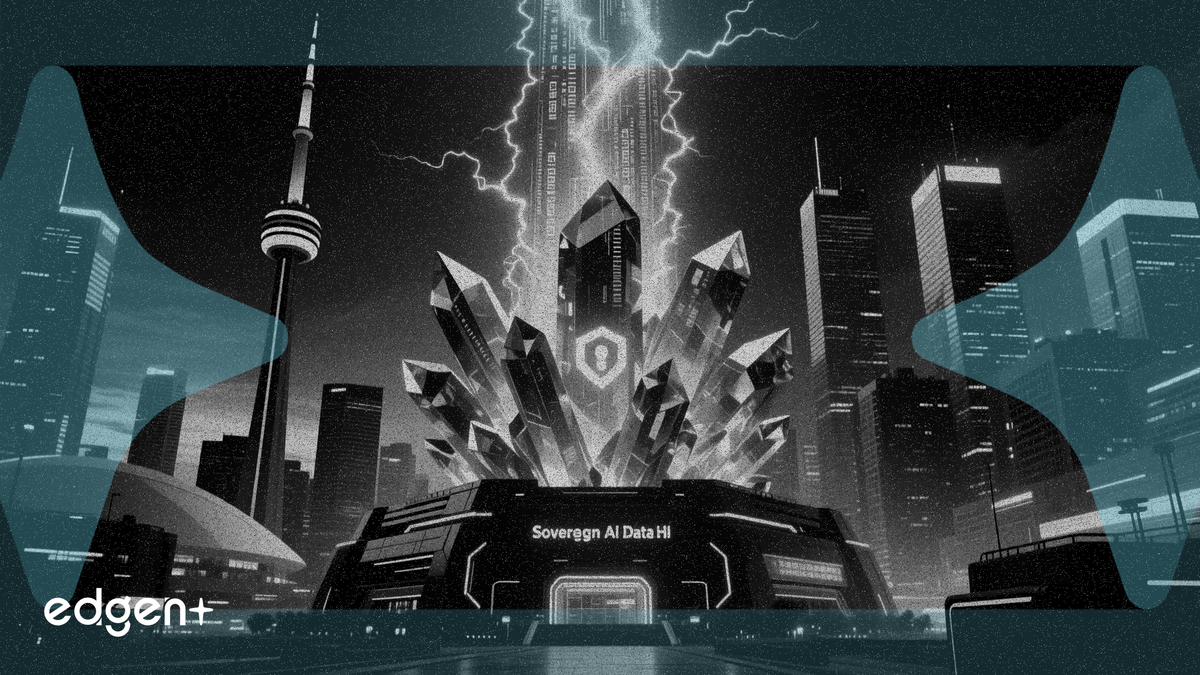
HIVE Digital Technologies Ltd. announced its BUZZ HPC division will build a 320-megawatt sovereign AI infrastructure facility in the Greater Toronto Area, a move designed to scale Canada’s domestic compute capacity for a new generation of AI applications.
"BUZZ is building industrial-scale infrastructure designed to help Canada scale compute capacity, accelerate domestic AI adoption, and support the next generation of enterprise, research and public sector AI applications," the company said in a statement on May 18.
The 320 MW capacity of the planned Toronto hub significantly exceeds other recently announced Canadian AI projects. For comparison, Telus is expanding its government-backed Sovereign AI Factory in British Columbia from an initial 85 MW toward a target of 150 MW by 2032. HIVE did not disclose the total investment for the project or a specific timeline for completion.
The project positions HIVE to compete for high-value government and enterprise contracts that require data to remain within Canada, a segment where security and data residency are paramount. However, it also represents a capital-intensive challenge against global hyperscalers like Amazon and Microsoft and raises questions about securing both customers and the vast amounts of power required to turn the investment profitable.
Sovereign Clouds Compete
The push for "sovereign AI" infrastructure is a global trend, with governments and domestic companies racing to build out data processing capabilities that are not reliant on foreign-owned hyperscalers. These projects are closely tied to national priorities around digital security and economic competitiveness. Telus's partnership with the Government of Canada on its AI cluster highlights the public-private model being used to advance these goals.
For investors, HIVE's announcement pushes the company deeper into the capital-heavy data center market, linking its valuation to the buildout of AI-ready infrastructure. While the potential for long-term contracts from government and regulated industries is significant, the financial risks are also substantial. Analysts have already flagged the high capital intensity of similar projects, such as Telus's AI Factory, noting that such large, long-term builds can keep capital expenditures elevated for years and pressure balance sheets.
The success of HIVE's 320 MW facility will depend on its ability to differentiate from competitors. Beyond data sovereignty, access to clean energy is becoming a key factor. Telus, for example, has highlighted that its British Columbia cluster will be powered by 98 percent renewable energy. Details on the power sourcing for HIVE's Toronto facility have not yet been disclosed. The ability to secure access to powerful and in-demand hardware, such as the latest generation of Nvidia GPUs, will also be critical for attracting top-tier AI developers and researchers.
This article is for informational purposes only and does not constitute investment advice.