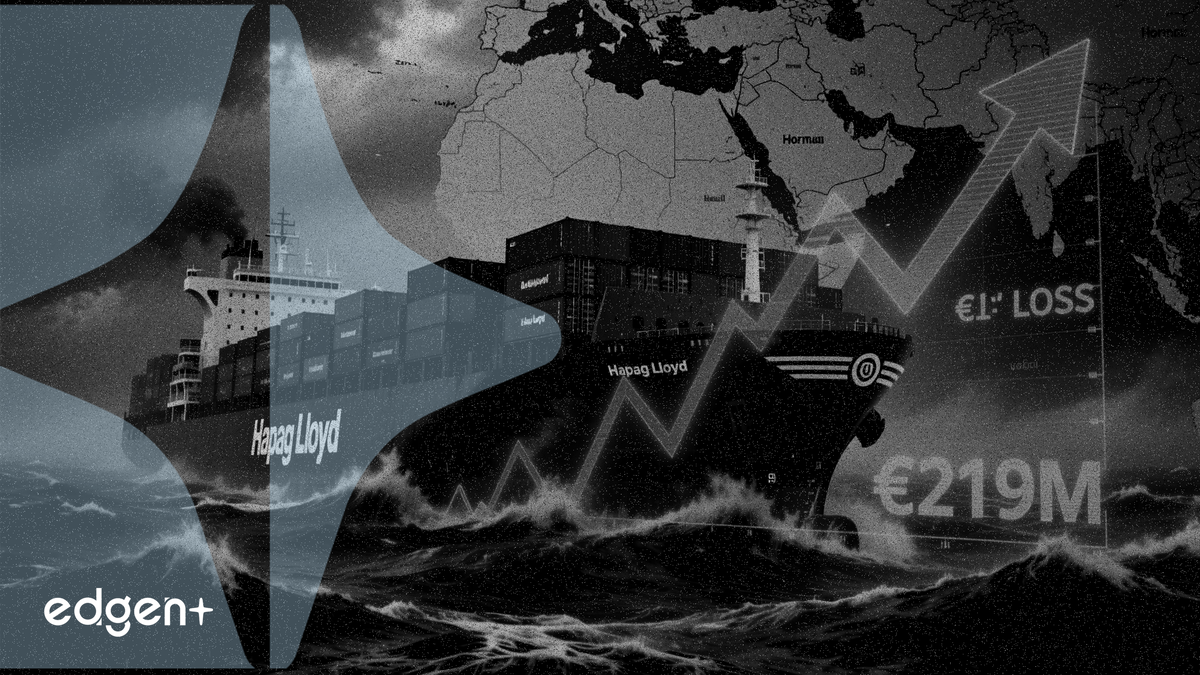
German shipping group Hapag-Lloyd AG posted a first-quarter net loss of €219 million, a significant downturn it attributes to the cascading effects of the Iran war, which has choked off the vital Strait of Hormuz waterway and sent operational costs soaring. The loss reverses a €446 million profit from the first three months of 2025, showing the financial toll of geopolitical instability on global trade.
"The first quarter of 2026 was unsatisfactory for us, with weather-related supply chain disruptions and pressure on freight rates leading to significantly lower results," chief executive Rolf Habben Jansen said in a statement.
The blockage of the Strait of Hormuz, a chokepoint for nearly a fifth of the world's oil trade, has left hundreds of commercial vessels and up to 20,000 seafarers unable to transit the waterway since February. This has forced costly rerouting and created logistical bottlenecks. While Hapag-Lloyd confirmed its full-year guidance, it warned it would focus on "rigorous cost management" in a volatile market.
Unlike piracy-related disruptions in the Red Sea where vessels could reroute, Hormuz offers no viable maritime alternatives for cargo destined for Gulf economies. This structural problem is forcing a fundamental redesign of maritime networks, with carriers establishing new transshipment hubs and feeder routes to maintain the flow of goods, according to analysis from Strategy& Middle East. Companies like Maersk and MSC are shifting to ports like Salalah in Oman and King Abdullah Port in Saudi Arabia, using smaller vessels to complete the final leg of transport.
Rising Costs Ripple Through Supply Chains
The workarounds create their own financial pressures. The cost of bunker fuel, the lifeblood of the shipping industry, has spiked in Asian refueling hubs like Singapore, rising from approximately $500 per metric ton before the conflict to over $800 in early May. This surge, driven by a shortage of heavier crude from the Middle East, is a direct cost passed from shipping lines to their customers and, ultimately, to consumers.
"Bunker fuel shortages tend to feed through to shipping costs more quickly than many other cost pressures," said Oliver Miloschewsky of risk consultancy Aon, who noted the cumulative effect will ripple across supply chains and influence consumer prices.
A Forced Evolution Toward Resilience
While disruptive, the crisis is accelerating a long-term shift away from lean, linear supply chains toward more flexible and resilient networked models. The volatility has highlighted the value of adaptability, with ship owners showing greater willingness to invest in dual-fuel capable vessels that can run on alternatives like liquefied natural gas (LNG) to hedge against price shocks in a single fuel source.
"The industry is learning that resilience must now be built into the architecture of global trade itself," said Christopher Long, a former British naval officer with the Neptune P2P Group. Even if a peace deal reopens the Strait of Hormuz, clearing the backlogs created by weeks of diverted cargo could take months, ensuring the disruption will have a long tail.
This article is for informational purposes only and does not constitute investment advice.