

Le président de Great Wall Motor, Wei Jianjun, mise son nom et sa réputation sur le nouveau Wey V9X, un hybride rechargeable haut de gamme qui rejette la philosophie dominante des plateformes exclusivement électriques.
Le président de Great Wall Motor, Wei Jianjun, mise son nom et sa réputation sur le nouveau Wey V9X, un hybride rechargeable haut de gamme qui rejette la philosophie dominante des plateformes exclusivement électriques.
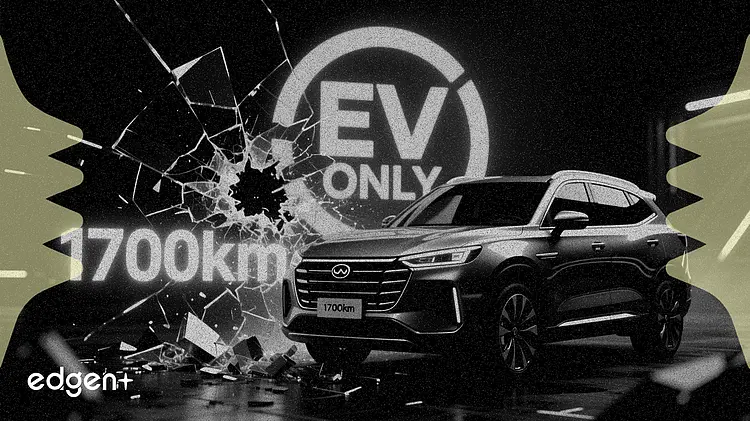
Great Wall Motor Co. lance son véhicule le plus crucial depuis des années, le SUV premium Wey V9X, avec une stratégie à enjeux élevés qui va à l'encontre du consensus actuel de l'industrie. Le président Wei Jianjun soutient personnellement cet hybride rechargeable de 349 800 yuans (environ 51 400 $), pariant qu'une plateforme flexible et multi-motorisation peut surpasser ses rivaux qui ont tout misé sur des architectures purement électriques. Le succès du V9X, avec son autonomie annoncée de 1 700 kilomètres, est crucial pour relancer la marque premium Wey de GWM.
« Nous avons été dupés par le concept de plateformes électriques dédiées au cours des 10 dernières années », a déclaré Wei lors de l'événement de lancement, affirmant qu'une focalisation exclusive sur les VE ignore de vastes marchés mondiaux dotés d'infrastructures de recharge sous-développées. Il s'engage personnellement à être un « garant à vie » du V9X, liant sa réputation au cycle de vie complet du véhicule, de la production au service après-vente.
Le nouveau Wey V9X est proposé entre 349 800 et 389 800 yuans (environ 51 400 $ à 57 300 $). Les premiers modèles hybrides rechargeables sont construits sur la nouvelle architecture « Guiyuan S » de GWM et disposent du système hybride Super Hi4, combinant un moteur 2.0T avec deux moteurs électriques pour produire jusqu'à 550 kW (738 ch). Avec une batterie de 80 kWh, il offre une autonomie purement électrique CLTC allant jusqu'à 470 km et une autonomie totale combinée de 1 700 km.
Ce lancement représente un moment charnière pour la marque Wey, qui a lutté contre une identité chancelante et des ventes en baisse ces dernières années. GWM parie que la garantie personnelle de Wei, soutenue par une généreuse garantie de 6 ans/150 000 km et un logiciel de conduite intelligente gratuit à vie, pourra restaurer la confiance des consommateurs. Cette initiative intervient après que les dépenses de vente de GWM ont bondi de 44 % en 2025, principalement pour développer un réseau de vente directe de plus de 430 magasins pour la marque Wey.
Le V9X est le premier véhicule issu de la plateforme « Guiyuan S » de GWM, une architecture conçue pour accueillir cinq types de motorisations différents avec plus de 90 % de pièces communes. Cette approche défie directement la stratégie de fabricants chinois de VE premium à succès comme Li Auto Inc. et la marque Aito, soutenue par Huawei Technologies Co., qui ont bâti leur succès en se concentrant sur un seul type de motorisation dans un segment de marché spécifique.
Le pari de Wei est que l'obtention d'une échelle mondiale à travers plusieurs types de motorisations finira par réduire les coûts, améliorer la disponibilité des pièces et renforcer la valeur de revente des véhicules — des avantages qui, selon lui, ne peuvent être égalés par des rivaux monoproduits. Cependant, le succès de cette stratégie dépend de la capacité du V9X à prouver qu'une plateforme « universelle » peut rivaliser en performance et en efficacité avec des architectures dédiées et construites à cet effet. Comme l'a noté Paul Gong, analyste chez UBS, le marché voit « plus de grands SUV, plus d'homogénéisation », faisant de la différenciation un défi persistant.
Après des années de stratégies changeantes pour la marque Wey, la décision de Wei Jianjun de soutenir personnellement le V9X est un geste puissant, bien que risqué, pour établir une identité stable. « Je n'ai aucun moyen de reculer », a déclaré Wei, présentant son implication comme un moyen d'assurer la responsabilité dans toute l'entreprise. Cela contraste avec une tendance récente de l'industrie où les fondateurs se retirent après une période de marketing personnel intense.
Le V9X entre dans un segment encombré de 350 000 à 400 000 yuans où les rivaux ont déjà établi une forte fidélité des utilisateurs. Bien que les ventes de Wey aient connu une reprise en 2025, atteignant 100 000 unités grâce à ses modèles Blue Mountain et Gaoshan, le V9X doit maintenant prouver qu'il peut convertir l'investissement massif de GWM en rentabilité durable. Les performances du véhicule dans les mois à venir seront un test clé de la vision à contre-courant de Wei et détermineront si GWM peut atteindre ses objectifs ambitieux pour 2026 de 1,8 million de ventes de véhicules et 10 milliards de yuans de bénéfice net.
Cet article est à titre informatif uniquement et ne constitue pas un conseil en investissement.
