
Greek shipowners are positioning oil tankers within striking distance of the Persian Gulf, wagering that a reopening of the Strait of Hormuz will unleash a surge in freight rates.
Greek shipowners are positioning oil tankers within striking distance of the Persian Gulf, wagering that a reopening of the Strait of Hormuz will unleash a surge in freight rates.
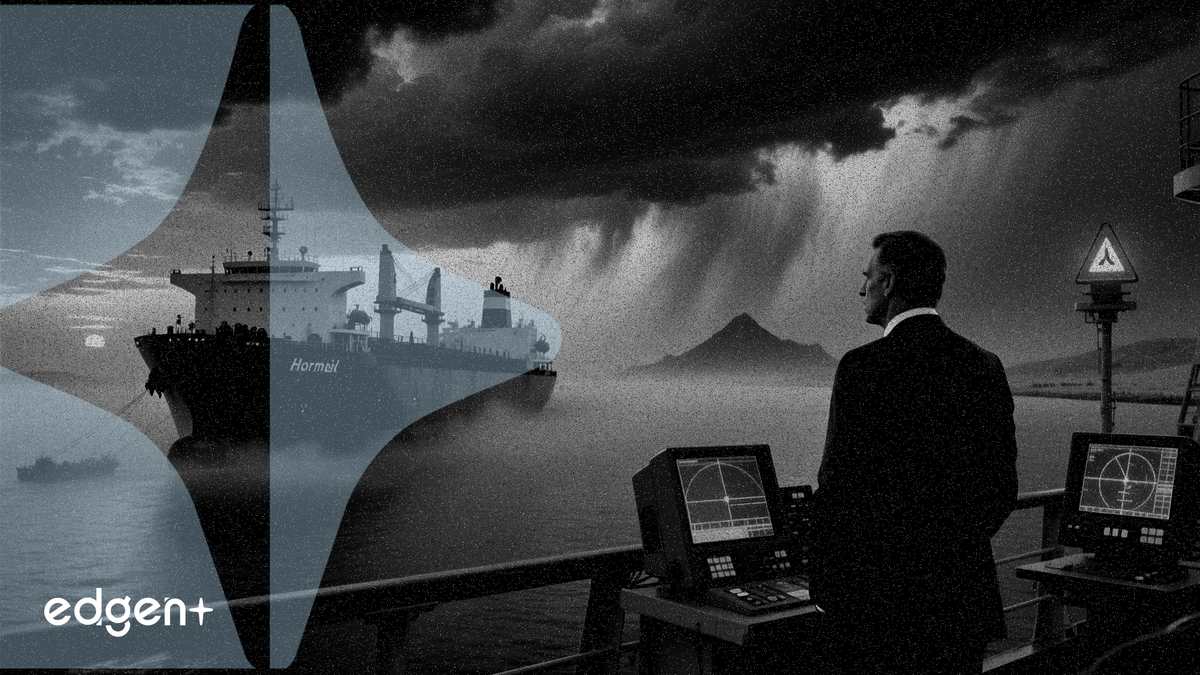
Greek shipowners are positioning oil tankers within striking distance of the Persian Gulf, wagering that a reopening of the Strait of Hormuz will unleash a surge in freight rates.
Greek shipowners led by Capital Maritime & Trading have repositioned oil tankers to waters three to five days from the Persian Gulf, betting that a reopening of the Strait of Hormuz will send freight rates to record levels.
"We have moved a significant number of vessels to waters near India and East Africa, ready to transit once the strait opens," Evangelos Marinakis, owner of Capital Maritime & Trading, said Tuesday at the TradeWinds shipowner forum in Athens.
At least one other Greek shipowner has similarly redeployed tankers, according to a person familiar with the matter. The repositioning comes as WTI crude slid 2.7% to below $89 a barrel within 30 minutes of Iranian state television broadcasting a draft US-Iran framework that would lift the naval blockade and restore commercial transits to pre-war levels within 30 days.
The bet on tanker rates reflects a growing conviction among shipping executives that a diplomatic resolution is nearing, even as analysts at RBC Capital Markets expressed skepticism that traffic will return to February levels anytime soon. RBC estimates that the current crude shut-in rate of 12.5 million barrels per day has already removed more than 1 billion barrels from the market through May, with losses approaching 1.5 billion barrels if the disruption persists through June.
The Strait of Hormuz handled roughly 20 million barrels per day before Iran's restrictions, with 125 to 140 commercial transits crossing daily. A reopening would release a massive backlog of supply, but the timeline for full recovery remains deeply uncertain. The last major disruption at the chokepoint, following the 2019 attacks on Saudi Aramco facilities at Abqaiq and Khurais, cut output by 5.7 million barrels per day for several weeks — less than half the current shut-in volume.
Kuwait Petroleum Co. expects to recover almost 70% of its production within six to eight weeks after the strait reopens, managing director for international marketing Shaikh Khaled Ahmad Al-Sabah said Wednesday at the S&P Global Energy Middle East Petroleum and Gas Conference. The remaining 30% would take about a month longer, he said. KPC could recover its refinery production to normal levels in about two to three weeks.
Other industry officials offered more cautious timelines. ADNOC's executive vice president for sales and trading, Philippe Khoury, said Tuesday that full transits through the Strait of Hormuz could take until mid-2027 to recover to pre-conflict levels. The International Energy Agency's head of oil, Toril Bosoni, said a recovery could take six to eight months in the best-case scenario.
Reopening Timeline Remains Divided
The divergence in outlooks highlights the complexity of restoring flows through a chokepoint that has been effectively closed since the US-Iran conflict escalated. RBC Capital Markets said mechanical challenges in restoring flows are being underestimated, with no readily available method to reverse the disruption quickly.
"If the optimistic scenario assumes an easy policy solution exists to restore shipping once economic costs become too severe, we think that underestimates the mechanical challenges," RBC said in a note.
The draft framework outlined by Iranian state television includes six provisions, including a US military withdrawal from Iran's vicinity and joint management of shipping routes by Iran and Oman. Tehran cautioned that no steps would follow without tangible verification from Washington, and the framework remains an "initial unofficial memorandum."
For tanker owners, the calculus is straightforward: when the strait reopens, the sudden demand for vessels to move accumulated crude could push daily charter rates above previous records. The United States Oil Fund has already reflected growing supply concerns, with shares trading at $133, up 93% over the past year and 89% year-to-date.
Goldman Sachs has projected a drop in global oil demand of 1.7 million barrels per day in the second quarter of 2026 while raising its price forecast to $90 a barrel, reflecting the supply-side shock from the Hormuz closure. RBC has warned that oil prices will likely surpass levels seen during the Russia-Ukraine conflict and approach the 2008 peak once summer demand begins and inventory draws accelerate, with demand destruction likely required to balance the market.
If the strait reopens within weeks, the release of more than 1 billion barrels of deferred supply could push prices sharply lower in the near term. If it remains closed through the summer, RBC estimates crude losses could approach 1.5 billion barrels, forcing prices to levels that destroy demand.
This article is for informational purposes only and does not constitute investment advice.
