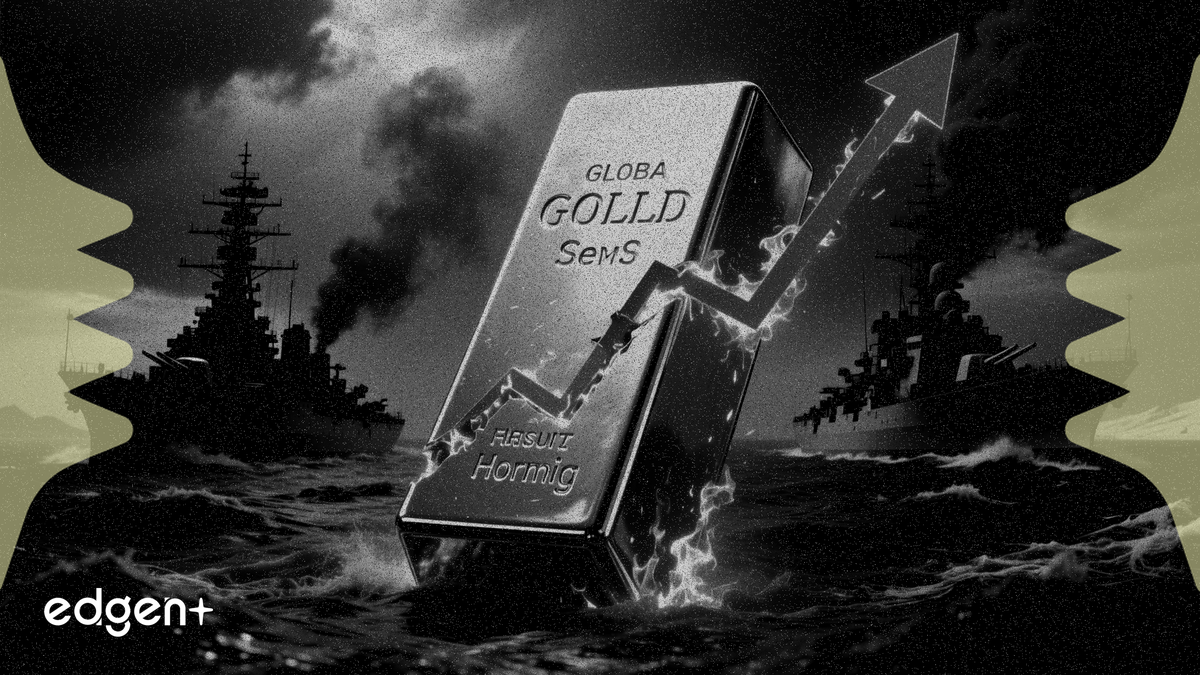
Los precios del oro están probando el nivel de los 4.500 dólares y la plata superó los 75 dólares la onza después de que Irán lanzara una serie de ataques contra buques comerciales y militares en el estrecho de Ormuz, escalando dramáticamente las tensiones a pesar de un frágil alto el fuego.
"Los sucesos en Ormuz dejan claro que no hay una solución militar para una crisis política", afirmó el ministro de Asuntos Exteriores de Irán, Abbas Araghchi, en una publicación en las redes sociales, al tiempo que advirtió que cualquier barco que intente transitar por la vía navegable sin permiso "será detenido por la fuerza", según el Cuerpo de la Guardia Revolucionaria Islámica.
Los ataques del lunes provocaron un fuerte aumento en los precios de la energía: el crudo Brent subió 3,06 dólares hasta los 111,23 dólares el barril y el West Texas Intermediate (WTI) subió 2,18 dólares hasta los 104,12 dólares. Los ataques incluyeron el disparo de misiles y drones contra los Emiratos Árabes Unidos; el Ministerio de Defensa de la EAU informó del lanzamiento de más de una docena de misiles. Un carguero con bandera de Corea del Sur también resultó dañado por un impacto externo, según funcionarios en Seúl.
La escalada pone en riesgo la seguridad energética mundial, ya que aproximadamente una quinta parte del petróleo del mundo pasa por el estrecho. El precio del oro cotiza ahora apenas un 5% por debajo de su máximo histórico establecido en marzo de 2025, lo que refleja una amplia huida hacia la seguridad en todos los mercados. La próxima señal importante para el mercado será el informe del Pentágono sobre el conflicto programado para el martes.
EE. UU. lanza el 'Proyecto Libertad'
En respuesta a los ataques, el ejército de los EE. UU. inició el "Proyecto Libertad" (Project Freedom), una operación para guiar a los barcos comerciales de forma segura a través de la vía navegable. El Comando Central de los EE. UU. (CENTCOM) confirmó que dos buques mercantes con bandera estadounidense y dos destructores de la Armada, el USS Truxtun y el USS Mason, transitaron con éxito por el estrecho el lunes.
El presidente Donald Trump declaró que las fuerzas estadounidenses destruyeron siete embarcaciones pequeñas iraníes por interferir en la operación. "Si, de alguna manera, se interfiere en este proceso humanitario, esa interferencia, lamentablemente, tendrá que ser tratada con fuerza", dijo Trump en un comunicado. El comandante del CENTCOM, el almirante Brad Cooper, confirmó que las medidas defensivas interceptaron o disuadieron con éxito cada amenaza entrante contra los buques navales.
Condena generalizada y consecuencias económicas
Los ataques iraníes provocaron una condena inmediata. El Ministerio de Asuntos Exteriores de Arabia Saudita expresó su "preocupación por la actual escalada militar" y pidió una desescalada. Egipto y el Consejo de Cooperación del Golfo también condenaron el ataque a un petrolero de la EAU propiedad de la Abu Dhabi National Oil Company (ADNOC), que fue atacado por dos drones iraníes.
La interrupción está afectando a algo más que al petróleo, ya que el Golfo también es una ruta de tránsito clave para el gas natural, el diésel y los productos fertilizantes. "Nos enfrentamos a un ajuste de cuentas con la conducción y los viajes de verano, y precios de la gasolina mucho más altos durante todo el verano", dijo Ed Hirs, experto en energía de la Universidad de Houston, a WTAE. Aunque el secretario del Tesoro de EE. UU., Scott Bessent, insistió en que EE. UU. tiene el "control absoluto" del estrecho, reconoció que puede tomar "semanas o un mes" para que se reanude el libre flujo de barcos.
Este artículo es solo para fines informativos y no constituye asesoramiento de inversión.