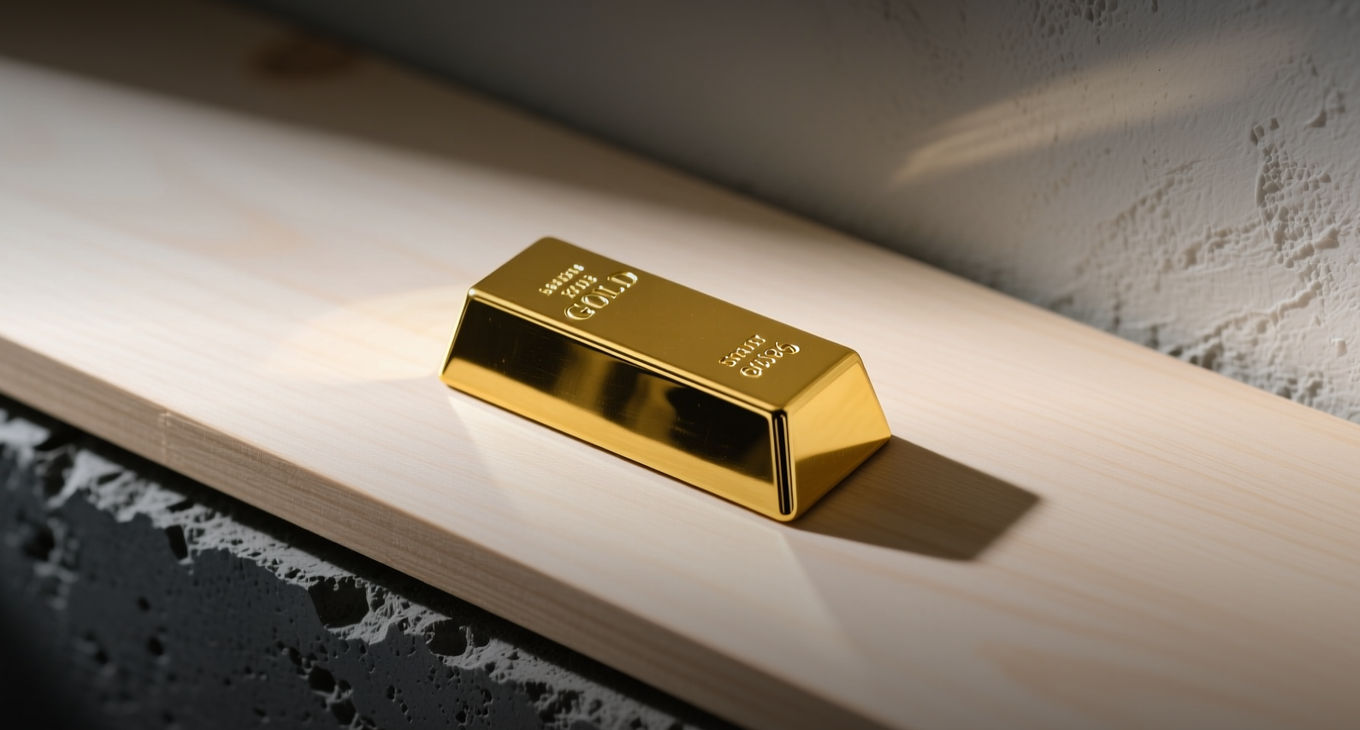
Gold is testing the $4,000 an ounce level as a strengthening US dollar erodes demand for the precious metal.
Gold approached the $4,000 an ounce level on June 23, pressured by a stronger US dollar that reduced demand for the precious metal. Spot gold traded at $4,208.58 as of 1003 GMT on June 22, after falling to its lowest level since June 11 in the prior session, according to Reuters data.
"Gold is stuck in a bit of a technical no-man's land, trudging above the 200-day moving average around $4,340 and capped below the 50-day moving average at $4,730," Greg Shearer, head of Base & Precious Metals at J.P. Morgan, said. The metal is currently testing the 0.272 Fibonacci retracement of the broader 1920-2026 advance, a level that could determine whether the secular bull market remains intact, said Razan Hilal, market analyst at forex.
The 200-day exponential moving average near $4,334 represents the first key level bulls need to reclaim on a daily closing basis, according to FXStreet analyst Haresh Menghani. A sustained break below $4,000 could expose the $3,500 region before renewed demand emerges, Hilal said. Silver faced similar pressure, with spot silver at $66.41 an ounce, up 2.3 percent on the session but down from its May highs near $89.
The Long-Term Case Remains Intact
J.P. Morgan Global Research forecasts gold averaging $6,000 an ounce by the fourth quarter of 2026 and rising toward $6,300 by the end of 2027, suggesting the current weakness may represent a buying opportunity for long-term investors. Central banks purchased 863 tonnes of gold in 2025, the fourth-largest annual total on record, extending a multi-year trend of elevated official-sector demand, according to the World Gold Council. Recent central bank surveys indicate strong intentions to further increase gold allocations in the coming years.
Silver's long-term outlook is underpinned by industrial demand from solar energy, electrification and artificial intelligence infrastructure. The Silver Institute has highlighted record industrial demand and multiple consecutive years of structural market deficits. A sustained break below the yearly low near $61 could expose the long-term breakout zone around $50, an area of considerable historical significance that served as major resistance for much of the period since the 1980s.
Seasonal liquidity conditions warrant attention, with summer trading activity typically lighter and the economic implications of Middle East tensions still unfolding. Volatility across precious metals is likely to remain elevated even if the broader secular bull market ultimately remains intact, analysts said.
This article is for informational purposes only and does not constitute investment advice.