
Former President Donald Trump’s threat to strike Iranian infrastructure unless the Strait of Hormuz is reopened sent gold prices tumbling, reversing the precious metal's recent safe-haven bid.
Former President Donald Trump’s threat to strike Iranian infrastructure unless the Strait of Hormuz is reopened sent gold prices tumbling, reversing the precious metal's recent safe-haven bid.
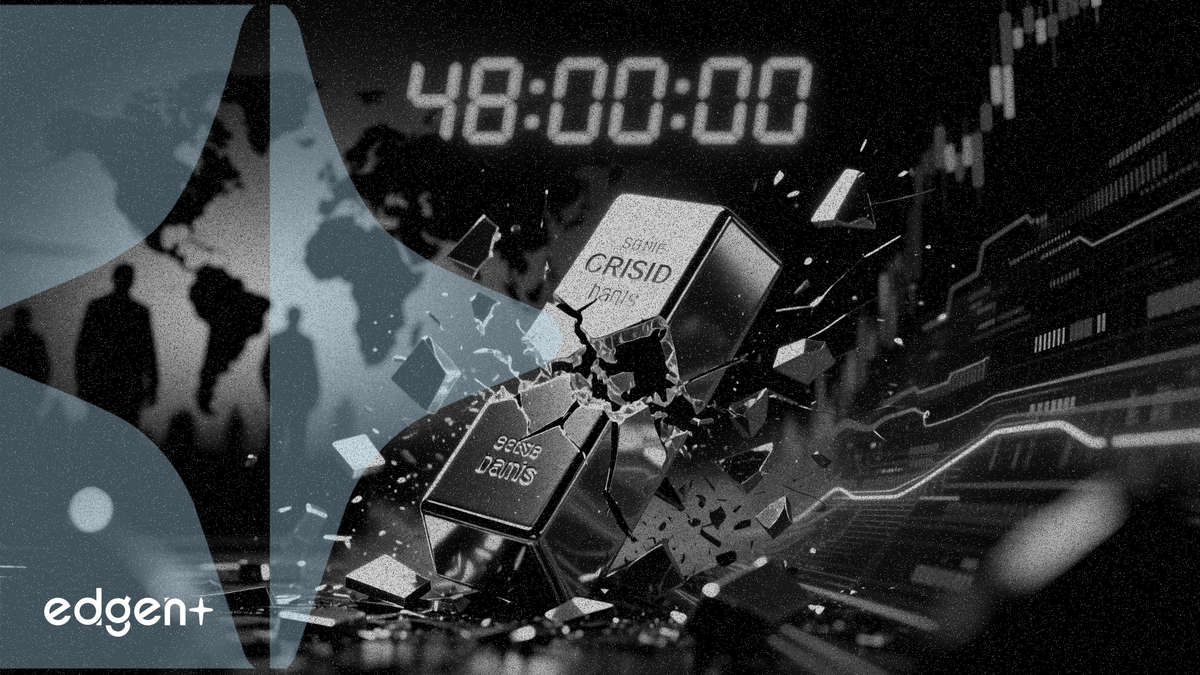
(P1) Gold prices fell to $4,600 per troy ounce on Monday, extending a sell-off after former U.S. President Donald Trump issued a 48-hour ultimatum to Iran, threatening military action if the Strait of Hormuz is not fully reopened to shipping. The move marks a significant escalation in rhetoric, directly linking geopolitical tensions to a specific deadline and pressuring commodity markets.
(P2) "'Open the Fuckin' Strait, you crazy bastards, or you'll be living in Hell - JUST WATCH!" Trump wrote on his Truth Social platform. In response, Gen Ali Abdollahi Aliabadi of Iran's central military command dismissed the threat as a "helpless, nervous, unbalanced and stupid action," stating that "the gates of hell will open" for the U.S. leader, according to reports.
(P3) The ultimatum, which threatens to target Iran's power plants and bridges, follows weeks of disruption in the critical waterway, which handles approximately one-fifth of global oil and liquefied natural gas flows. Gold has been volatile, declining a total of 12 percent since the conflict began, with the latest threat accelerating losses from the previous session.
(P4) At stake is the stability of global energy supplies and the potential for a wider conflict that could sharply reverse gold's recent downturn. While the immediate reaction saw a decline in gold prices, a military escalation could trigger a spike in oil prices and a renewed flight to safe-haven assets, creating significant volatility in equity and commodity markets.
Trump's warning explicitly targeted Iran's economic and electricity infrastructure, a sharp escalation from previous statements. The threat came after an Israeli strike on an Iranian petrochemical facility and the downing of a U.S. F-15 fighter jet over Iran, heightening fears of a direct confrontation. The former president's post also referenced a previous 10-day deadline that has now been shortened to just 48 hours.
This strategy builds on past actions, including U.S. strikes on Iran's Kharg Island, a terminal that handles about 90 percent of the nation's oil exports. While Trump has also floated the idea of winding down the war, his recent statements suggest a pivot back toward military pressure. He has also spoken of building a multi-national coalition including China, Japan, and several European nations to secure the strait.
Iran's public stance has been to frame the issue around maritime security. Ali Mousavi, Iran's ambassador to the U.K., told China's Xinhua news agency that Tehran was working with the International Maritime Organization to ensure safety. He signaled that vessels not linked to Iran's adversaries could receive safe passage if they coordinate with Iranian authorities, a position that directly conflicts with Trump's demand for unconditional and unimpeded transit for all ships.
This diplomatic messaging contrasts sharply with the military posturing from both sides. While Iran attempts to project a degree of control and reasonableness, the U.S. ultimatum leaves little room for negotiation, setting the stage for a potential clash after the deadline expires on Tuesday.
This article is for informational purposes only and does not constitute investment advice.