

General Motors is betting C$1.1 billion on Canadian manufacturing even as Washington threatens to double auto tariffs to 50 percent.
General Motors is betting C$1.1 billion on Canadian manufacturing even as Washington threatens to double auto tariffs to 50 percent.
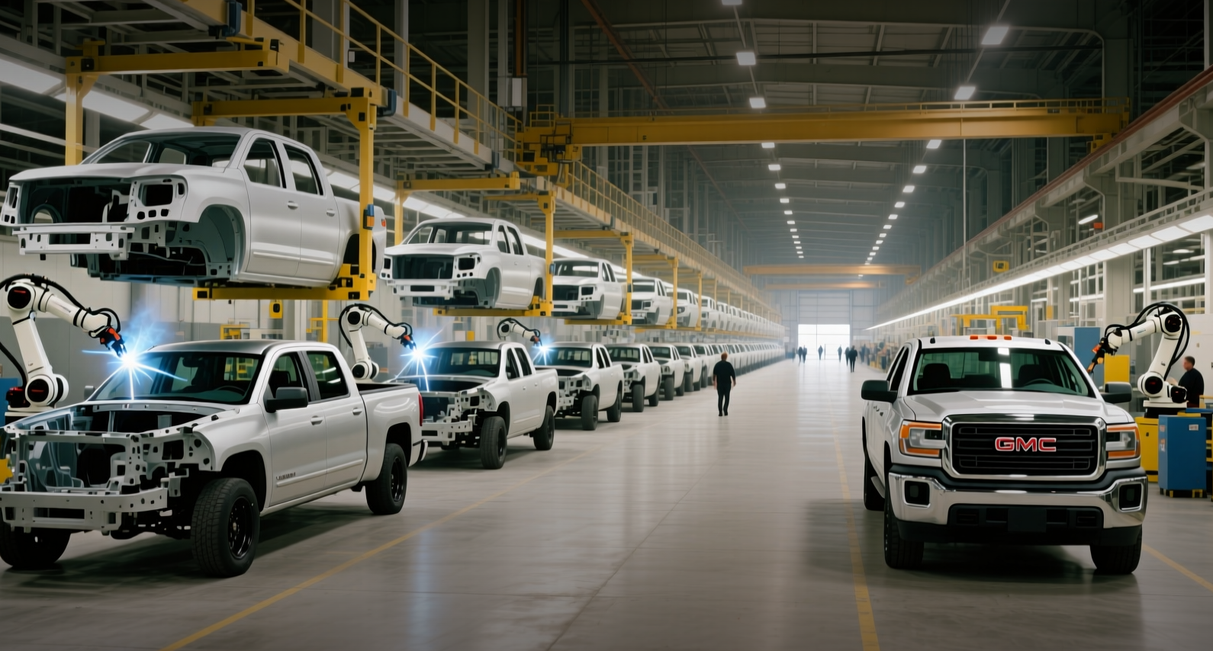
General Motors is betting C$1.1 billion on Canadian manufacturing even as Washington threatens to double auto tariffs to 50 percent.
General Motors will invest C$1.1 billion in Canadian auto plants under a tentative Unifor deal as US tariffs on Canadian vehicles threaten to double to 50 percent on Jan. 1, 2027.
"The recently threatened 50 percent tariffs on Canadian autos, trucks, and car parts would feed through to consumer prices more readily than before," said Bernard Yaros, lead economist at Oxford Economics. "That cushion is wearing thin."
The C$1.1 billion package includes C$144 million for the next-generation heavy-duty GMC Sierra at Oshawa, C$691 million for new V8 engine production previously announced in April, and C$215 million for a new transmission line at St. Catherines starting in late 2029. GM also committed to not selling or closing its CAMI assembly plant in Ingersoll while it studies alternative production, including potential defense work for the Canadian Armed Forces.
The deal covers 4,600 Unifor members in Ontario and is contingent on worker ratification votes this weekend. It comes as US-Canada trade negotiations collapsed last week over unresolved issues including whether to cut duties on medium- and heavy-duty vehicles critical for Canadian factories — with Canada insisting it cannot accept a deal that doesn't ensure the survival of its auto assembly and parts industry.
Beyond autos: the tariff war's wider economic toll
The threatened escalation from 25 percent to 50 percent on Canadian vehicles, parts and steel would mark the sharpest move yet in a conflict that has already reshaped cross-border trade. US Commerce Secretary Howard Lutnick said Canadian negotiators only raised demands to include medium- and heavy-duty trucks on Friday at 4 p.m., just ahead of the deadline for securing a deal. Trump has also clashed with Ontario Premier Doug Ford in recent days, threatening to rename Lake Ontario as "Lake America" as the dispute escalates.
Canada has retaliated with its own 25 percent import tax on certain American vehicles since last year, and Prime Minister Mark Carney's government has announced additional duties on US steel, aluminum, lumber, household goods and alcohol. Saskatchewan and Alberta remain the only provinces still selling American alcohol, with Saskatchewan imposing a 50 percent charge on US-imported alcohol from Sept. 8. Carney had asked provinces to restore US alcohol to their shelves during trade talks, but with talks collapsed, the ban is likely to return.
The conflict extends well beyond vehicles. The US imported $23 billion worth of wood products in 2024, with almost half coming from Canada, according to a US Congress report. Canada's forest industry employs nearly 200,000 people and has urged the government to boost domestic demand through federal housing programs. Bradley Saunders, North America economist at Capital Economics, said job losses could have a bigger impact on households than higher prices, pointing to bespoke furniture producers in British Columbia facing 50 percent tariffs on exports to the US. "If you're a bespoke furniture producer in BC, you're now facing a 50 percent tariff on your exports to the US — that could really shut the business down," he said.
For consumers, higher import costs could push manufacturers toward luxury cars, SUVs and pick-up trucks, while a shortage of cheaper new vehicles could raise used-car prices, Yaros said. The Budget Lab at Yale expects marginal increases in furnishing and other household equipment costs for Americans, mainly because of tariffs on lumber and other materials. The USMCA free-trade agreement between the US, Canada and Mexico remains operational but faces uncertainty — Canada and Mexico want it extended for another 16 years, while the US has said it will not renew it in its current form. With negotiations stalled and tariffs escalating, the auto sector, which relies on deeply integrated cross-border supply chains, remains the most exposed industry to the dispute.
This article is for informational purposes only and does not constitute investment advice.
