
The AI energy trade is the only thing keeping U.S. equities from a deeper rout, former Trump economic adviser Gary Cohn said.
The AI energy trade is the only thing keeping U.S. equities from a deeper rout, former Trump economic adviser Gary Cohn said.
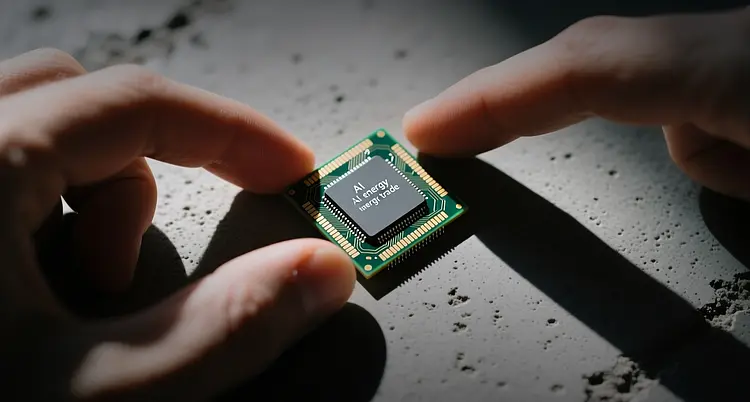
The AI energy trade is the only thing keeping U.S. equities from a deeper rout, former Trump economic adviser Gary Cohn said.
The Nasdaq 100 braced for a $1 trillion-plus value wipeout Tuesday as a tech selloff deepened, with the AI energy trade propping up an otherwise floundering market.
"The market would be floundering without the AI energy trade," Gary Cohn, vice chairman at IBM and former director of the National Economic Council, said on CNBC's Squawk Box.
The selloff extended a weeks-long decline in technology shares, with AI-linked companies bearing the brunt of the selling. Oracle disclosed Monday it had cut 21,000 employees over the past 12 months, a 13% reduction, citing the adoption of AI technologies as a factor. The cuts add to a wave of tech layoffs that hit their highest single-month level in May, with AI cited as the most common reason, according to outplacement firm Challenger, Gray & Christmas.
Cohn's warning highlights a growing concentration risk in a market where a narrow set of AI and energy infrastructure names are driving returns. If the AI energy trade falters, the broader market lacks a second engine to absorb the selling pressure, leaving the S&P 500 and Nasdaq vulnerable to a more sustained drawdown.
The layoff wave sweeping through the technology sector shows the tension between AI as a growth driver and a cost-cutting tool. Meta cut about 8,000 employees in May, moving 7,000 others into AI-focused roles. Intuit eliminated roughly 3,000 jobs, about 17% of its workforce, in a restructuring centered on AI. Block cut nearly half its workforce, dropping to under 6,000 from more than 10,000, with CEO Jack Dorsey saying AI tools were enabling "a new way of working." Across the industry, companies including Microsoft, Amazon, Salesforce, and Cisco have all reduced headcount this year while simultaneously boosting AI investment.
The dynamic creates a paradox for equity investors: AI is simultaneously the market's strongest growth story and the reason companies are cutting jobs. Cohn's assessment that the market would be floundering without the AI energy trade suggests the bull case rests on a narrow foundation. Energy stocks tied to AI data center power demand — utilities, natural gas producers, and nuclear operators — have been among the best performers this year, while the broader technology sector has struggled under the weight of layoffs and valuation compression.
For portfolio managers, Cohn's analysis reinforces the case for focusing on AI infrastructure and energy exposure. The AI energy trade encompasses utilities that supply power to data centers, natural gas producers meeting surging electricity demand, and nuclear operators extending plant lifetimes to serve the grid. On the technology side, semiconductor companies building AI chips and cloud providers leasing data center capacity remain the primary beneficiaries.
The concentration of market returns in AI and energy names echoes the narrow leadership of the 2023-2024 rally, when a handful of mega-cap technology stocks drove the majority of S&P 500 gains. What has changed is the addition of energy infrastructure as a parallel pillar, as data center electricity demand forecasts have pushed utility and natural gas stocks to multiyear highs. Cohn's framing of the AI energy trade as the market's primary support mechanism suggests that any disruption to data center buildout timelines or AI adoption rates could trigger a broader correction.
Cohn's comments come as investors grapple with whether AI-driven productivity gains will translate into broad-based earnings growth or concentrate wealth among a handful of infrastructure and energy providers. The answer will determine whether the current market structure — heavily dependent on the AI energy trade — is sustainable. The next major test for the thesis comes in July, when the Federal Reserve's next policy decision and a fresh round of tech earnings will test whether the AI energy trade can continue to carry the market.
This article is for informational purposes only and does not constitute investment advice.
