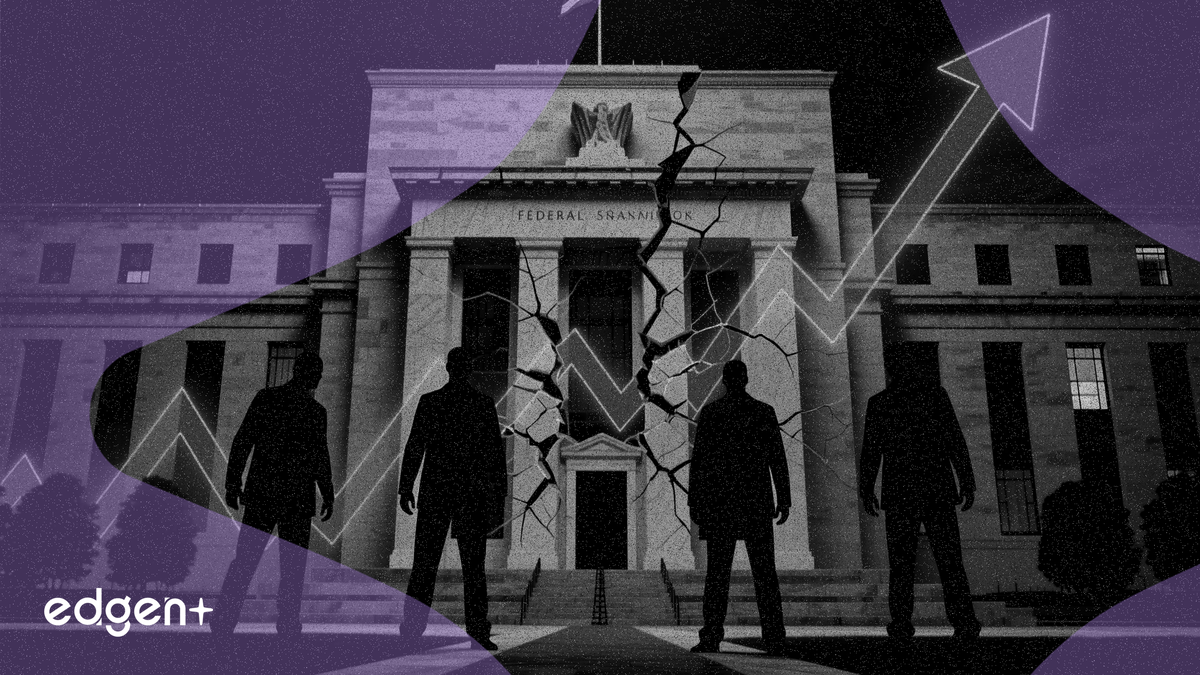
New York Fed President John Williams’ hawkish inflation commentary adds to the uncertainty surrounding a central bank visibly divided on its next move.

Federal Reserve Bank of New York President John Williams said US inflation remains “stubbornly above target,” a view that adds fuel to the contentious debate within a central bank that just saw the most policy dissents in over 30 years. His remarks follow a recent policy meeting where the Federal Reserve held its benchmark rate steady in a 3.5 percent to 3.75 percent range for the third consecutive time.
“The elevated levels of inflation, mixed signals from the labor market, and heightened uncertainty from the Middle East conflict present an unusual set of circumstances,” Williams said in a prepared speech on Monday, adding that the current policy stance is “well positioned to balance the risks.” The core of the issue, he noted, is that "U.S. inflation is stubbornly above target, which has absolutely caught the attention of regional Fed presidents."
The Fed’s last meeting revealed deep fractures on its rate-setting committee, producing four dissents for the first time since 1992. Fed Governor Stephen Miran pushed for an immediate quarter-point cut, while three regional presidents—Beth Hammack of Cleveland, Neel Kashkari of Minneapolis, and Lorie Logan of Dallas—voted to remove the statement’s language hinting at future cuts. This division underscores the challenge facing the central bank as inflation remains at a two-year high of 3.3 percent, well above the Fed's 2 percent target.
Complicating the policy path is an unusual leadership crisis. Chair Jerome Powell, whose term ends May 15, announced he will remain on the board as a governor to see through a Justice Department probe, a move not seen from a chair since 1948. His nominated successor, Kevin Warsh, who was approved by the Senate Banking Committee, has advocated for rate cuts, putting him potentially at odds with the committee's more hawkish members and the reality of persistent inflation.
Powell cited “a series of illegal attacks on the Fed” as his reason for staying, vowing to keep a low profile once Warsh is confirmed. “There is only ever one chair of the Federal Reserve board,” Powell said at his final press conference.
The internal debate rages as the economy sends conflicting signals. While inflation has been pushed higher by energy prices, hiring has slowed significantly. Yet, with unemployment declining to 4.3 percent and layoffs remaining low, many officials argue the labor market is not weak enough to warrant rate cuts. For now, market watchers see little chance of a change.
“The markets are thinking there isn’t going to be any change for the next six months, and maybe not even then,” said Chester Spatt, a finance professor at Carnegie Mellon University’s Tepper School of Business. This sentiment aligns with the Fed's own cautious language, but the open disagreements among its top officials suggest the path forward is anything but certain.
This article is for informational purposes only and does not constitute investment advice.