
Europe's push to rebalance trade with China is colliding with an inconvenient reality: a historic heat wave driving record demand for Chinese-made air conditioners.
Europe's push to rebalance trade with China is colliding with an inconvenient reality: a historic heat wave driving record demand for Chinese-made air conditioners.
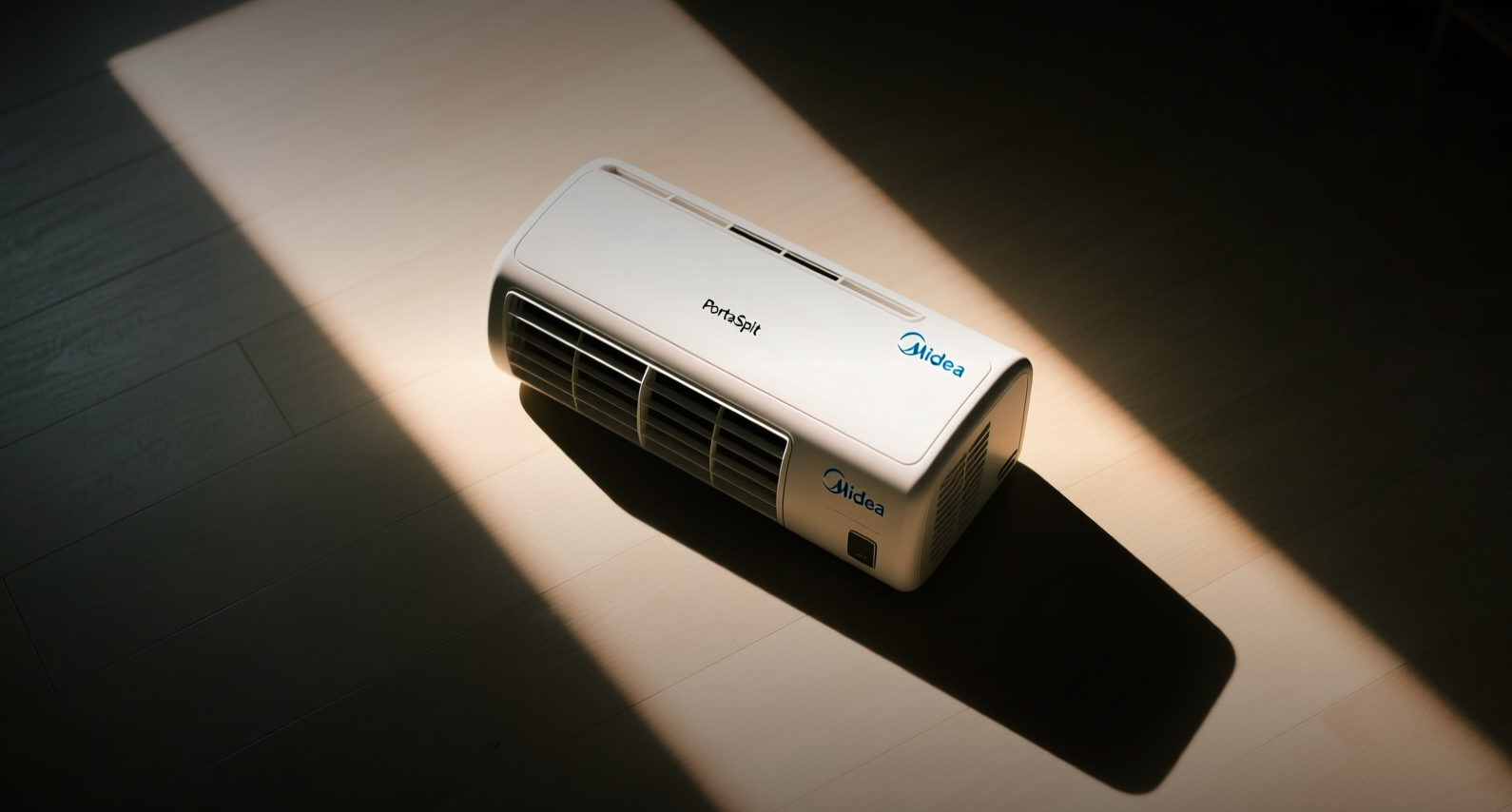
The European Union's campaign to narrow a €360 billion goods deficit with China faces a practical hurdle as a historic heat wave drives surging demand for Chinese air conditioners, exposing the gap between trade policy goals and consumer reality.
"The sense of urgency over China's threat to European industry appears to have reached a tipping point, but there is no sign of policy action forceful enough to materially reduce the trade surplus with Europe," said Gabriel Wildau, managing director at consultancy Teneo.
Chinese customs data show exports of air-conditioning machines to France jumped 57 percent in May from a year earlier to about $26 million, while shipments to Spain surged 41 percent to about $71 million — and that was before June temperatures regularly topped 100 degrees Fahrenheit. Midea Group's PortaSplit unit, engineered for Europe's strict building codes, has sold more than 200,000 units this year, with near-zero inventory across 1,200 German retail locations tracked by a third-party website.
The timing highlights the complexity of EU-China trade talks, where Brussels is demanding "tangible results" by October on market access and export controls while European consumers and municipalities — including Paris, whose mayor recently purchased 50 Haier air conditioners for local schools — are voting with their wallets for Chinese products that often have no European-made equivalent.
A Market Built on Regulatory Gaps
Only about one-fifth of European households own an air conditioner, compared with nearly 90 percent in the U.S., according to the International Energy Agency. That gap represents a structural demand driver that Chinese manufacturers are uniquely positioned to fill. Midea, Haier Group and Gree Electric Appliances together hold about 32 percent of the European market by retail volume, according to Euromonitor International. None of Europe's five best-selling air-conditioner brands is owned in the bloc.
Midea's PortaSplit illustrates the engineering required to crack Europe's fragmented regulatory landscape. The unit clips onto a window bracket without drilling, classifying it as furniture rather than a fixture — sidestepping facade-modification bans in cities like Paris. Its refrigerant charge of 1.99 kilograms sits just under France's 2-kilogram limit. Jens Schultheiss, a 30-year-old warranty manager at a Volkswagen dealership in Nuremberg, said he refreshed a local hardware store's website hourly until he secured a unit for €750, equivalent to about $850. "I am very satisfied with their products because they are inexpensive," he said.
Trade Talks, Tariffs and the October Deadline
The bloc's goods deficit with China grew 15 percent to €360 billion last year, with all 27 member states experiencing a shortfall, and expanded to €98 billion in the first quarter — the highest since 2022. Through May, China's exports to the EU have risen 16 percent year over year to about $254 billion. European trade chief Maros Sefcovic said after meeting with China's Commerce Minister Wang Wentao that the two sides agreed to set up a bilateral working group, with "reassurance" from Beijing that existing export controls on rare earths and permanent magnets will not disrupt EU supply chains.
"China has made no real commitment in setting an actual import quota or actual implementation mechanism," said Alicia García Herrero, chief economist at French investment bank Natixis, calling the progress "smoke" from Beijing to deter Europe from launching more protectionist measures. The European Commission has said "the status quo is not an option" and has recently restricted funding to solar projects using Chinese-made components and ended a tax exemption for low-value parcels used by companies like Temu and Shein.
Andrew Small, director at the European Council on Foreign Relations, said any measures would be "targeted in areas where either Chinese competition risks causing serious harm to critical industrial sectors, or where there is a major dependency risk that China may weaponize," with a particular focus on rare earths, chemicals, autos and heavy machinery. "There is no discussion about across-the-board tariffs," he added.
The last time the EU escalated trade measures against China — the 2024 anti-subsidy probe into Chinese EVs — Beijing retaliated with anti-dumping investigations into European brandy and pork imports, reducing bilateral agricultural trade by an estimated $1.2 billion over six months. A repeat scenario could hit European exporters harder this time, given that China's leadership has shown "little appetite for placating Europe," Wildau said.
Denis Depoux, global managing director at Roland Berger, said half of the EU's imports from China are now technology products, from cars to sophisticated machinery. "This is an inversion of the past decades and is scary for European industries, and can be a financial systemic problem for the Union," he said. "Delayed reciprocity" — where Chinese and European firms eventually merge to compete globally rather than clash over market share — may be the most viable path forward, Depoux added.
This article is for informational purposes only and does not constitute investment advice.
