European natural-gas prices fell Monday after President Trump said Iran talks were continuing, though losses were limited by uncertainty over a final agreement before winter.

European natural-gas prices fell Monday after President Trump said Iran talks were continuing, though losses were limited by uncertainty over a final agreement before winter.
European natural-gas prices declined after President Trump said negotiations with Iran were ongoing, though the drop was capped by persistent doubts about a lasting deal and the risk of supply shortages heading into the winter heating season.
"Oil prices are likely to remain above $100 for the rest of the year even if the current restrictions on the strait are lifted," analysts at JPMorgan Chase & Co. said in a note. The investment bank's forecast underscores the market's expectation that the disruption to energy flows through the Strait of Hormuz will persist even under a best-case scenario.
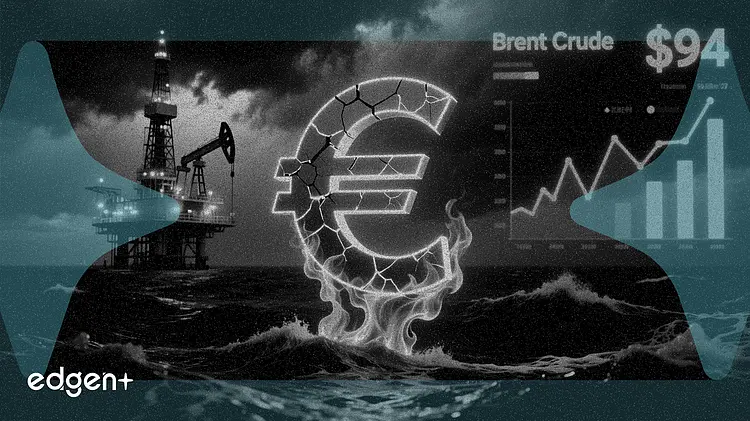
Brent crude, the global benchmark, traded near $94 a barrel Monday, down from its peak above $126 reached after the conflict began Feb. 28 but still well above the pre-war level of about $73. The strait, through which about 20% of the world's oil and liquefied natural gas normally passes, has been effectively closed since the war began. Only a handful of vessels have made the crossing compared with about 138 on a typical day, according to BBC Verify. The last time energy markets faced a disruption of this magnitude was Russia's full-scale invasion of Ukraine in 2022, when Brent briefly topped $130 and UK petrol prices hit 191.5 pence a liter.
The stakes are high for Europe as it approaches the winter restocking season. China, the world's largest LNG buyer, boosted imports to 4.9 million tons in May after April purchases fell to the lowest in eight years, according to ship-tracking data compiled by Bloomberg. That rebound signals intensifying competition for spot cargoes between Asia and Europe, potentially keeping prices elevated even if a diplomatic solution emerges. Europe's 30-day moving average for LNG deliveries has fallen 13% year-over-year, the data show, leaving the region more exposed to price swings as it rebuilds inventories ahead of peak demand.
The impact is already visible in consumer prices across the UK. Petrol reached 158.5 pence a liter on May 19, the highest since the war began, while diesel stood at 185.9 pence, according to the RAC motoring group. The RAC said it expected unleaded petrol to rise to at least 160 pence a liter in the coming weeks unless there was a sustained drop in the oil price. Every $10 increase in the oil price pushes up pump prices by roughly 7 pence a liter, analysts estimate. Since the war began, filling a typical family car with petrol has become about 14 pounds more expensive, while a tank of diesel costs 27 pounds more.
The UK government has responded with a series of measures. On May 20, it eased sanctions on Russian oil refined into diesel and jet fuel in third countries and lifted some restrictions on the transport of Russian LNG. Earlier this month, it allowed airlines facing fuel shortages to cancel flights in advance without losing valuable take-off and landing slots at busy airports. Chancellor Rachel Reeves said on April 16 that the UK was not facing an immediate shortage of petrol, diesel or jet fuel, noting that the country holds more than the 90 days of net oil imports required by the International Energy Agency.
For UK households, the broader energy crunch is intensifying. Energy bills are expected to rise when the next price cap takes effect July 1, with analysts at Cornwall Insights predicting an increase of 209 pounds to 1,850 pounds a year for a typical dual-fuel household, a 13% jump from the current 1,641 pounds. Ofgem is due to confirm the level of the July cap on May 27. Heating oil users in Northern Ireland and rural areas face even more direct exposure, with the government announcing a 53-million-pound support package to help those affected.
The ceasefire that started April 8 has largely held, but efforts to reach a long-term peace agreement have faltered, with control of the Strait of Hormuz emerging as a major sticking point. Fresh clashes between the two sides were reported over the weekend as they traded truce terms, according to Rigzone. Any renewed escalation could send energy prices sharply higher, while a breakthrough would remove a key source of supply risk — though JPMorgan's forecast suggests even that may not bring prices back to pre-war levels.
This article is for informational purposes only and does not constitute investment advice.