


Key Takeaways:
- European new car registrations rose 7% in April to 1.15 million units
- Pure-electric vehicle deliveries surged 38% year-over-year
- Volkswagen, Stellantis and Ferrari each gained more than 1% on the data
Key Takeaways:
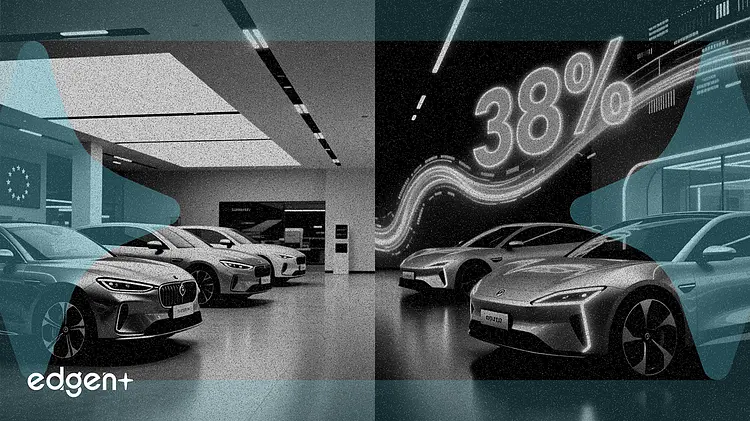
European auto registrations climbed for a third straight month in April, with pure-electric vehicle deliveries surging 38%.
European new car registrations climbed 7% in April from a year earlier to 1.15 million units, the European Automobile Manufacturers Association said Wednesday, as consumers continued shifting toward electric and hybrid models.
"Consumers are increasingly choosing electrified powertrains as model availability expands and charging infrastructure improves," Fares Hendi, portfolio manager at Societe de Gestion Prevoir, said.
Pure-electric vehicle deliveries jumped 38% year-over-year, marking the strongest growth rate in more than a year. Major markets Germany and the UK led the recovery, with both posting double-digit gains in overall registrations. The data pushed European auto stocks higher, with Volkswagen AG, Stellantis NV and Ferrari NV each rising more than 1% in Wednesday trading.
The EV surge comes as lower oil prices ease inflation concerns across the region. Brent crude dropped 2% to about $97 a barrel on optimism that the US and Iran will sign a peace deal, reducing a key cost pressure for consumers and businesses. The combination of falling fuel costs and expanding EV model choice is accelerating the powertrain transition, analysts said.
Stellantis, Europe's second-largest automaker by volume, reported European sales rose 7.1% in the first four months of 2026, outpacing the broader market. Volkswagen, the region's largest automaker, has committed tens of billions of euros to electrification and is rolling out new EV models across its Audi, Porsche and Volkswagen brands.
The broader Stoxx Europe 600 index rose 0.3%, edging within 0.6% of its February record high, as technology shares climbed alongside auto stocks. ASML Holding NV and Infineon Technologies AG were among the biggest contributors to the benchmark after Micron Technology Inc. rallied past $1 trillion in market value in the US, lifting semiconductor sentiment globally. The energy sector was the biggest laggard, with Brent's decline weighing on oil majors.
Lower oil prices also provide relief for the European Central Bank, which has been navigating sticky inflation driven partly by energy costs. A sustained decline in crude reduces the risk of further rate hikes, supporting consumer spending power and auto financing demand. The ECB's next policy decision is scheduled for June, and the inflation outlook will be a key factor in determining whether the central bank holds or cuts rates.
The acceleration in EV adoption creates a widening gap between automakers with strong electric lineups and those still reliant on internal-combustion models. Legacy manufacturers that invested early in dedicated EV platforms are capturing the bulk of the growth, while smaller players face mounting pressure to secure battery supply and meet tightening European CO2 emissions targets. The European Union's 2035 ban on new combustion-engine car sales provides a regulatory backstop for the transition, though automakers have warned that charging infrastructure deployment must keep pace with vehicle sales to sustain momentum.
The sustained EV adoption trend strengthens the case for automakers investing heavily in electrification, though the transition carries significant margin risk. The 38% surge in EV deliveries suggests consumer adoption is accelerating faster than many analysts had modeled, potentially narrowing the valuation gap between legacy automakers and pure-play EV competitors. European auto stocks have gained this year, supported by strong first-quarter earnings and easing inflation concerns, though the sector's exposure to technology and AI-linked stocks remains modest compared with US and Asian markets.
This article is for informational purposes only and does not constitute investment advice.
